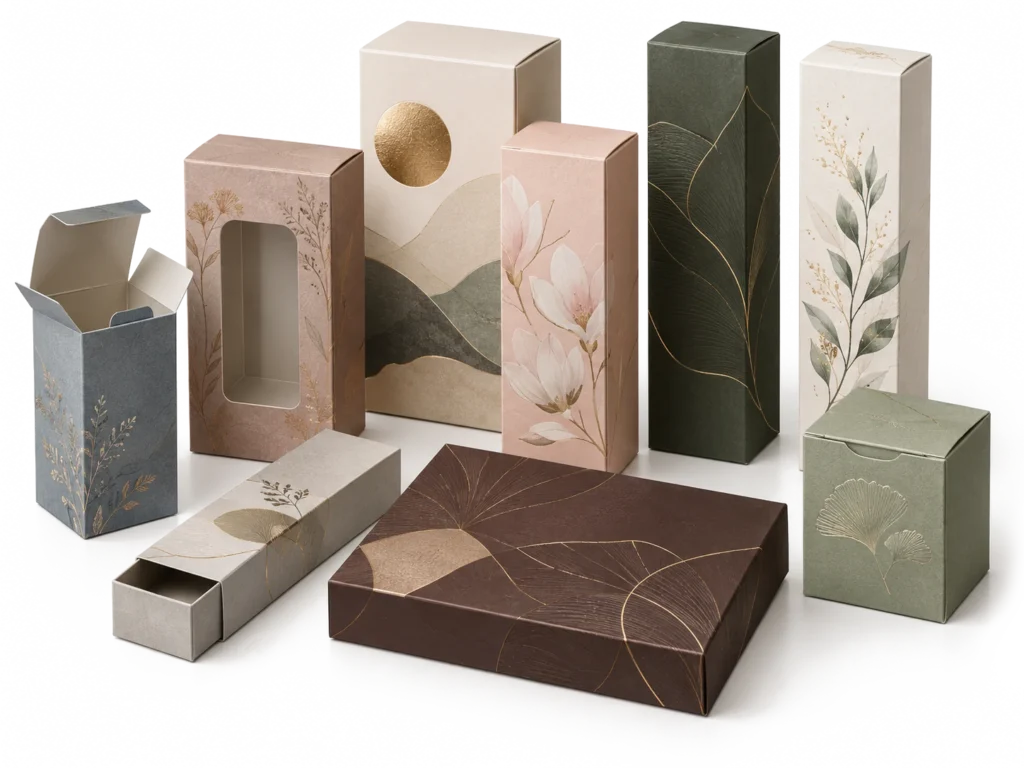
Stand a retail box upright when its loaded base is stable, the main panel is readable from the aisle, and shoppers can lift it out comfortably. Lay it flat when the product needs that orientation, headroom is limited, or a broad gift presentation matters more than a tall facing. Make the decision with a filled sample on the intended shelf. An attractive empty-box photograph cannot establish either arrangement.
For chocolate brands, cosmetic gift suppliers and independent retailers, retail box shelf orientation affects more than appearance. It changes the space requested from the retailer, the surface shoppers see, and how the last remaining pack behaves. The useful purchasing question is which arrangement works throughout the selling cycle, rather than which looks taller in a rendering.

Get the retailer’s shelf brief before approving the box
Ask for usable shelf width, depth and clear height, including any price rail, divider, shelf above or projecting sign. Confirm whether the pack will stand by itself, sit inside a display tray, or be stacked. A photograph with a ruler can clarify a fixture, but obtain the retailer’s confirmed measurements before committing to production.
Define the viewing position too. A carton displayed below eye level may show its top panel clearly; the same flat carton on a high shelf may expose only a narrow edge. The relevant comparison is the installed view, with price tickets and neighbouring products present.
For custom chocolate bar cartons for retail and gifting, ask whether the store wants individual bars standing in rows or flat packs in a shallow presentation area. Keep the chocolate’s approved inner packaging and storage instructions unchanged during this comparison. Changing the outer box orientation does not establish food-contact suitability or preservation performance.
Separate the sales unit from its display support
A carton that stands securely in a fitted tray has not necessarily demonstrated that it can stand alone. State which arrangement the quotation covers. If stores may discard the tray or move the packs to another fixture, ask for a standalone assessment as well.
Compare the two orientations against the same constraints
| Decision point | Upright arrangement | Flat arrangement |
|---|---|---|
| Customer-facing area | Can expose a large vertical printed panel. | May expose the top panel or only a shallow front edge, depending on shelf height. |
| Shelf footprint | A thin pack may occupy less depth, but its narrow base needs checking. | A broad footprint can consume more depth and reduce front-to-back stock. |
| Removal and return | Needs space to grip without knocking over neighbours. | Needs access beneath or beside the pack; stacking can complicate selection. |
| Product position | Requires suitable internal support and an approved product orientation. | Requires confirmation that the contents can lie on that face. |
| Opening for demonstration | May require taking the box off the shelf first. | Can suit a display sample, provided the lid has sufficient clearance. |
There is no universal winning row. A chocolate carton, a bottled skincare set and a jewellery gift box have different loads and shopping interactions. Apply the table to each actual packed product.
Calculate the footprint without confusing it with a stocking plan
Consider a hypothetical closed carton measuring 160 × 80 × 25 mm externally. With its long side vertical and broad panel facing the shopper, it occupies an 80 × 25 mm base and rises 160 mm. Laid on its broad panel, with the long edge facing the aisle, its base becomes 160 × 80 mm and its height becomes 25 mm.
Across a hypothetical 600 mm clear shelf width, those arrangements permit seven or three packs respectively before allowances. These are simple whole-pack width calculations, not approved facing counts. Dividers, hand access, imperfect alignment and retailer spacing rules reduce usable space. Do not multiply by shelf depth and present the result as a safe inventory capacity.
Record the proposed shelf-facing width, front-to-back depth and installed height beside a photograph of each orientation. Separately retain the dimensions required for product-data exchange. GS1 US measurement guidance starts consumer-item measurements from a defined default front; use the applicable standard and trading partner instructions rather than silently swapping data fields to match a display sketch.
Check stability with the real load and fewer neighbouring packs
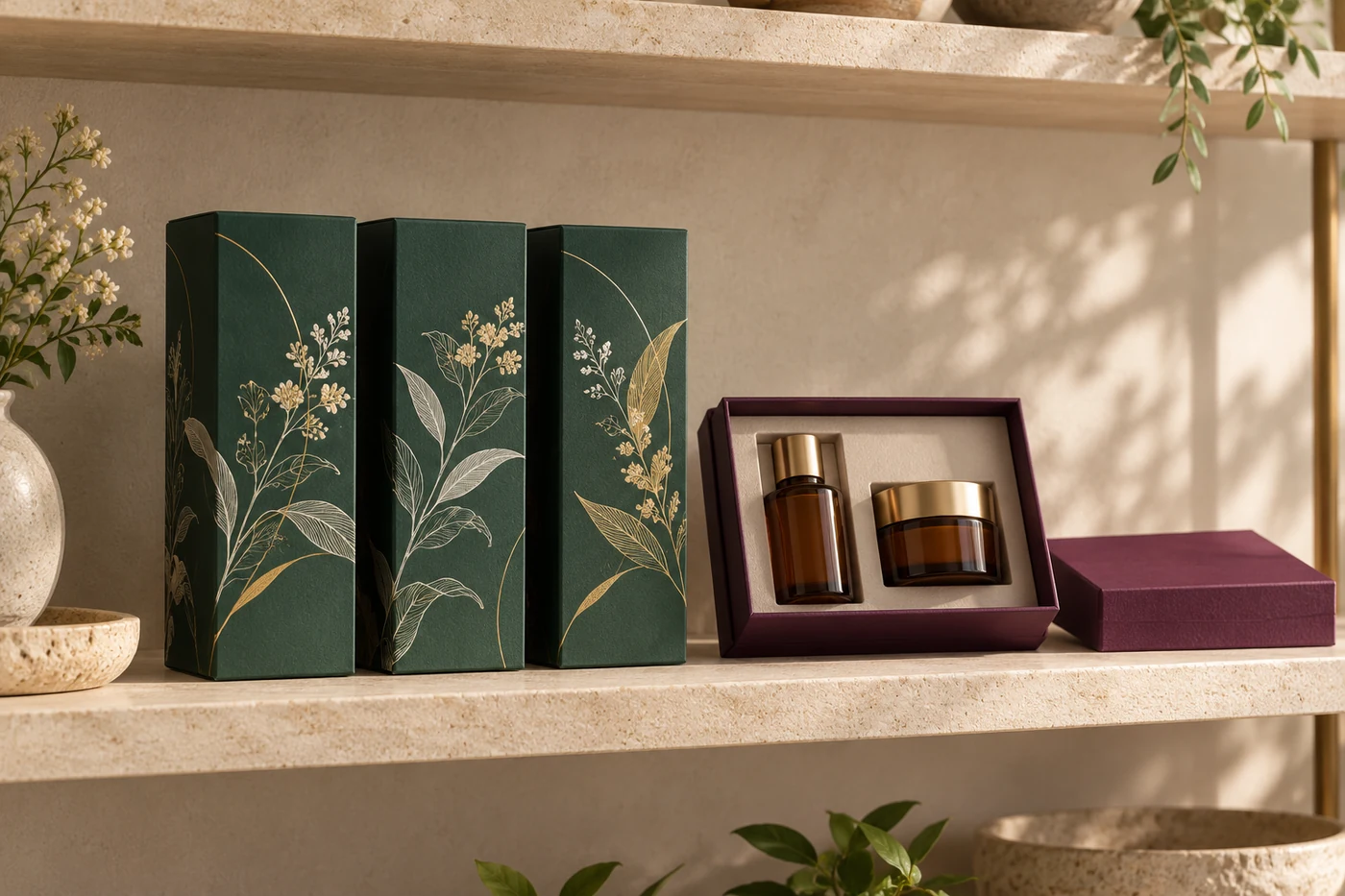
A row can appear stable because adjacent cartons support each other. Remove the neighbouring packs and repeat the check. Inspect whether the base sits evenly, whether closure flaps create a rocking point, and whether the contents shift when a shopper picks up and replaces the box.
Use the actual product weight and its approved insert. An empty mock-up cannot reproduce the behaviour of a glass jar or bottle positioned high inside a carton. Avoid a generic maximum height-to-base ratio: material, load position, shelf surface and display support all affect the outcome.
The lift-off-lid gift boxes and removable-cap paper tubes on our site illustrate why format matters. A gift box and a tube need separate base and removal checks even when they share artwork. For bottled cosmetics, confirm the product supplier’s allowed storage orientation; the paper tube is outer packaging, not a liquid container.
Agree on a realistic handling check
Ask the retailer to demonstrate ordinary removal, replacement and restocking. Record any tipping, unwanted lid movement or product displacement. If a tray or divider is essential, keep it in the approved specification. This is an application assessment, not a certified stability test or a substitute for transport validation.
Match gift-box opening to the way the store sells
Gift packaging often needs two arrangements: closed stock on the shelf and one demonstration sample on a counter. Trying to open every saleable pack in place may require space the store cannot provide, and can expose sale stock to unnecessary handling.
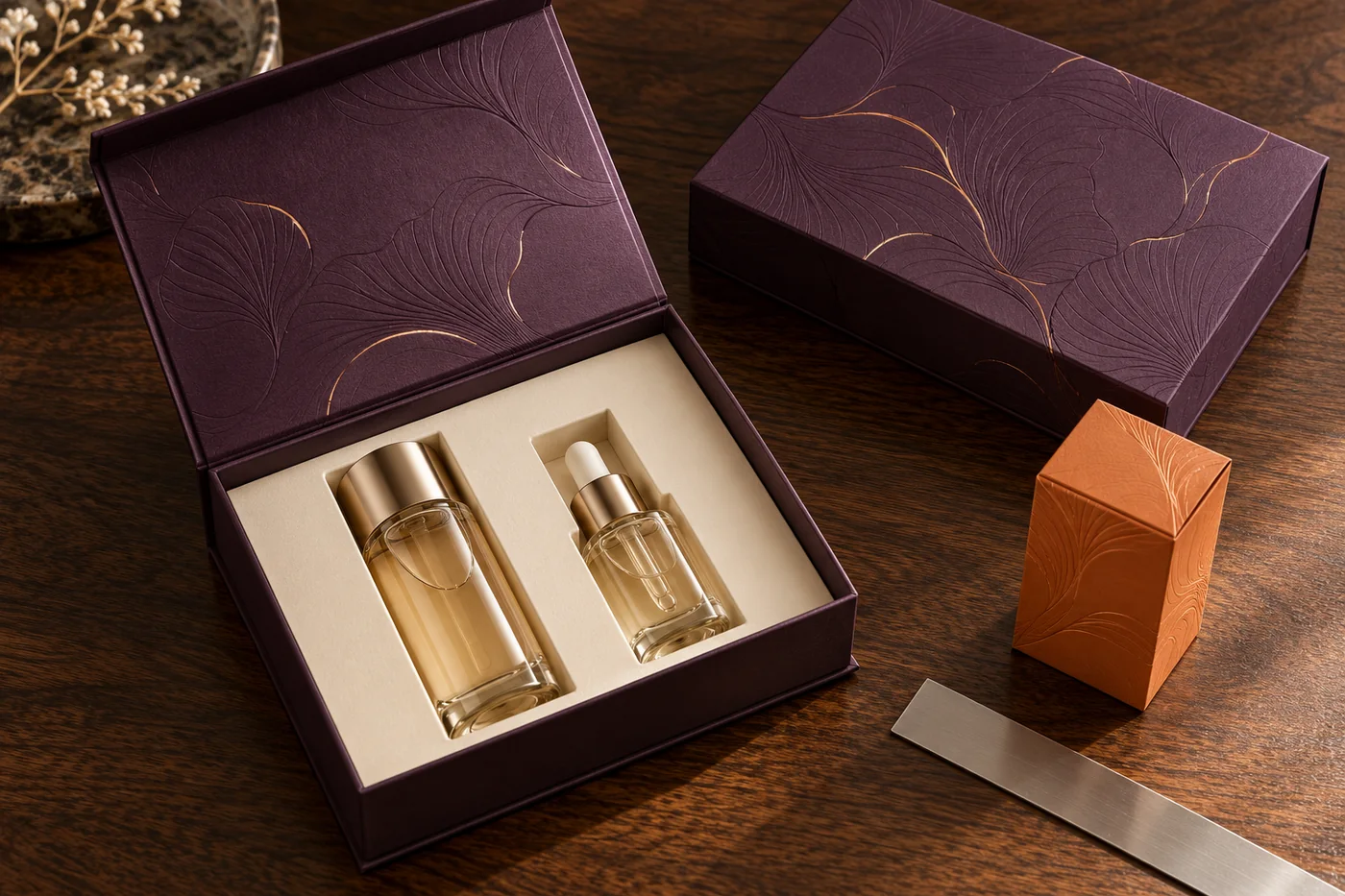
For a magnetic book-style gift box for cosmetics or accessories, confirm the cover’s opening direction and the loaded insert position. A box photographed open and flat should not automatically be specified for upright opening. Ask whether staff will remove the demonstration box to a clear counter before lifting its cover.
For seasonal chocolate gift cartons, assess the actual holiday fixture as well as the normal shelf. A temporary promotional stand may have different depth, ticket placement and customer approach. Seasonal artwork does not justify assuming that the regular arrangement will still work.
Approve the visible artwork in both intended positions
Mark the primary selling panel, variant identifier and opening direction on the dieline. View a printed mock-up from the aisle with the shelf rail fitted. Check that a flat pack still identifies itself from its exposed edge and that an upright pack does not show its main text sideways.
If two display orientations are genuinely required, decide which panels need readable identification in each position. Check required product information with the brand’s responsible reviewer; adding a decorative panel is not a labelling compliance assessment. Avoid filling every face with repeated claims simply because the pack can rotate.
Use a supporting tray when the fixture needs it
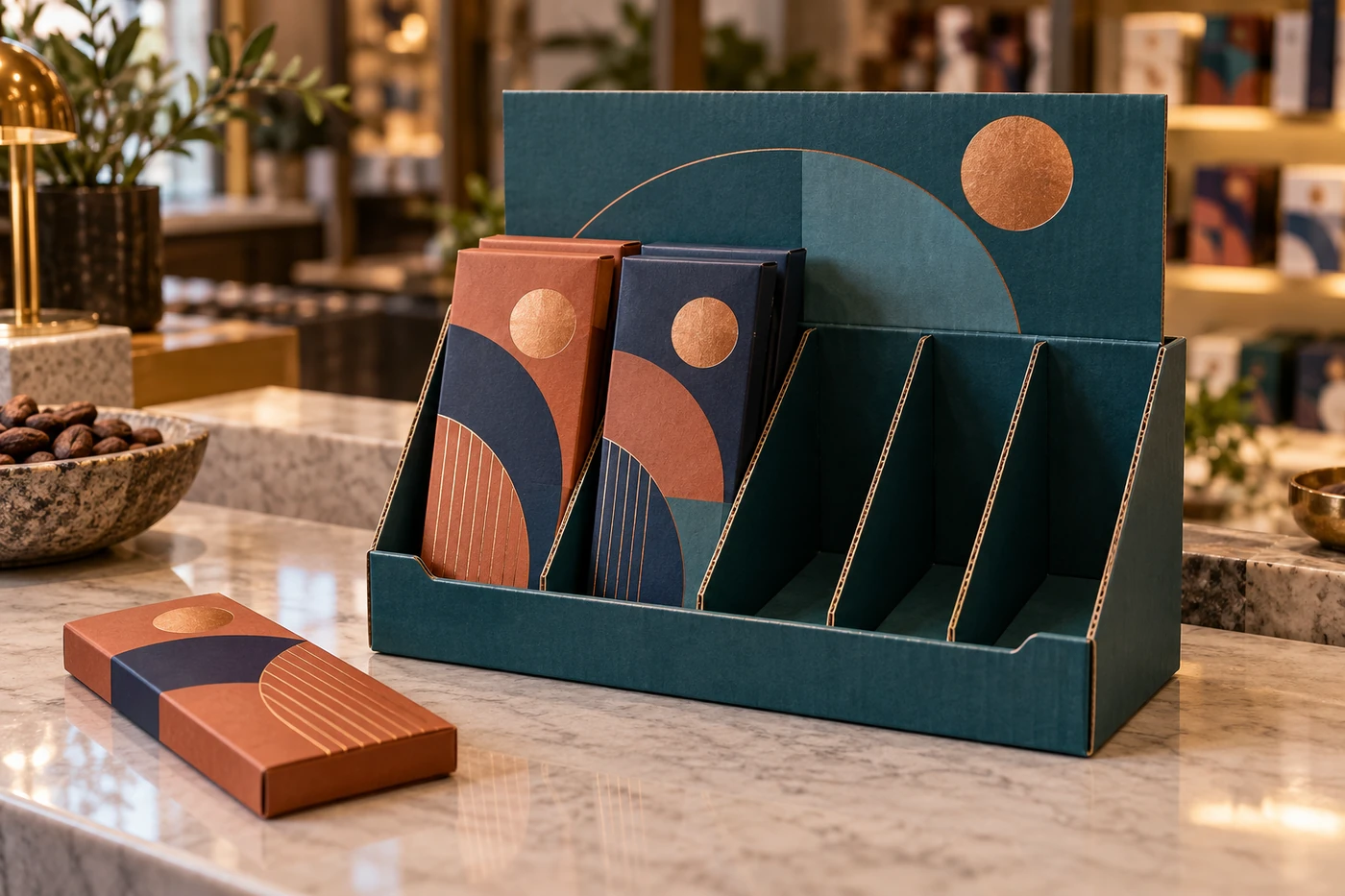
A shallow tray or separated channel may help organise slim cartons, but it changes the purchase from an individual pack to a pack-and-display system. Specify the tray’s external footprint, its front lip and its relationship to the shopper-facing panel.
Our custom cardboard counter displays for wrapped snack and chocolate packs are a relevant route to discuss when unsupported packs cannot deliver the required presentation. Assess the loaded tray on the actual fixture; being a counter display does not automatically establish suitability for every store shelf.
FEFCO’s shelf-ready packaging guidance includes shopper visibility and easy removal and replacement among its practical considerations for corrugated secondary packs. Apply those principles when evaluating a supporting tray. For the separate question of how many units it should hold, see our counter display capacity and replenishment guide.
Compare the cost of the complete arrangement
Request comparable quotes for the same product quantity, artwork and finish. List any changed insert, larger base, display tray, extra printed face or packing step separately. A lower individual carton price can be offset by a necessary support component or extra store handling.
Keep the comparison conditional. A flat pack is not automatically cheaper, and an upright pack does not prove higher sales. Ask which proposed change solves the observed fixture problem, then test that change before paying for extra material or tooling.
Release production with an orientation approval sheet
Attach a short orientation sheet to the final packaging specification so the factory, brand and retailer are reviewing the same arrangement. Include:
- The filled product, weight, insert version and approved product storage direction.
- Closed external dimensions and a photograph identifying the intended base and selling face.
- The confirmed fixture dimensions, shelf rail and required access space.
- Standalone or tray-supported status, including the tray drawing if applicable.
- Photographs at full stock and with only one pack left, plus removal and replacement observations.
- Demonstration-box opening position and any lid-clearance restriction.
- The approved artwork version, unresolved issues and the person authorised by the brand to release production.
If the store changes the fixture, review the affected assumptions before reordering. An orientation approval belongs to the packed product and display arrangement that were assessed; it is not an unrestricted promise for any shelf.
Frequently asked questions
Can the same carton work upright and flat?
Possibly. Check product orientation, loaded stability, readable panels and shopper access in both positions. Approve both explicitly; do not infer a second arrangement from an attractive photograph.
Will thicker board stop a slim box tipping?
Not necessarily. More stiffness may address deformation, while tipping may require a different base, load position or supporting tray. Identify the failure in a filled sample before changing the board specification.
Can we approve orientation from a digital rendering?
A rendering helps communicate the proposal. Use physical filled samples and confirmed fixture measurements for the purchase decision. Generated images do not prove load behaviour, fit or retailer acceptance.
Discuss the shelf arrangement directly with the factory
NEXA Packaging is an actual factory manufacturing custom paper boxes and custom paper tubes. Our factory-direct pricing reduces intermediary markup, while direct production communication helps align structure, cost and scheduling. The factory is directly responsible for production quality and following up packaging issues; agree the order’s requirements and acceptance terms before manufacture.
Our regular production lead time is 7–15 working days, excluding transportation, subject to quantity, structure, materials, finishing and the final confirmed production schedule. Send the filled-product details, shelf brief, quantities and proposed orientations through our custom packaging enquiry form to discuss a suitable sample and quotation.
Creation note: AI-assisted drafting and model editorial review. Illustrations are AI-generated packaging concepts, not photographs of tested samples, customer installations or factory production.