
Usually, a printed chocolate box should surround a separately specified inner wrapper or container; it should not be assumed to replace it. The inner pack must be suitable for the chocolate and intended conditions of use. The paperboard carton provides the agreed outer presentation and handling structure. If you want unwrapped chocolate to touch the box or insert, treat that as a different packaging specification requiring a separate suitability assessment.
For a chocolate brand buying custom packaging, the immediate task is to assign responsibilities to each layer before requesting prices. A beautiful carton, a metallic-looking wrapper and a supplier’s general “food-grade” description do not establish how the complete pack performs. This guide focuses on the purchasing brief for wrapped bars, retail cartons and gift presentations, rather than prescribing a universal film or shelf life.
Define what the chocolate touches before choosing the box
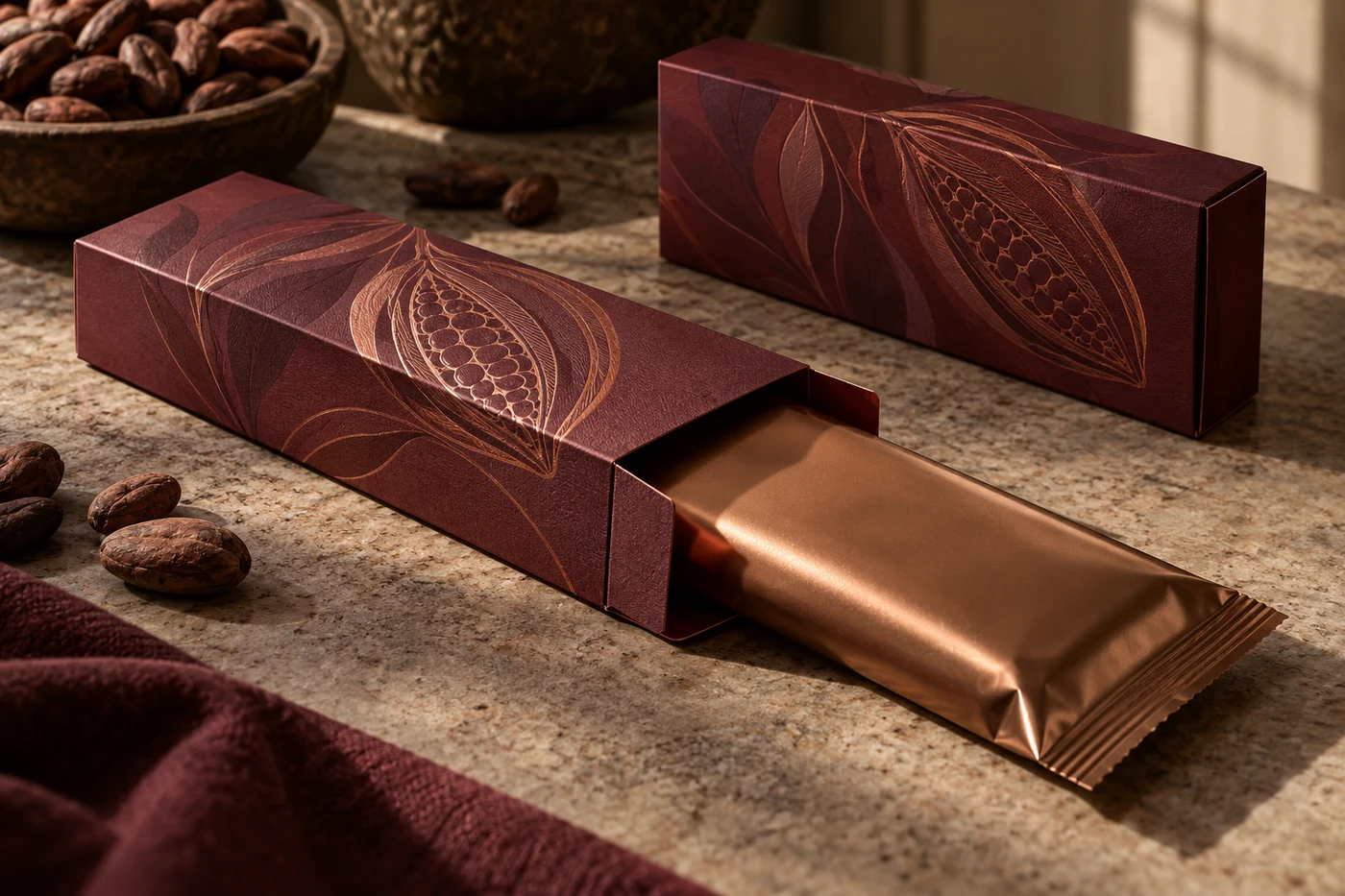
Start with a simple layer map: chocolate, direct-contact wrapper or container, printed carton, optional gift or display box, and transport packaging. Identify every component supplied by each party. The chocolatier may already buy sealed primary packs, while the paper packaging factory supplies only the printed outer boxes. Make that division explicit on both quotations.
With custom chocolate candy-bar cartons, send a representative bar in its finished wrapper. Ask the factory to develop the outer pack around that actual unit. A product page showing a chocolate application is a starting point for design discussion, not documentation that every available paper, ink, adhesive and finish is suitable for every food-contact arrangement.
Draw arrows showing what touches what during packing, storage and opening. Include the inner face of the carton, folded flaps, insert edges and any window material. If a decorative sheet sits between bars, record whether the chocolate can touch it. Calling a component an insert or liner does not settle its intended use.
Keep three packaging jobs separate in the quotation
| Layer | Purchasing question | Evidence to request |
|---|---|---|
| Inner wrapper or container | Is it suitable for this chocolate and its intended storage? | Exact material identification and applicable intended-use support |
| Printed retail carton | Does it fit the wrapped bar and support the sales presentation? | Construction drawing, packed sample and agreed material specification |
| Gift or display packaging | Does it hold the complete saleable units without changing their primary protection? | Full assortment sample, loading sequence and component list |
These roles can overlap in a validated design, but they should not disappear from the brief. An outer carton does not establish a barrier specification simply because it closes. Likewise, a shiny pouch does not establish a particular barrier level from its appearance. Ask the responsible supplier to identify the actual construction and its limitations.
For festive printed chocolate-bar packaging, keep holiday decoration on the agreed presentation layer. If the primary wrapper remains unchanged, say so. If the seasonal project introduces a new wrapper, do not carry forward the previous pack’s performance assumptions without review.
Ask for intended-use evidence, not a generic certificate
The FDA’s explanation of food-contact substances describes assessment in relation to intended use and migration. For procurement, the useful question is whether the supplied material and proposed use match the supporting information. A document for a different construction or use does not answer that question.
The European Commission’s food-contact materials overview also explains safety principles addressing transfer of constituents and unacceptable changes to food composition, taste or odour. Have the brand’s responsible food-packaging specialist determine the applicable requirements for the destination and complete pack. An outer-box supplier’s general marketing language should not replace that review.
Record the chocolate type, expected storage duration and conditions, destination market, inner-pack construction and any foreseeable direct contact with other components. Ask which supporting documents relate to which component. Keep the document reference and material revision together so a later substitution can be reviewed against the original brief.
This is a way to organize supplier questions, not a determination that a particular pack complies. Do not print certification marks or broad safety claims on the carton simply because a quotation uses the term “food-grade.” Confirm the precise statement and its basis before artwork approval.

Measure the sealed wrapper, including its awkward edges
A bare chocolate bar is an incomplete sizing reference. The finished wrapper can add thickness at seams, extra length at end seals and variation where folds accumulate. Measure several representative packed units in their normal condition, and record which dimensions include the seals. State whether flexible ends will remain extended or fold into a defined position.
Consider an illustrative bar whose sealed pouch has a longer footprint than the chocolate itself. A carton sized from the moulded bar could push against the pouch ends when its flaps close. The correction is not automatically a larger box in every direction: first decide the approved seal orientation, then develop and sample the internal envelope around it. This is a hypothetical fit problem, not a measured customer case.
During sampling, load the wrapped bar as a packer would. Check insertion, flap closure and removal. Look for pouch edges caught under tuck flaps, sharp insert corners bearing on a seal, and excessive compression when the carton is closed. Agree on the necessary clearance through physical sampling rather than applying an unsupported universal millimetre allowance.
Keep gift presentation from changing the primary pack
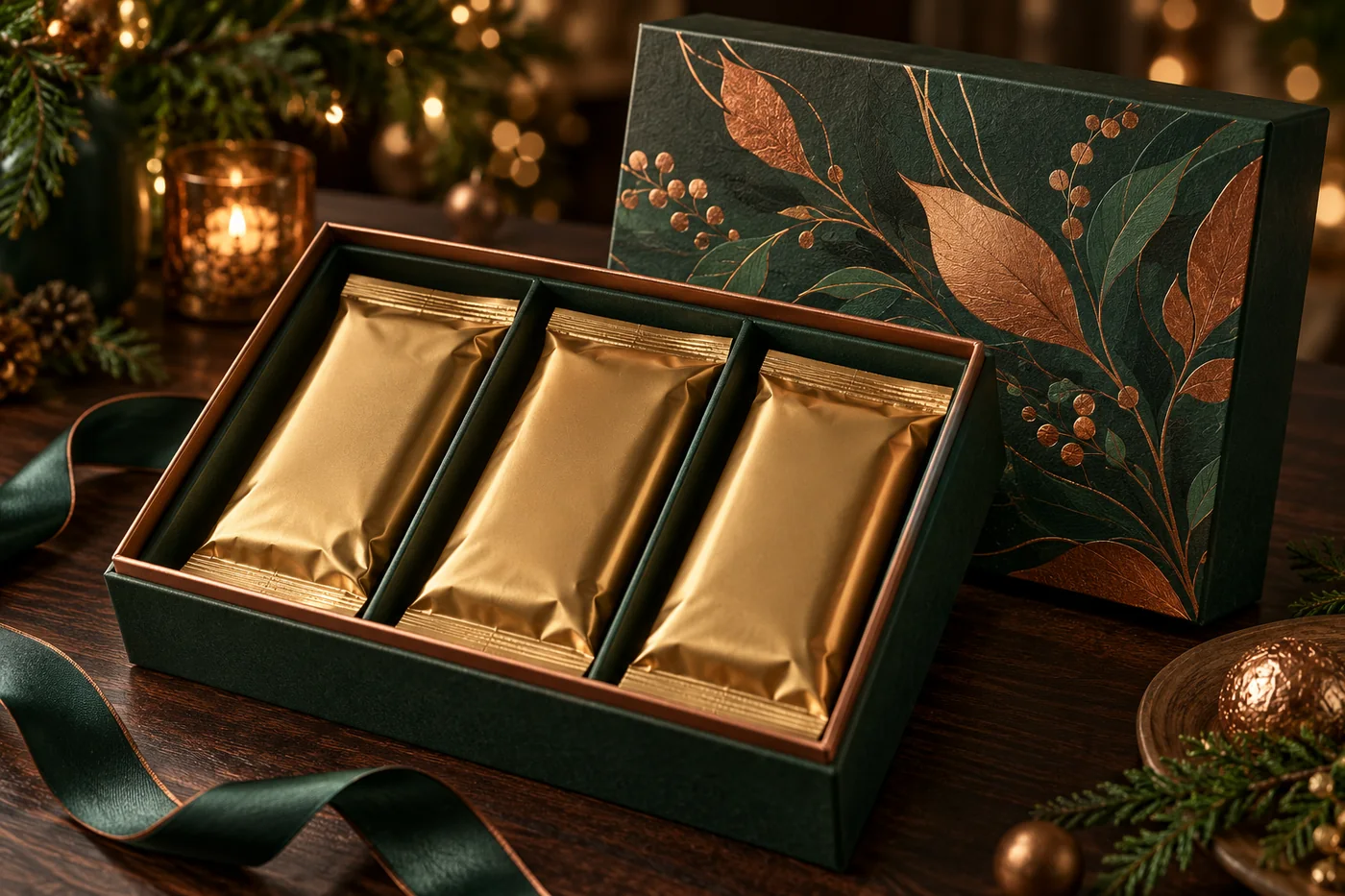
A gift buyer may want a tightly arranged assortment, but the tray must accommodate the wrapped units actually supplied. With magnetic book-style gift boxes for chocolate assortments, develop cavities around the retained wrappers or individual cartons. Removing wrappers to make the arrangement look cleaner changes the project and requires review before the insert is approved.
For a dedicated Christmas chocolate-bar gift carton, specify whether it holds one wrapped bar or forms part of a larger assortment. That decision determines the sample contents and quotation scope. Do not assume the photographed contents, stated bar weight or visual proportions establish your custom dimensions.
A paper divider may separate products without being suitable for direct chocolate contact. Conversely, an individually wrapped bar still needs a layout that avoids damaging its wrapper. Evaluate the full pack in the intended arrangement, including the first bar being removed. Keep presentation approval distinct from any food-contact or shelf-life assessment.
Define the unit that reaches the retail counter
For cardboard counter displays for chocolate and snack bars, tell the factory whether each slot holds a sealed pouch, a pouch inside a carton, or a multipack. Those are different loaded units. The display should be developed around the confirmed unit and intended replenishment method.
If a retailer will remove the individual cartons before display, review the remaining wrapper as the saleable pack with the appropriate brand and channel owners. Do not assume information, identification or handling requirements remain satisfied after a layer is removed. The packaging order should describe the actual retail configuration, not only how products leave your own packing area.
Compare complete supply scope before cutting a layer
Separate the costs of the inner pack, printed carton, inserts, gift box, packing labour and transport case. Show any development or tooling charges separately. Otherwise, a cheaper outer-box quotation may simply exclude the wrapper or require your team to do more assembly. Ask each supplier to state exactly what arrives and what remains to be supplied.
Removing a layer is a reasonable option only after its function is identified. A carton might be simplified if an existing primary pack already meets the product’s needs, but that does not prove the carton has no structural or retail role. Compare the revised packed sample, not just the material count. Do not claim a cost saving until equivalent scope and quantities have been quoted.
Also keep project milestones distinct: wrapper approval, outer-box sampling, artwork release, bulk production and shipping. An approved empty carton does not mean the complete food pack has been approved. Assign an owner to each decision so neither supplier waits for an assumption that the other party has already checked.
Use a packed-sample checklist before releasing production
- Layer map: identify the food-contact component, outer presentation components and supplier for each.
- Material identity: record the exact wrapper and carton specifications, revisions and supporting document references.
- Fit: check actual wrapped dimensions, seal orientation, insertion, closure and removal.
- Interfaces: inspect flap and insert contact points for catching, pinching or abrasion.
- Sales configuration: confirm which layers remain for singles, gift sets and counter display.
- Validation scope: distinguish appearance and fit checks from the specialist assessment of intended use, barrier needs and shelf life.
- Change control: require review before replacing the wrapper, changing finishes or altering direct-contact surfaces.
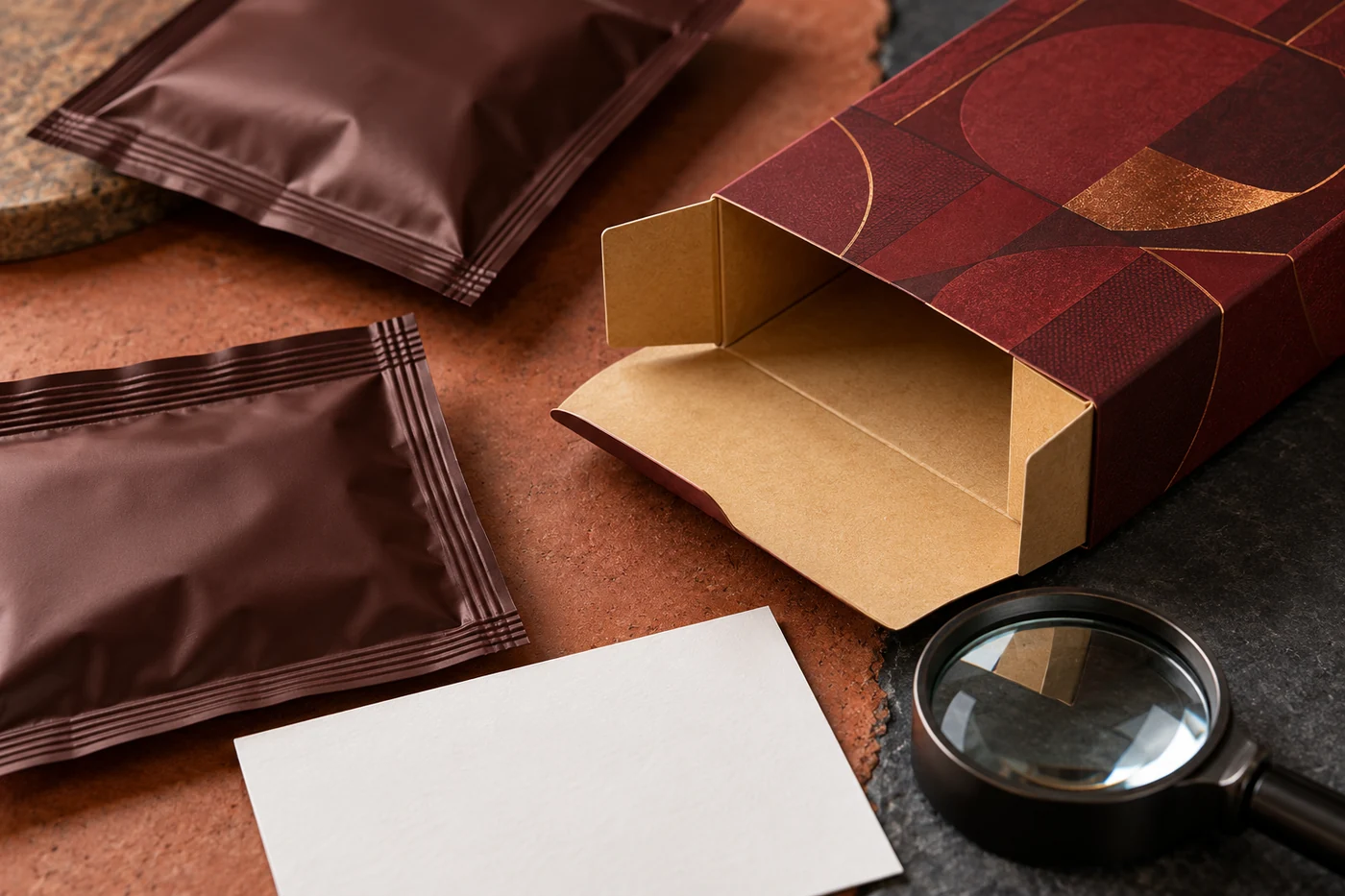
Record what the approved sample actually contains. If the sample used a provisional pouch, mark that limitation and repeat the affected checks with the final one. A photograph is useful for orientation, but retain the agreed specifications and representative physical components as well.
Frequently asked questions
Can a paperboard chocolate box replace a sealed inner wrapper?
Only if the proposed complete construction has been assessed for that role. Do not infer suitability, barrier performance or shelf life from the fact that the carton encloses the bar. Request a separate specification whenever the direct-contact arrangement changes.
Does adding foil decoration make the box a barrier pack?
No barrier performance is established by decorative foil on a carton. Identify the component intended to provide protection and ask for relevant evidence for the proposed use. A metallic appearance is not a material specification.
Should we send bare chocolate or a wrapped sample to the box factory?
For an outer carton around a wrapped bar, send the final wrapped unit or representative samples with confirmed measurements. Explain any provisional materials. The box factory needs the unit it will actually accommodate, including seams and seals.
What should we include in a factory-direct quotation request?
Send the layer map, wrapped dimensions, quantities per artwork, sales configuration, destination and requested finishes. Identify who supplies the primary pack and which approvals remain outstanding. Request separate pricing for optional presentation layers.
Discuss the complete packaging brief with NEXA Packaging
NEXA Packaging is a manufacturing factory producing custom paper boxes and custom paper tubes. Factory-direct pricing reduces intermediary layers and markups, while direct production communication helps clarify specifications, scheduling and responsibility for packaging quality. NEXA directly follows up on the quality of the packaging it manufactures; project-specific requirements and acceptance terms should be agreed in the order.
Our standard production lead time is 7–15 working days, excluding shipping, subject to quantity, structure, materials, finishes and the final confirmed production schedule. Share the finished wrapped product and packaging brief to discuss a factory quotation. State clearly whether you need outer paper packaging only or a wider supply scope; food-contact suitability and primary-pack responsibilities must be confirmed for the actual project.
Creation note: Prepared with AI assistance and model self-review using the linked official sources and current product descriptions. Images are AI-generated packaging concepts, not production samples, certification evidence or test results. Confirm project-specific feasibility and intended-use requirements before ordering.