
Repeat orders of the same custom box can look different because the artwork file is only one part of the color system. Paper shade, ink route, press condition, coating or film, viewing light, and even the reference used for approval may change between runs. The practical solution is to treat a reorder as a controlled reproduction: identify one production-intent master, lock the variables that matter, agree how color will be judged, and require written approval before any substitution.
This is a different problem from a first order that does not match a screen preview. In a repeat order, the buyer already has a physical result worth reproducing. The job is to define exactly what from that result must remain stable and which changes are acceptable.

Start with the right reference hierarchy
“Same as last time” is not a measurable instruction. The supplier may have the previous artwork but no retained production sample, or the buyer may compare a new box with one that has faded, yellowed, rubbed, or absorbed odor in storage. Build a reference hierarchy before requesting the quotation:
- Approved physical production sample: identify the run, date, SKU, and approved face. Store it flat or assembled as appropriate, protected from light, moisture, dirt, and abrasion.
- Approved color data: record whether the critical color is a named spot ink, a process build, or a measured target. A color name without the relevant print condition is incomplete.
- Final production artwork: retain the output file, not only an editable design document. Include separations, overprint decisions, and the version that actually printed.
- Material and finish specification: record the paper grade, shade, surface, supplier or approved equivalent, laminate or coating, and decorated stack.
- Written acceptance rule: state the viewing and measurement method, sampling plan, and what happens when the new run is outside the agreed range.
A retained sample remains useful, but it is not permanent truth. Its paper and ink can age, so note its storage history and keep current measurement data when color is commercially critical.
Why a reorder drifts even when the file is unchanged
1. The paper is part of the color
Process inks are not opaque paint. The shade and surface of the paper influence the light returned through the ink film. A cooler white coated board, a warmer replacement stock, and kraft paper will not produce the same appearance from one CMYK recipe. That is why the print reference and substrate belong in the same approval decision.
This matters for custom chocolate bar cartons, where seasonal reorders may use large areas of one brand color. If the board changes, approve the color on the proposed board rather than accepting a white-paper proof as a substitute.
2. Spot color and process color are different instructions
A spot ink is mixed as a separate color; a process build creates an appearance from screened CMYK inks. Converting between them can change hue, smoothness, registration risk, and cost. Even a well-managed CMYK reproduction may not equal every spot color. For a compact printed flip-top cigarette carton with a critical solid panel, ask whether the previous run used a separate spot ink or a process build and keep that route explicit in the purchase specification.
Do not ask a supplier to “make it Pantone” after approving a CMYK sample. Decide which system is being purchased, then compare like with like.
3. The characterized printing condition may change
Press, ink set, plate or screening approach, and process control all affect reproduction. ISO 12647-1 describes primary process-control parameters used to specify the visual and technical characteristics of production prints and simulations. Fogra’s ProcessStandard Offset overview likewise treats standardized materials, testing equipment, data preparation, plate production, and printing as a connected workflow.
Buyers do not need to prescribe every press setting. They do need to know whether the supplier proposes a materially different printing route and whether a new proof or press approval is required.
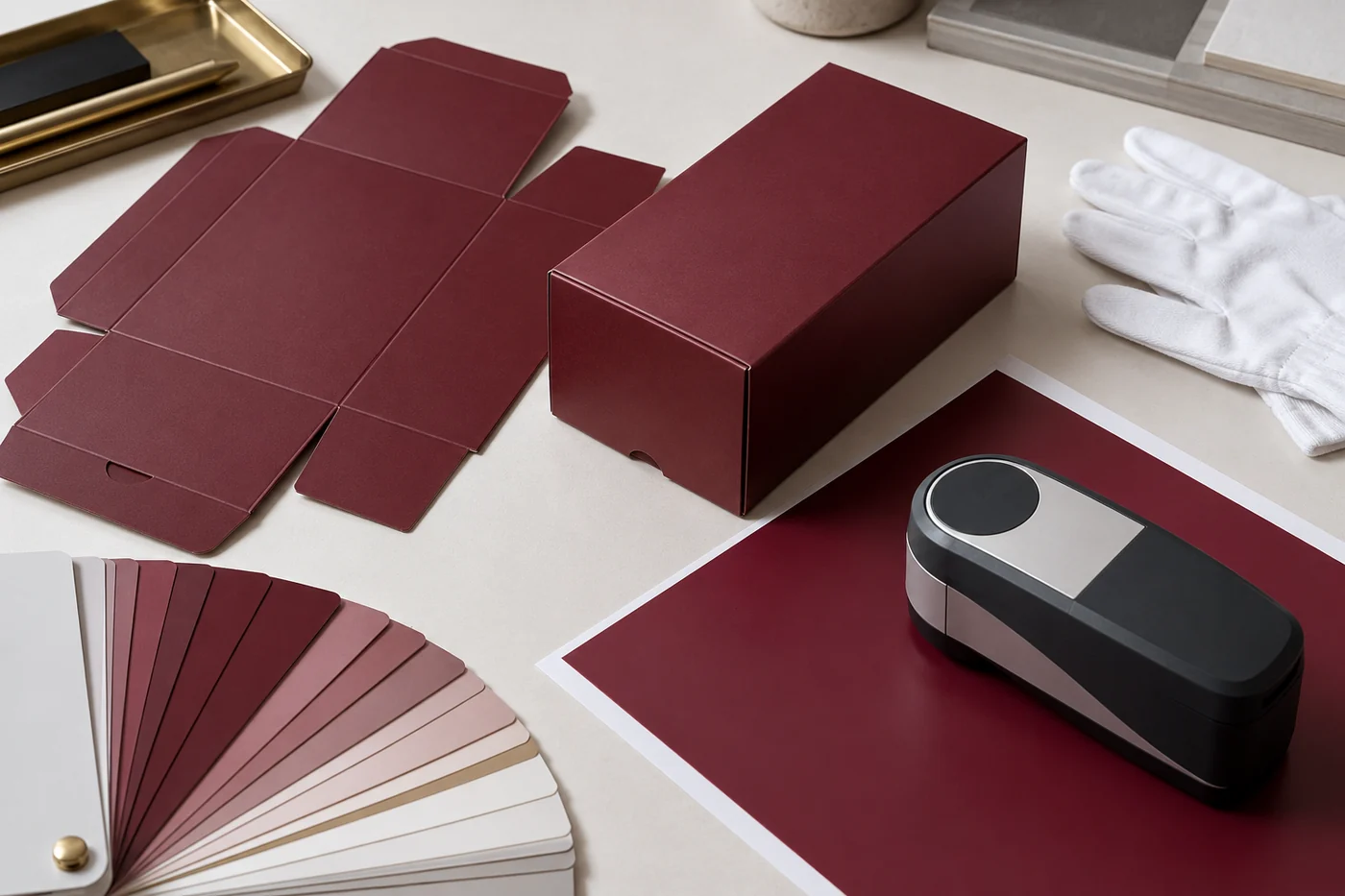
4. Lamination and coating change the observed surface
Gloss film can deepen apparent contrast; matte and soft-touch surfaces scatter light differently; varnish and spot UV create local gloss changes. A color approved before finishing is not automatically approved after finishing. For book-style rigid gift boxes with magnetic closure, compare the finished wrap on the completed cover, especially across broad panels, hinge areas, foil, and spot decoration.
Require a fresh sample if the laminate supplier, film type, coating, adhesive, or finishing sequence changes. The same rule applies when moving decoration from printed paperboard to a wrapped rigid structure.
5. Different structures create different viewing conditions
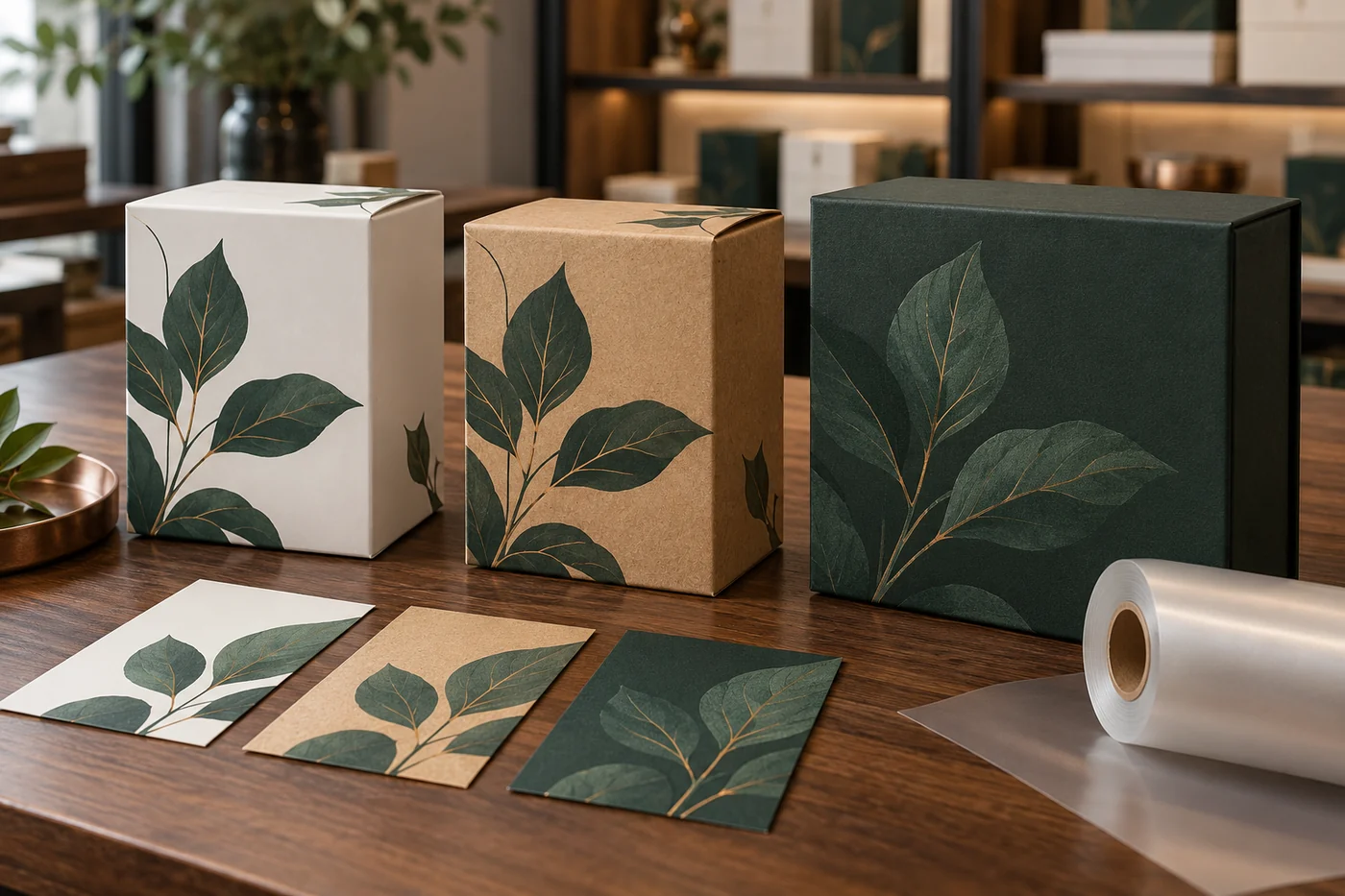
A flat drawdown, folded carton, cylindrical tube, and wrapped rigid box present color at different angles and on different surfaces. A coordinated range of luxury paper boxes and tubes may share artwork, yet the tube seam, curved surface, rigid wrap, and folding carton cannot be judged as one identical object. Set the target for each production construction rather than assuming one proof qualifies every format.
6. The comparison itself may be inconsistent
Two samples can appear to match under one lamp and separate under another. Phone photographs, monitor previews, mixed daylight and office lighting, and different viewing angles add uncontrolled variables. If instrumental measurements are part of acceptance, the buyer and supplier should agree the device geometry, measurement condition, backing, illuminant or viewing condition, target, and tolerance before production.
There is no universal Delta E number that is automatically correct for every box, color, substrate, finish, instrument, and commercial risk. A tight numerical limit copied from another job can reject acceptable work or disguise an unsuitable method. Define the method and tolerance together.
Build a reorder brief that a supplier can execute
| Reorder field | Decision to record | Evidence to request |
|---|---|---|
| Identity | SKU, dieline revision, artwork version, previous PO and approved run | Marked file list and photos of retained master |
| Color route | Spot ink, CMYK build, or another defined process | Separation summary and physical color reference |
| Substrate | Grade, shade, surface and acceptable substitution rule | Material sample or printed proof on proposed stock |
| Finish | Film or coating type, gloss level, foil and raised decoration | Finished sample using the intended stack |
| Evaluation | Viewing light, instrument conditions, target, tolerance and priority panels | Signed sample and measurement report if contracted |
| Sampling | How many units, when selected, and from which lots | Pre-shipment record linked to lot or batch |
| Change control | Which material, process or supplier changes need written approval | Deviation request before production release |
For custom vape packaging boxes offered in multiple structures and finishes, keep one master specification per SKU. A “family” reference is not enough when one variant is a laminated tuck carton and another is a wrapped drawer box.
Choose the level of control by commercial risk
Not every reorder needs a press-side approval. Use the least expensive control that still protects the product:
- Low color risk: text-led artwork, small color accents, unchanged board and finish. A supplier proof plus retained production sample may be sufficient.
- Moderate risk: large brand-color areas, several SKUs displayed together, or a proposed material substitution. Request a production-intent printed and finished sample and document the comparison.
- High risk: color must align across formats, factories, or replenishment lots; the design uses a difficult spot color; or rejection would interrupt a launch. Agree measurement conditions, production sampling, escalation limits, and a press approval or equivalent controlled verification.
Higher control adds sampling, setup, freight, and decision time. Budget for it at quotation rather than discovering it after the run. Conversely, do not buy expensive measurement reports that the contract never defines how to use.
Approve the first sheet and inspect the delivered lot
A perfect approval sample does not prove the entire run is uniform. Ask how production samples are distributed across the run and how mixed lots are identified. At receipt, let samples reach a reasonable common condition, then compare units from different cases under the agreed light. Check priority faces, folds, seams, and decorated areas. Record the lot, case, time, and observation before separating suspect goods.
If the new boxes do not match, preserve evidence before requesting a remake:
- Quarantine representative sealed cases rather than selecting only the worst units.
- Photograph the new and retained samples together under the agreed lighting, including case and lot identifiers.
- Confirm that the comparison uses the same SKU, substrate, finish, and approved reference.
- Ask for production and measurement records relevant to the contracted acceptance rule.
- Classify the issue: reference ambiguity, approved substitution, process drift, finishing change, or inconsistent inspection.
- Agree containment for usable stock and a corrected reference before the next production run.
Questions to ask before releasing a repeat order
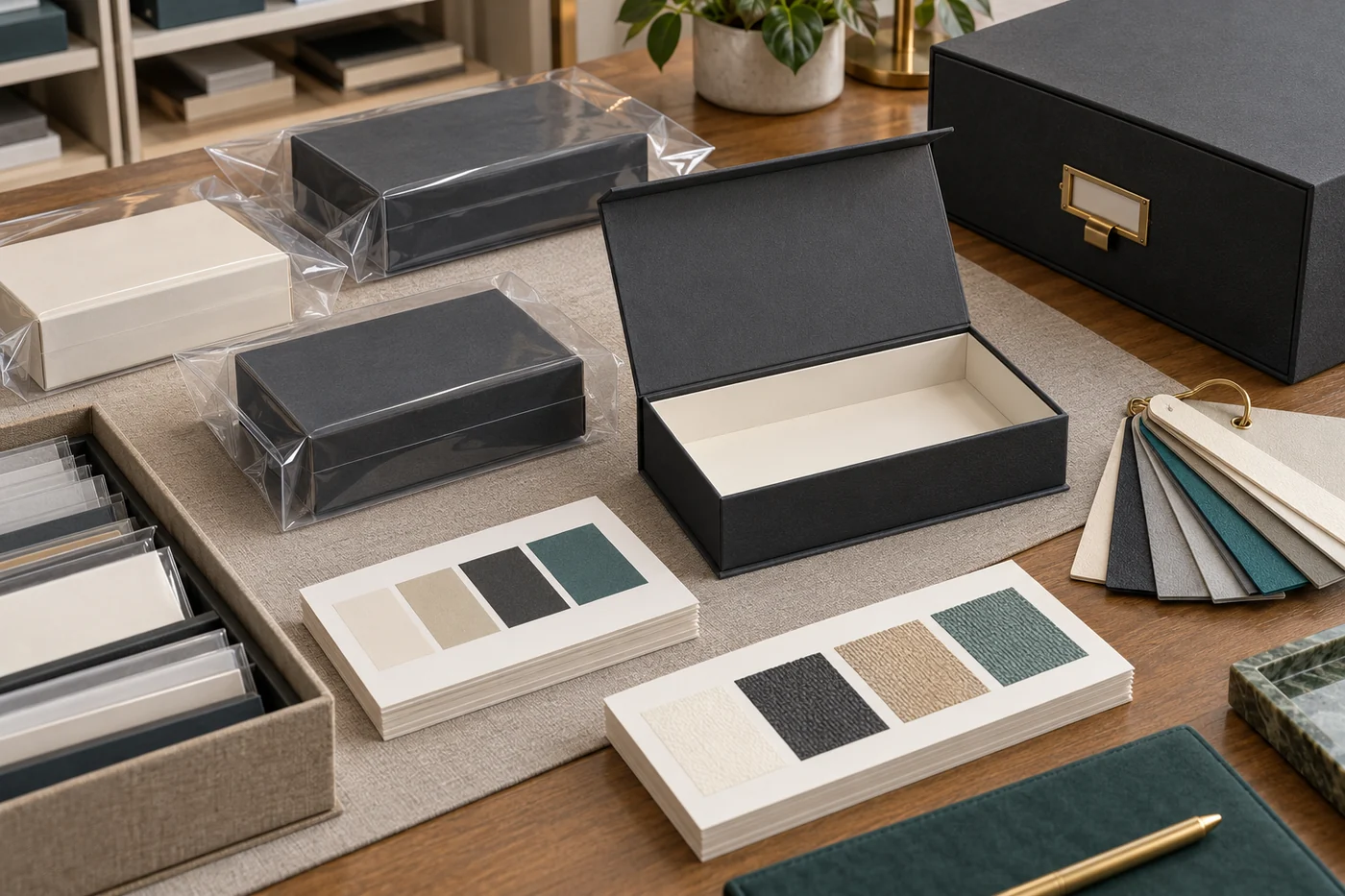
- Do both parties hold the same approved physical sample and final production file?
- Has the paper grade, shade, mill source, ink route, laminate, coating, foil, or printing process changed?
- Which panels and colors are commercially critical?
- Will the proof use production-intent material and finishing?
- How will a color difference be evaluated, and who has authority to approve a deviation?
- How are samples selected across the production run and linked to delivered cases?
FAQ
Can a printer guarantee that every reorder will be visually identical?
Exact identity is not a practical acceptance statement for physical printing. Materials, processes, instruments, and perception all vary. A useful agreement defines controlled inputs, a reference, an evaluation method, and an acceptable range for the specific job.
Is a digital proof enough for repeat-order color approval?
It can approve content and provide a useful simulation, but it does not automatically represent the production substrate, ink, laminate, or structure. Use a physical production-intent sample when those variables are responsible for the decision.
Should every important brand color be printed as a spot color?
No. Spot color can improve control for some designs, but it adds a separate ink and may increase setup cost. Process color can be appropriate when its achievable appearance is accepted. Choose the route based on the target, artwork, run plan, and cost—not a blanket rule.
What should be sent with a reorder inquiry?
Send the final dieline and artwork, previous PO or run reference, photos of the retained master, required quantity and delivery plan, the material and finish specification, and a list of any known changes. If color is critical, state the reference and evaluation conditions at the quotation stage.
Make the next reorder easier to reproduce
Reliable repeat color comes from change control, not from repeatedly adjusting an unchanged artwork file. Define the physical master, freeze production-relevant variables, and decide how the new lot will be assessed before approving a substitute. To review a specific box, send PaperBoxPro the dieline, previous sample details, material and finish specification, quantity, and target delivery point through the packaging inquiry page. Ask for a proposal that separates confirmed matches from changes that require a new sample.
Creation note: this article used AI-assisted research and drafting followed by a separate model self-review against the cited technical sources and PaperBoxPro’s current product pages. The images are AI-generated packaging concepts; they do not document a customer order, certified test, or production site.