
Packaging variants get mixed up when the purchase order, approved artwork, physical components and shipping labels use different ways to identify the same item. Preventing that mistake requires one controlled variant list, an explicit release for each artwork revision, and a packing plan that keeps the approved combinations together. A correct total quantity cannot compensate for the wrong mix of designs.
This guide is for buyers ordering several printed packaging versions at once: different flavors, languages, seasonal designs or gift-set combinations. It focuses on order identity and handover. Print color approval, structural testing and barcode print quality remain separate checks.
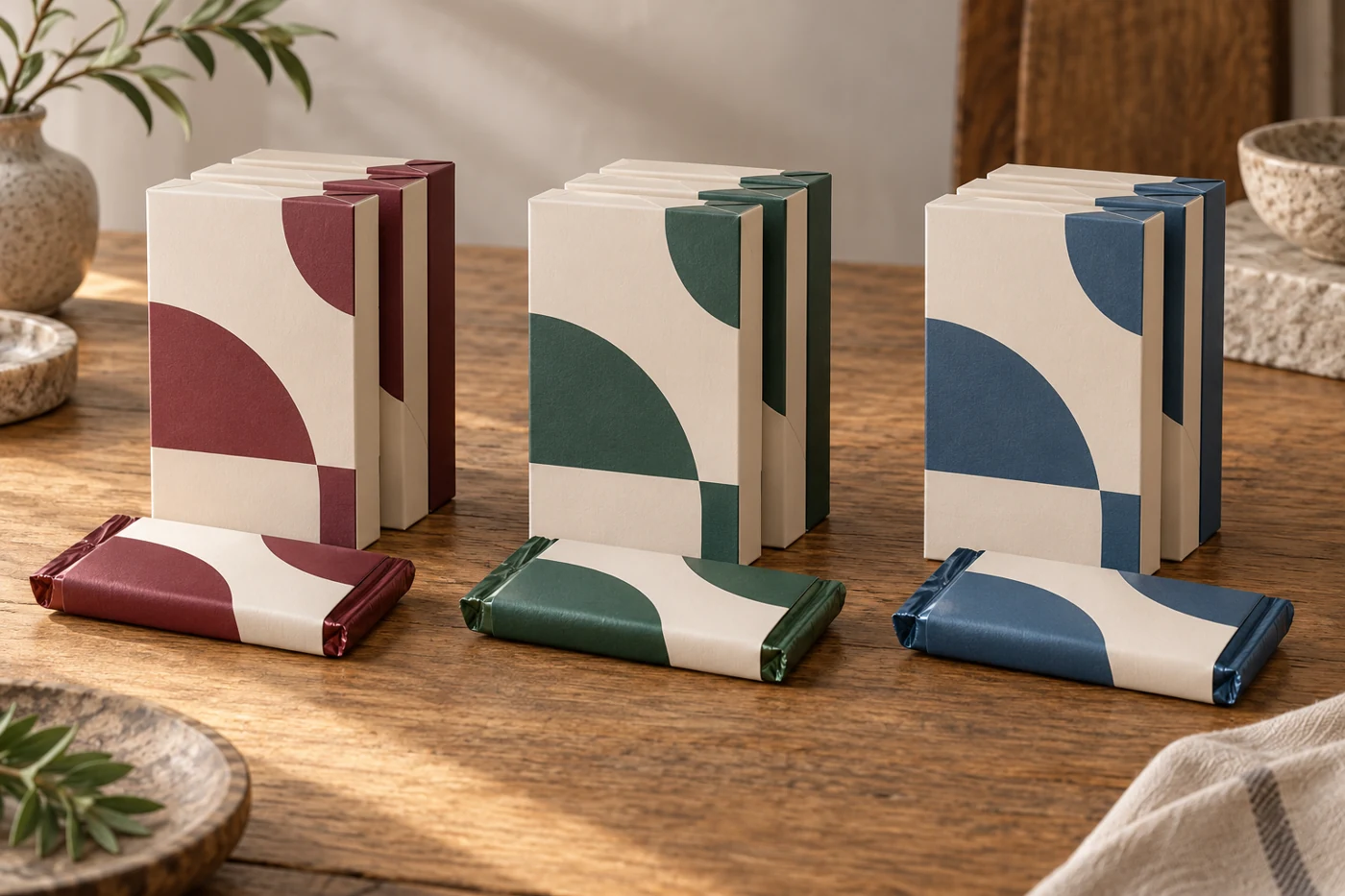
Where does a packaging mix-up actually begin?
A typical weak instruction is “print the three attached designs, same quantities as before.” The supplier may have an older attachment, the buyer may have revised one ingredient panel, and the packing team may distinguish the cartons only by background color. Everyone can follow their own instruction and still produce an incorrect shipment.
Locate the first point where the identity became ambiguous. Was the wrong file printed, the correct carton paired with an incorrect insert, or the right finished boxes put under the wrong outer-case label? These are different failures. Request photographs of the packaging, case labels and approved file references before assuming the printer used the wrong artwork.
For custom chocolate bar cartons, make flavor or edition a separate order field even when every carton has the same dimensions. Shape alone cannot distinguish closely related designs. Treat the product names in a buyer’s example as placeholders until the brand has supplied its final approved content.
Build one variant register before requesting a quotation
A variant register is a table linking each ordered packaging item to its approved specification. A stock keeping unit, or SKU, is the buyer’s internal item identifier. It should not be confused with the filename, the supplier’s production job number or a retail identifier such as a GTIN. Record their relationship rather than expecting the numbers to be interchangeable.
Use one row per separately ordered packaging configuration. If a gift box has a sleeve and insert, list their component references in that row. If those components are also purchased independently, give them their own order lines and identify which combinations are permitted.
| Field | What the buyer should specify | What it prevents |
|---|---|---|
| Packaging item ID | A stable internal reference for the exact variant | Identification by color or informal nickname alone |
| Artwork release | Exact PDF filename, revision and approval date | Use of an older attachment |
| Construction | Dieline revision, material and finish references | Correct graphics on the wrong structure |
| Component combination | Permitted box, sleeve, insert and leaflet references | Assembly of incompatible editions |
| Quantity and packing | Units per variant, per case and delivery split | A correct grand total with an incorrect mix |
| Release owner | Named buyer contact authorized to approve changes | Conflicting instructions from different teams |
For example, a hypothetical order might contain 600 ivory cartons and 400 green cartons. The register should state both quantities; “1,000 assorted” leaves the ratio undefined. These numbers illustrate an order-control method, not a suggested minimum order quantity or a production capability claim.
Separate seasonal artwork from the underlying product
A seasonal redesign can share a size with an everyday carton while requiring different handling. Specify whether old and new packaging may coexist, which delivery receives each edition, and when the seasonal version should stop being supplied. Do not leave the changeover to a shipping date alone when multiple deliveries overlap.
When ordering holiday chocolate bar packaging, record the campaign edition independently from the flavor. Otherwise, a repeat order for one flavor may accidentally inherit the previous holiday artwork. A useful order line identifies the product variant, campaign, market and packaging revision together.
Keep the packaging revision and product identification decision separate. A new PDF revision does not automatically mean a new GTIN, and a visually similar pack does not prove that the existing identifier remains appropriate. The brand should check the applicable GS1 GTIN Management Standard when product or packaging attributes change. This article does not determine identifiers for a particular product.
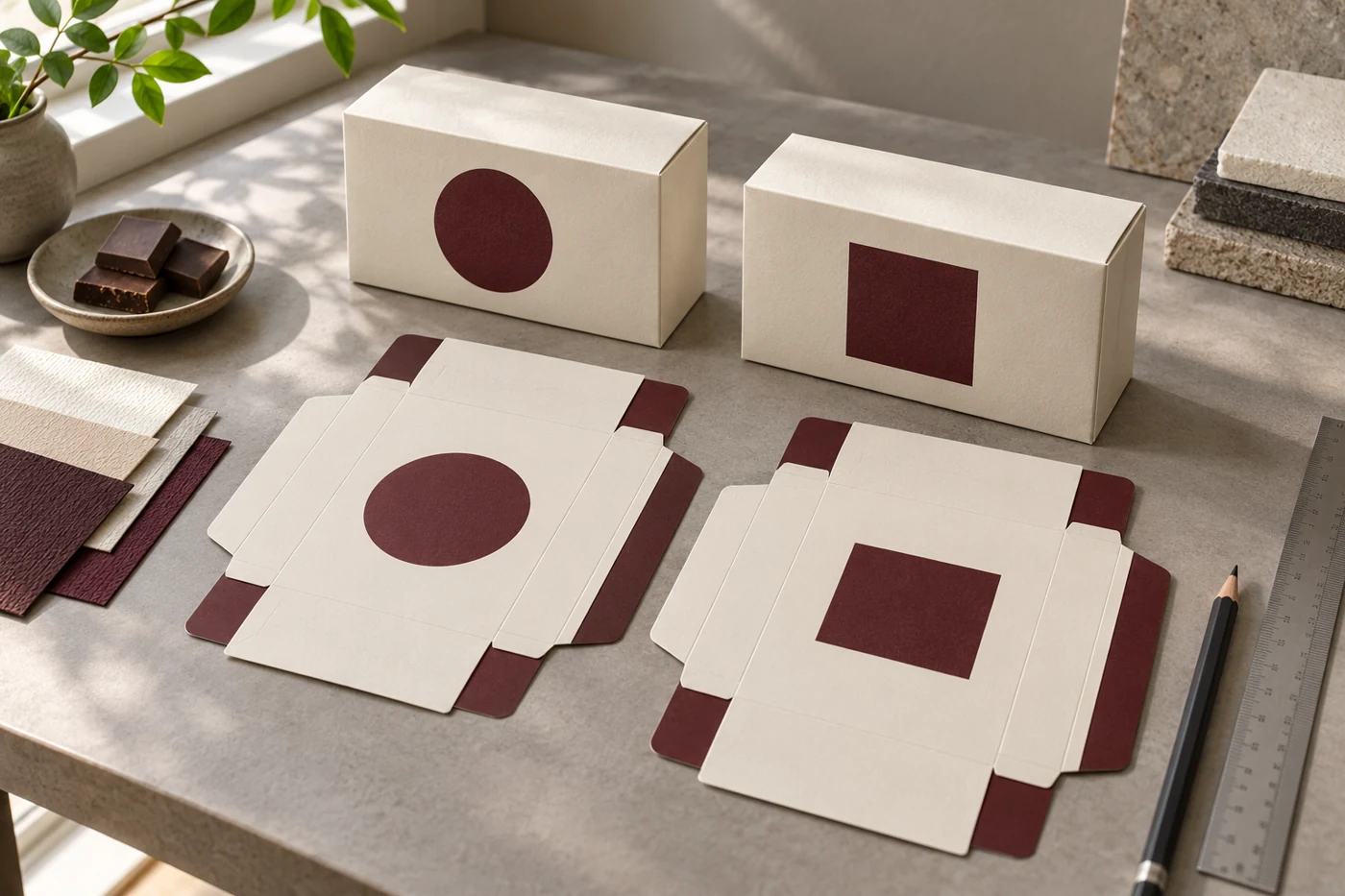
Approve the exact production file, then close the revision loop
Give each released file a clear name, such as CHOC-A_EN_R03.pdf, and identify it in the approval message. Avoid “final-new-final” filenames. Keep obsolete versions in an archive that is clearly outside the production handover folder. A folder containing several plausible finals invites a selection error.
After a correction, ask for the revised production PDF and compare it with the last approved version. Check the intended edit and unexpected changes elsewhere: a moved panel, substituted picture, altered quantity statement or missing finishing layer. Approving a screenshot of one corrected sentence does not approve the rest of the revised file.
Adobe’s PDF comparison guidance explains how Acrobat reports differences between versions. Its comparison settings matter: a text-only comparison excludes graphic differences, and some report categories are not shown by default. Use the report as a review aid, then check the production file and physical sample where appearance or construction is involved.
Agree on a change cutoff. If a revision arrives after production release, require a written decision on affected work: continue, hold, segregate or replace. Ask the supplier to state which quantity and job reference the change covers. An email acknowledging receipt is not the same as confirmation that the old version has been withdrawn from production.
Control component combinations in premium gift packaging
Gift packaging adds another layer of identity. The outer box may be common to several sets while the insert, sleeve or leaflet changes. Specify the complete combination, including which parts are genuinely shared. Similar appearance is not evidence of interchangeability.
For book-style gift boxes with custom printing, the buyer might approve one outer design but separate inserts for different assortments. Ask for an assembled reference for each allowed combination. Photograph it with its component references in the inspection record; the references need not appear as visible branding on the retail box.
A coordinated range of custom paper boxes and tubes needs distinct component records for each format. Shared artwork colors do not make a tube cap, tube body or gift-box insert a common component. Confirm the actual fit through sampling and keep the approved matching combinations traceable.

Choose a packing plan that makes mistakes visible
Separate cases or intentionally mixed cases?
Single-variant cases simplify identification and stock allocation, but small quantities may create partially filled cases and extra handling. Mixed cases can suit a pre-agreed assortment, provided their contents and internal separation are defined. Ask for both options when this tradeoff affects your receiving operation.
If mixed cases are necessary, specify each variant’s quantity, its position or separated bundle, and the information on the case label. Do not let the packing team invent the assortment from whichever boxes remain. The packing list should reconcile the variant totals across all cases, including partial cases.
Make the changeover explicit
Ask the supplier how it removes the previous variant’s loose packaging, labels and reference sample before starting the next. Request confirmation of the next item and first packed case against the register. This is a proposed buyer control, not a claim that every supplier uses a particular automated inspection system.
For printed seasonal chocolate gift boxes, include the delivery edition on the agreed outer-case identification. When several festive designs share a color palette, the label should identify the ordered variant explicitly; “Christmas boxes” is too broad for receiving.
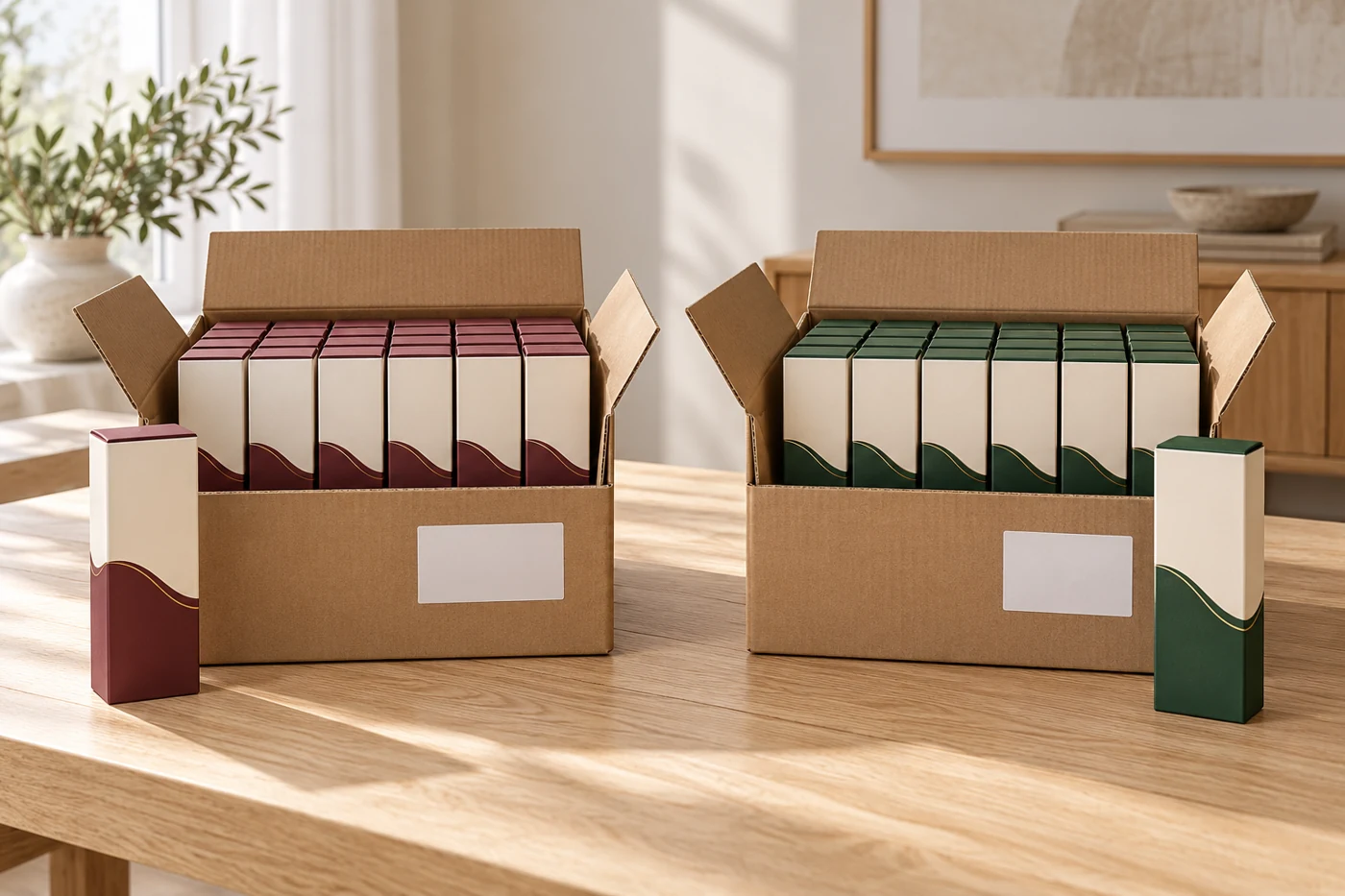
What evidence should you request before shipment?
Ask for an evidence set organized by variant rather than a few attractive photographs of the overall order. A photograph of one perfect box cannot demonstrate that the order mix is correct. The scope and sampling method should be agreed with the supplier based on the order’s risk and your receiving requirements.
- Match each finished packaging sample to the released artwork and construction reference.
- Show any variant-specific components assembled together.
- Compare the outer-case label with the contents of that case.
- Reconcile ordered, accepted and shipped quantities for each variant separately.
- Identify partial cases, held goods and any approved substitutions.
- Confirm which person authorized shipment and which release record they used.
On arrival, keep the shipment identifiable by case while checking it. If one mismatch appears, hold the affected identifiable stock and preserve the evidence before repacking. Expand inspection according to the agreed response plan. Finding one error does not establish the total affected quantity, and finding one correct sample does not clear the whole delivery.
Frequently asked questions
Can one artwork approval cover every color variant?
Only if the approval explicitly identifies every included file and its scope. Shared layout does not confirm variant-specific wording, images or identifiers. Review the differences in each version, even when the structure is common.
Should we print an internal code on the box?
A discreet identifier may help, but agree its location and purpose first. It must not obscure consumer information or be mistaken for a required retail identifier. If the design cannot accommodate it, use controlled bundle and case identification with the supplier.
Is direct printing safer than adding variant labels?
Both routes need controls. Direct printing creates separate artwork inventories; labels add a matching and application step. Compare change frequency, quantities, appearance, application checks and the cost of unused stock before selecting a route.
What should we send with an enquiry?
Send the variant register, quantities by design, released or draft artwork status, component combinations and preferred packing arrangement. Flag any editions that must remain separated. Discuss your packaging order with PaperBoxPro and ask the quotation to state the approval and packing assumptions, so both teams can review the same scope before production.
Editorial note: This guide was prepared with AI assistance and model-based review of the cited sources. Examples and images are illustrative concepts, not customer case studies or records of a factory’s procedures.