
Soft-touch packaging shows fingerprints and scuffs quickly when the selected finish provides a velvet feel but was not engineered—or approved—for the brand’s actual handling conditions. “Soft touch” describes a tactile effect, not a universal promise of fingerprint resistance, scratch resistance, or abrasion durability. Film grade, printed surface, box geometry, post-lamination decoration, packing methods, and the acceptance test all matter.
For a packaging buyer, the practical fix is not simply to request “more soft touch.” Specify the appearance and feel you want, identify where the pack will be touched or rubbed, compare the appropriate film or coating grades on production-representative samples, and agree on measurable approval criteria before the purchase order is released.

First, identify the mark you are actually seeing
“It marks too easily” can describe several different failures. Treating all of them as the same problem leads to the wrong corrective action.
- A fingerprint or smudge is transferred during normal handling and changes the way light reflects from the surface. It may wipe away without permanently damaging the film.
- A gloss change is a polished-looking patch created by repeated contact or rubbing. It may remain even after cleaning.
- A scuff is visible abrasion caused by contact between packs, guides, belts, inserts, partitions, or shipping materials.
- A scratch is a more localized line or cut, often associated with a hard edge or trapped particle.
- A bonding defect may look like haze, silvering, bubbling, lifting, or local delamination rather than surface abrasion.
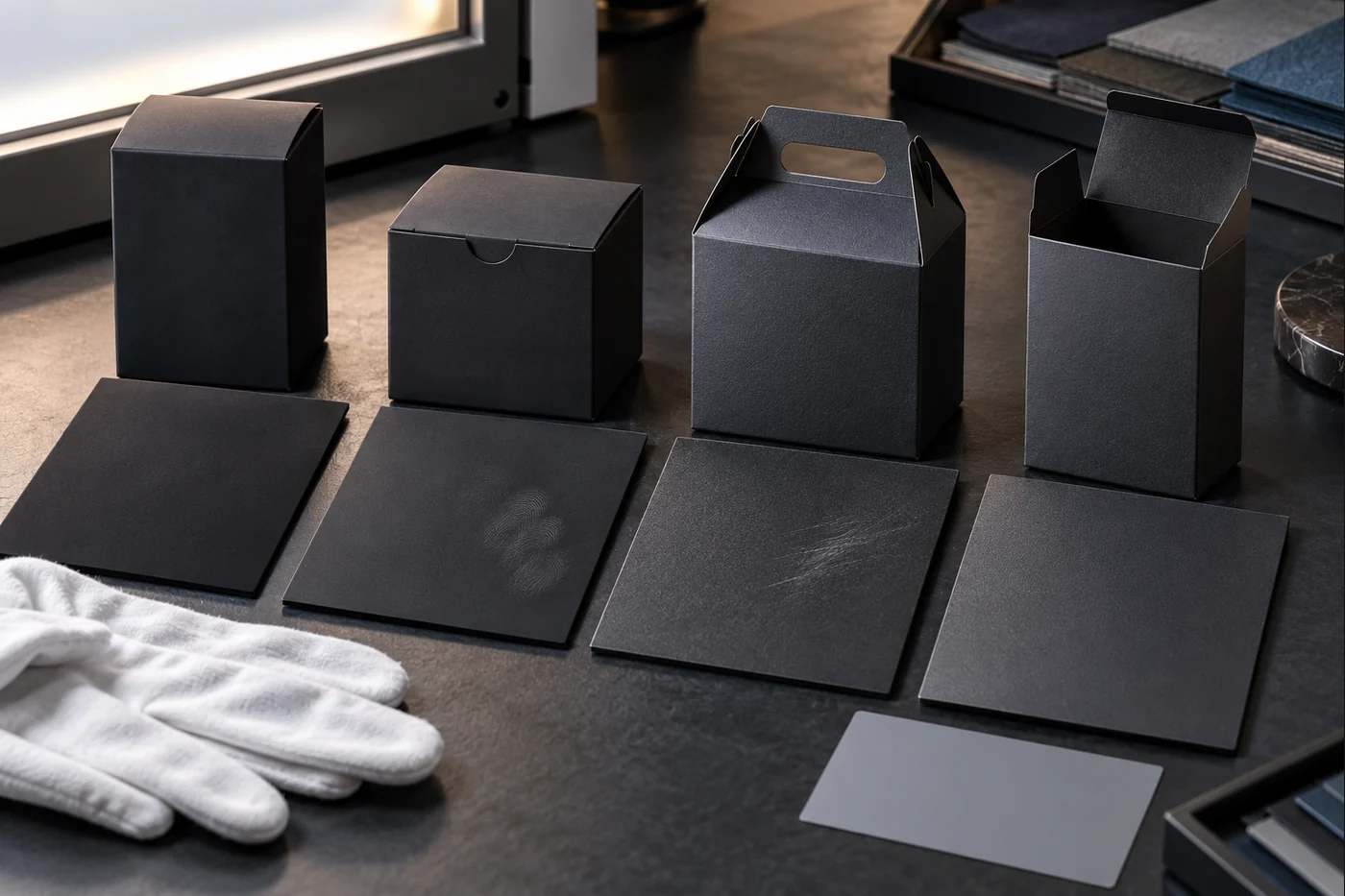
Record the location, lighting angle, handling stage, and whether the mark wipes away. A broad panel on a book-style magnetic gift box may reveal fingerprints under retail lighting, while a sliding edge on drawer-style cartridge packaging may develop repeated-contact scuffs. The finish can be identical, but the exposure is not.
Why a velvet feel does not automatically resist fingerprints
Soft touch, smudge resistance, and scuff resistance are separate specifications
Commercial film ranges make the distinction clear. Taghleef Industries’ Derprosa line offers a Soft Touch Pro-Shield 4×4 grade that specifically adds fingerprint and scratch resistance. Cosmo Films separately markets velvet lamination films for tactile appearance and scuff-free matte films for resistance to marks during production, transport, and handling. Those product families are evidence that buyers should not treat every soft-touch film as functionally interchangeable.
This distinction also appears on real packaging option lists. Our custom vape packaging page lists soft-touch coating and anti-scratch film as separate choices. If both the feel and the durability matter, put both requirements into the RFQ and sample approval rather than assuming one phrase includes the other.
Dark, low-gloss surfaces make small changes easier to notice
A matte or velvet surface is chosen because it suppresses sharp reflections and gives color a restrained, premium appearance. Contact residue or a locally polished area can interrupt that uniform look. The problem may appear worse on black, navy, burgundy, or other deep colors and across large uninterrupted panels. This is a visibility issue as well as a durability issue: the same handling mark may be less obvious on a light pattern or a surface with more visual texture.
Do not approve color and finish under one convenient desk lamp. View the sample at several angles under the lighting used for quality inspection and, when known, the retail display. For coordinated formats such as luxury paper boxes and tubes, approve each geometry separately. A curved tube and a flat rigid box can reflect light differently even when the artwork and finish specification match.
The conversion route must match the printed surface
Wet lamination and thermal lamination use different adhesive systems and process controls. Some films are supplied in variants for wet, thermal, digital, or offset applications. A film that performs well over conventional offset ink is not automatically the best choice over a digitally printed, toner-rich surface. The converter should confirm the film variant, ink or toner system, adhesive, temperature, pressure, speed, and curing or conditioning requirements as one process—not as isolated purchasing items.
Post-lamination decoration matters too. Foil stamping, spot UV, embossing, creasing, die-cutting, and gluing can add heat, pressure, or surface chemistry after lamination. A finish may look clean immediately after lamination yet change during a later operation. Production-representative approval must therefore include the complete decoration sequence.
Which finish should a buyer consider?
| Finish route | Best reason to consider it | Trade-off to verify | Approval emphasis |
|---|---|---|---|
| Standard velvet or soft-touch film | Pronounced tactile feel and muted appearance | Fingerprint and scuff performance varies by grade | Handling marks, color shift, edge behavior |
| Smudge-resistant soft-touch film | Velvet feel where frequent touching is expected | Cost, availability, decoration compatibility | Fingerprint visibility after a defined handling routine |
| Scuff-resistant matte film | Lower-gloss look with greater resistance to production and transit marks | Tactile feel may differ from a velvet grade | Rub test, pack-to-pack contact, fold and edge appearance |
| Soft-touch coating | Coating-based route suited to some print and converting programs | Feel, rub resistance, consistency, and fold performance depend on the system | Drawdown or press proof plus finished-box trial |
| Conventional matte lamination | Controlled matte appearance without requiring a strong velvet feel | Not automatically scuff-free | Visual standard and real packing-line handling |
The correct choice depends on touch frequency and movement. A folding format such as flip-top cigarette packaging is repeatedly opened and handled. A child-resistant pre-roll box adds a lock or release area that concentrates contact. These are stronger reasons to evaluate a smudge-resistant or scuff-resistant grade than a display pack that is touched only once during unboxing.
Do not select from a finish name alone. Ask for the film or coating manufacturer’s technical identifier and confirm that the supplied production material matches the approved sample. Equivalent substitutions should require written approval and a new comparison when surface performance is important.
Build a useful RFQ instead of asking for “premium soft touch”
A defensible RFQ connects the finish to the real use case. Include:
- Pack structure and dimensions: folding carton, wrapped rigid box, tube, drawer, or child-resistant mechanism.
- Printed surface: substrate, ink or toner process, color build, and whether large dark solids are present.
- Required tactile result: provide an approved physical reference rather than adjectives alone.
- Surface-performance requirement: state whether fingerprint, scuff, scratch, or chemical resistance is the priority.
- Decoration sequence: foil, spot UV, embossing, debossing, windowing, creasing, die-cutting, and gluing.
- Handling exposure: manual packing, conveyors, partitions, shrink film, master cartons, fulfillment, and retail display.
- Inspection conditions: lighting, viewing distance and angle, sample quantity, and acceptable defect threshold.
- Change control: require disclosure and approval of film, coating, adhesive, print-process, or supplier substitutions.
This information lets a converter propose a finish for the application instead of choosing the least expensive material that happens to be called soft touch.
How should you approve fingerprint and scuff performance?
Use a production-representative finished pack
A flat swatch is helpful for narrowing choices, but it cannot reveal edge lifting, fold whitening, glue interaction, rubbing at drawer rails, or marks created during final packing. Approve at least one finished-pack stage using the intended board, print, finish, decorations, and converting route. For a program with multiple structures, do not assume the result on a small carton will transfer unchanged to a large wrapped rigid box.
Define a repeatable handling check
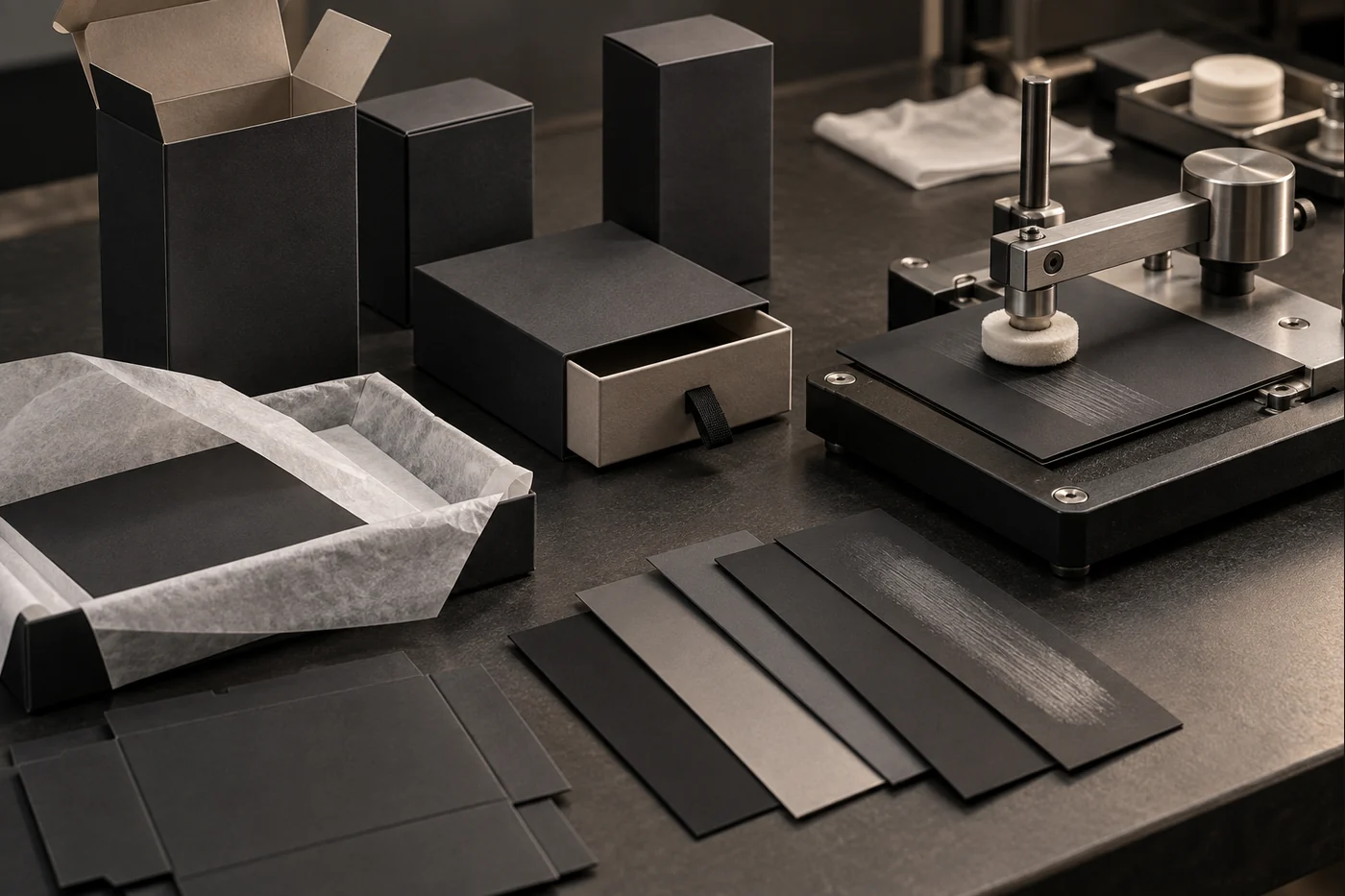
Agree on clean starting samples, conditioning, number of handling cycles, contact areas, inspection lighting, and whether wiping is allowed before evaluation. Use both untouched controls and handled samples. Photographing the same surface under different uncontrolled lighting can make a minor difference look like a major one, so keep the comparison setup consistent.
Add an agreed abrasion test when scuffing is a risk
Laboratory rub methods can compare combinations of inks, coatings, laminates, and substrates under controlled conditions. They are useful for supplier comparison and lot acceptance, but they do not reproduce every distribution hazard. Set the apparatus, contact material, load, cycle count, evaluation method, and pass/fail limit in writing; then support the result with a packing-line or distribution trial appropriate to the product.
Also inspect after the complete chain: printing, lamination or coating, post-finishing, die-cutting, assembly, packing, and shipment simulation. A beautiful freshly laminated sheet is not the final deliverable.
What should you do when production boxes already show marks?
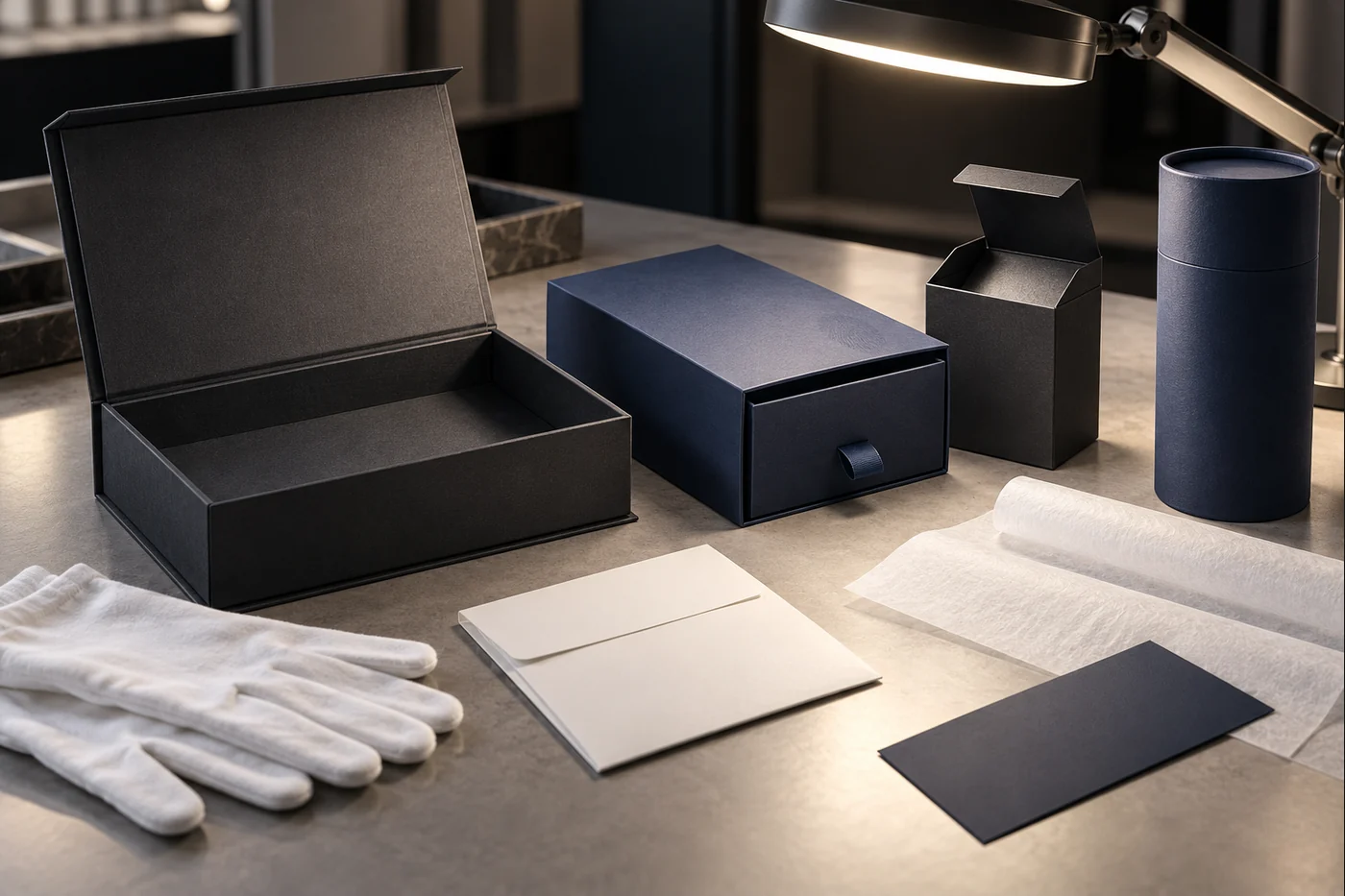
First, quarantine affected stock and keep samples from before and after the stage where marks appear. Separate removable fingerprints from permanent gloss changes, scuffs, scratches, and bond defects. Map the defect location: random marks point toward handling or contamination, parallel lines suggest a guide or belt, repeated edge wear suggests pack-to-pack contact, and consistent broad haze may indicate lamination or surface compatibility.
Next, compare the production lot with the signed sample and material records. Check film or coating identifier, adhesive, print process, operating settings, curing or conditioning time, packing sequence, separator materials, and master-carton fit. Avoid approving a wipe-on remedy until its effect on appearance, odor, decoration, and product compatibility has been reviewed.
Corrective action may involve cleaner handling, protective interleaving, revised guides, more conditioning time, a different film variant, or a redesigned high-contact area. Changing to a tougher grade can be the right answer, but only after locating the actual damage mechanism.
Frequently asked questions
Is soft-touch lamination supposed to be fingerprint-proof?
No. A soft-touch label primarily describes feel and appearance. Some specific grades add smudge, fingerprint, scratch, or scuff resistance, but buyers should verify the exact product and approve its performance.
Will a thicker film solve the problem?
Not necessarily. Thickness can affect stiffness, feel, and converting behavior, but surface chemistry and grade design drive fingerprint and scuff performance. Evaluate the full construction rather than using thickness as a substitute for testing.
Can foil stamping or spot UV be applied over soft-touch film?
Many grades are designed for post-lamination decoration, but compatibility depends on the film, treatment, foil or coating system, and process settings. Include every decoration in the approved production sample.
Should every box use an anti-scratch film?
No. Use exposure and brand requirements to justify it. A frequently handled dark retail pack may benefit, while a protected inner pack may not. Compare visual effect, tactile feel, converting compatibility, availability, and cost.
Approve the surface, not just the name
Soft-touch packaging succeeds when tactile intent, appearance, handling exposure, process route, and acceptance criteria are treated as one specification. Before placing a production order, request material identification, a finished-pack sample, and a written performance check that reflects your packing and retail conditions.
If you are comparing folding cartons, rigid boxes, tubes, or drawer structures, share the product dimensions, artwork, decoration sequence, handling route, and finish reference with PaperBoxPro. A useful quote should identify the proposed surface route and the sample tests needed before mass production—not simply repeat the words “premium soft touch.”
Technical references
- Cosmo Films: Velvet Lamination Films
- Cosmo Films: Scuff-Free Matte Lamination Films
- Derprosa: Soft Touch Pro-Shield 4×4
Editorial note: The packaging images in this article are AI-generated concept illustrations used to explain finish selection and quality-control scenarios. They do not depict a named customer, certified test facility, or guaranteed production specification.