
Fold-line cracking usually means the paperboard, grain direction, crease geometry, printed surface, and folding conditions were not qualified as one system. The practical fix is not simply “use thicker board” or “add lamination.” A packaging buyer should approve a production-intent sample made with the nominated stock, coating, die line, creasing tools, and folding direction, then define an observable acceptance limit before mass production.
A white line on a dark carton may be only a surface fracture, but it can still make new packaging look worn. A deeper split can weaken a tuck flap, tear after repeated opening, or slow packing because operators handle every fold cautiously. This guide explains how to diagnose the defect, choose corrective actions without unnecessary cost, and write a purchase specification that a converter can actually verify.
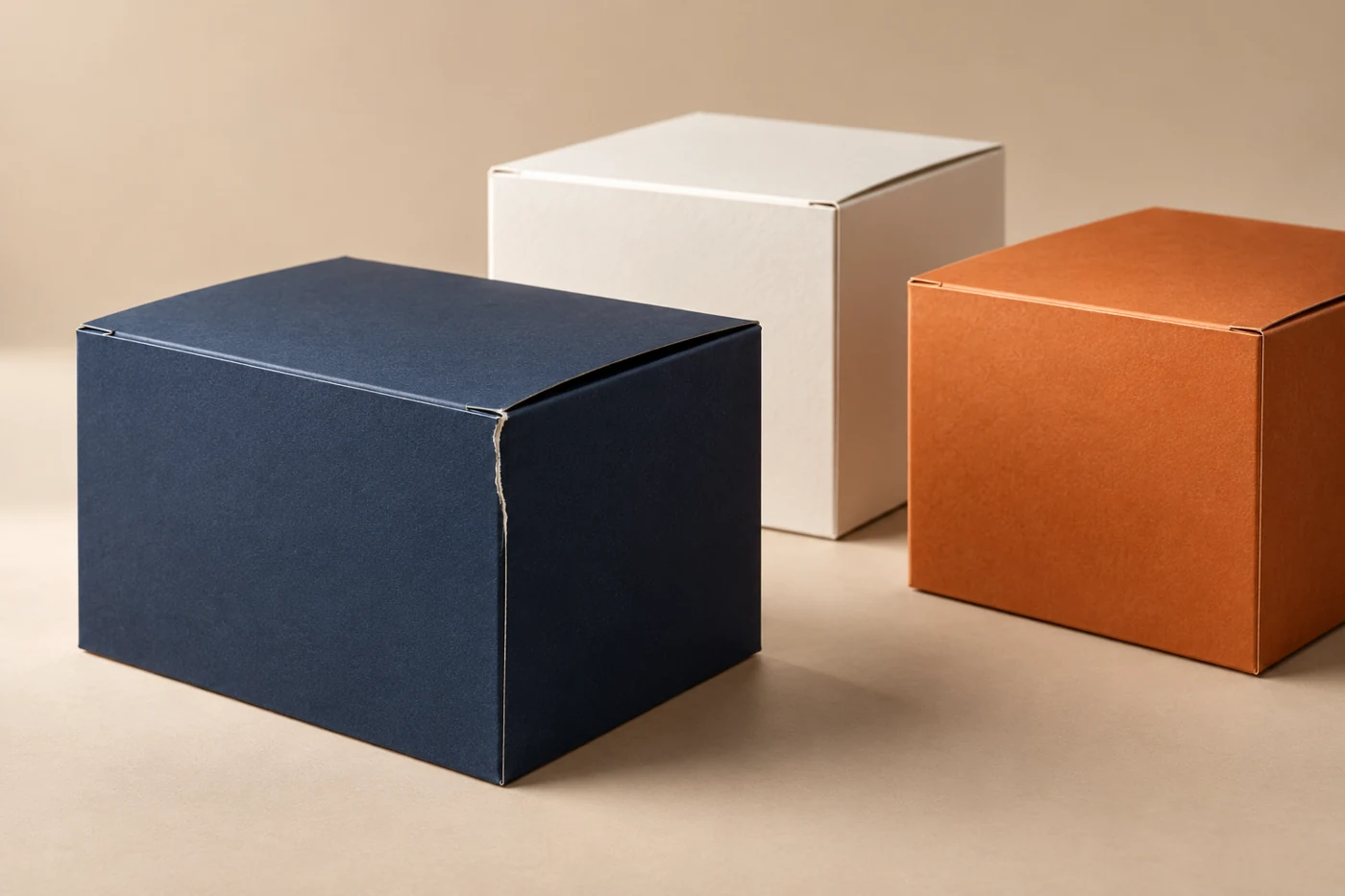
What exactly is cracking at the fold?
A paperboard fold is not a simple bend. A crease rule presses the sheet into a matching channel, compressing and locally separating layers so the crease can behave like a controlled hinge. Iggesund’s technical guidance explains that paperboard should be creased before folding and that an effective crease is deep and narrow enough to reduce folding resistance. Its guidance also distinguishes the behavior of different board constructions rather than treating every sheet of the same thickness as interchangeable. See the manufacturer’s technical overview of creasing and folding.
What buyers call “cracking” can describe three different symptoms:
- Surface whitening: the print, coating, or top fibres separate enough to reveal a pale line, while the fold remains functional.
- Coating or ink fracture: the printed layer breaks into a jagged line, often most visible in solid dark coverage or at heavily decorated panels.
- Structural split: the board itself tears through one or more layers, reducing durability and sometimes changing the carton’s shape.
Do not combine these into one vague defect count. Photograph the fold under consistent lighting, record whether it appears before or after final folding, and note whether the line is cosmetic, structural, or both. That distinction changes the remedy.
Why do printed carton folds crack?
1. The grain direction fights the critical fold
Paperboard is direction-dependent. Creasing and folding behavior changes when a fold runs with or across the predominant fibre direction. Iggesund notes that producing a high-quality crease is generally easier when the crease is parallel to the fibre direction. A carton layout, however, may contain folds in both directions, so the engineer must prioritize the longest, most visible, or most frequently operated panels.
This matters for small, high-coverage formats. On custom flip-top cigarette cartons, the lid hinge and repeated opening action make fold placement especially visible. Ask the supplier to mark grain direction on the imposed sheet and explain which crease was prioritized. A dieline can fit the sheet efficiently yet still be oriented poorly for the most demanding fold.
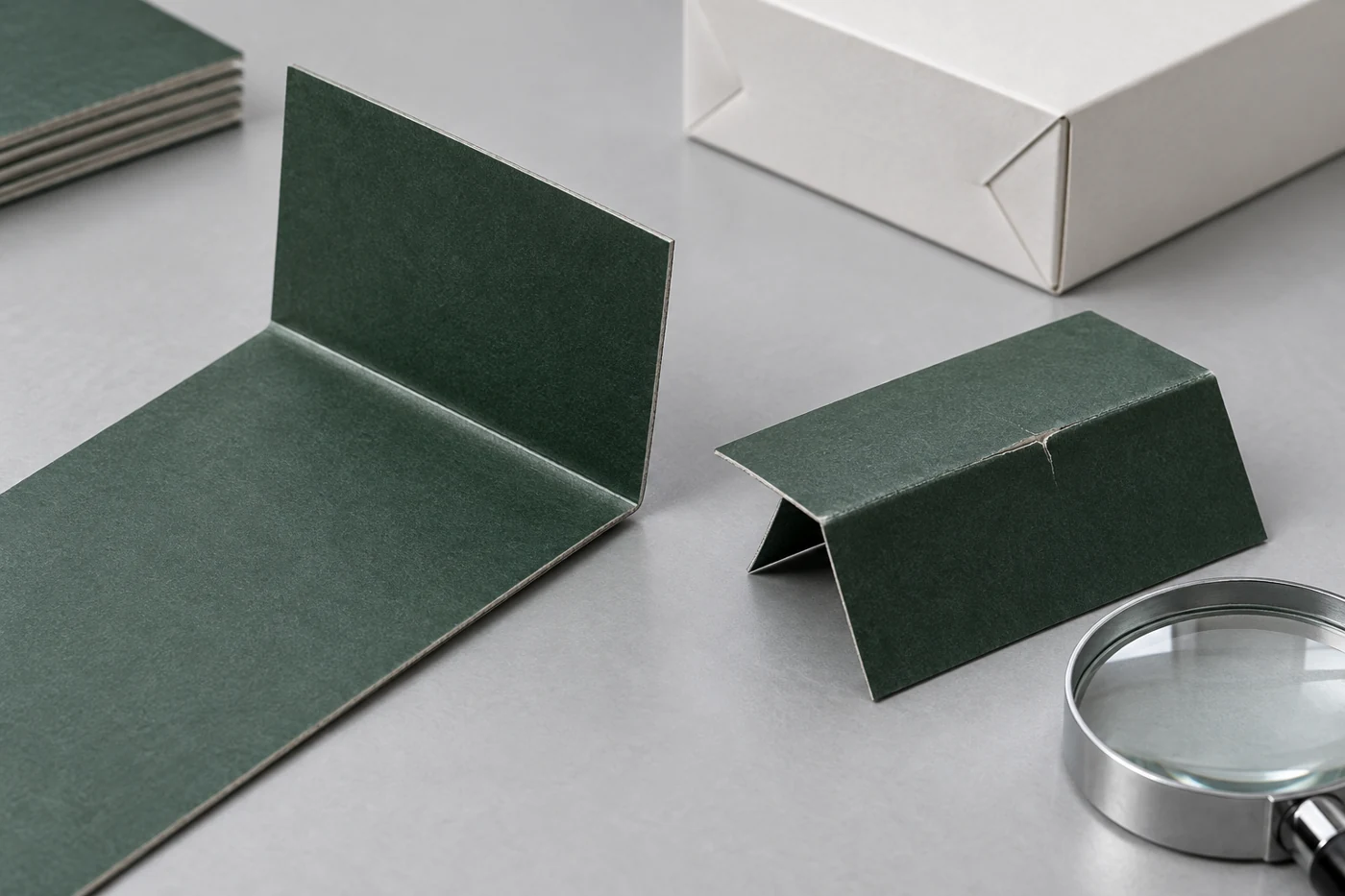
2. The crease rule and channel do not match the board
Board caliper, construction, density, and surface layers all influence the required rule and matrix. A channel that is too narrow or excessive pressure can cut or crush the surface. A crease that is too shallow or broad may not form a controlled hinge, forcing the outer surface to stretch during folding. Tool wear, make-ready variation, and pressure imbalance across a sheet can also explain why one panel looks acceptable while another cracks.
Changing from 300 gsm to 350 gsm does not by itself define the needed tool setup: basis weight is not the same as thickness, and two boards at the same grammage may have different caliper and ply construction. Require the named paper grade or an agreed performance-equivalent substitute, not only a gsm number.
3. Heavy print coverage makes small fractures obvious
Solid black, navy, green, and saturated brand colors create strong contrast when pale fibres become exposed. Thick ink films, some UV systems, and brittle coating combinations may have less tolerance for elongation at the outer radius. Decorative processes near a fold add another variable. Metsä Board’s official special-effects example notes that embossing on solid black or heavy print coverage is particularly demanding and depends on strong surface and coating properties. The lesson is not that dark printing must be avoided; it is that the decorated fold needs its own trial.
A custom disposable vape carton may use a tuck-end structure, window, foil, embossing, or lamination. Keep critical foil edges, tight spot-UV boundaries, and fine reverse type away from high-strain crease zones unless a representative test proves the combination. The safe clearance depends on the artwork, tooling, board, and fold, so it should be confirmed on the dieline rather than guessed.
4. Lamination can help the surface—but cannot repair a bad crease
A suitable film may bridge minor surface stress and mask fibre exposure, but a rigid film can also reveal poor creasing through delamination, lifting, or a sharp white line. Lamination changes fold resistance and should be present in the approved sample. The same applies to water-based varnish, UV varnish, soft-touch coating, and anti-scratch finishes.
For printed hemp oil bottle boxes, finish selection should be tested together with the bottle fit and insert because an over-tight pack can bow panels and keep stress on the creases. Finish approval and structural approval are therefore connected, even when the visible complaint appears to be “only print cracking.”
5. Moisture history and folding conditions changed
Paperboard responds to its environment. Storage and converting conditions can influence moisture balance and flexibility; an approved sample and a production run may behave differently if the stock has been stored or conditioned differently. Buyers do not need to prescribe a universal humidity number without knowing the chosen board. They should ask the converter to follow the board supplier’s handling guidance, record production conditions when a defect occurs, and quarantine affected lots for comparison.
Machine folding can also expose problems that hand-folded samples hide. Speed, pre-breaking, fold sequence, guide pressure, and the time between printing, finishing, die-cutting, and folding all matter. A digitally printed prototype hand-assembled at a desk is useful for checking dimensions and graphics, but it is not proof of production crease performance.
Which corrective action should you choose?
| Observed pattern | Likely area to investigate | First controlled trial | Trade-off to review |
|---|---|---|---|
| Crack on one long, prominent fold | Grain direction or local crease setup | Rotate layout if feasible; compare a revised rule/channel | Sheet yield and tooling changes |
| Cracks mainly in dark printed areas | Ink/coating flexibility and contrast | Compare the same board with revised finish or artwork clearance | Color appearance and finish cost |
| Several folds split through the board | Board suitability, moisture history, excessive pressure | Test the specified grade and a better-matched crease setup | Material price, stiffness, and run speed |
| Hand samples pass; machine run fails | Production process not represented by sample | Run a production-intent pilot on actual converting equipment | Pilot cost and schedule |
| Failure appears after packing | Fold sequence, product/insert pressure, repeated opening | Pack and cycle complete samples using real components | Pack-out speed and internal dimensions |
Change one or two variables at a time. If a trial simultaneously changes the paperboard, lamination, tooling, ink, and fold direction, a better result will not tell you which control should be locked into the purchase order.
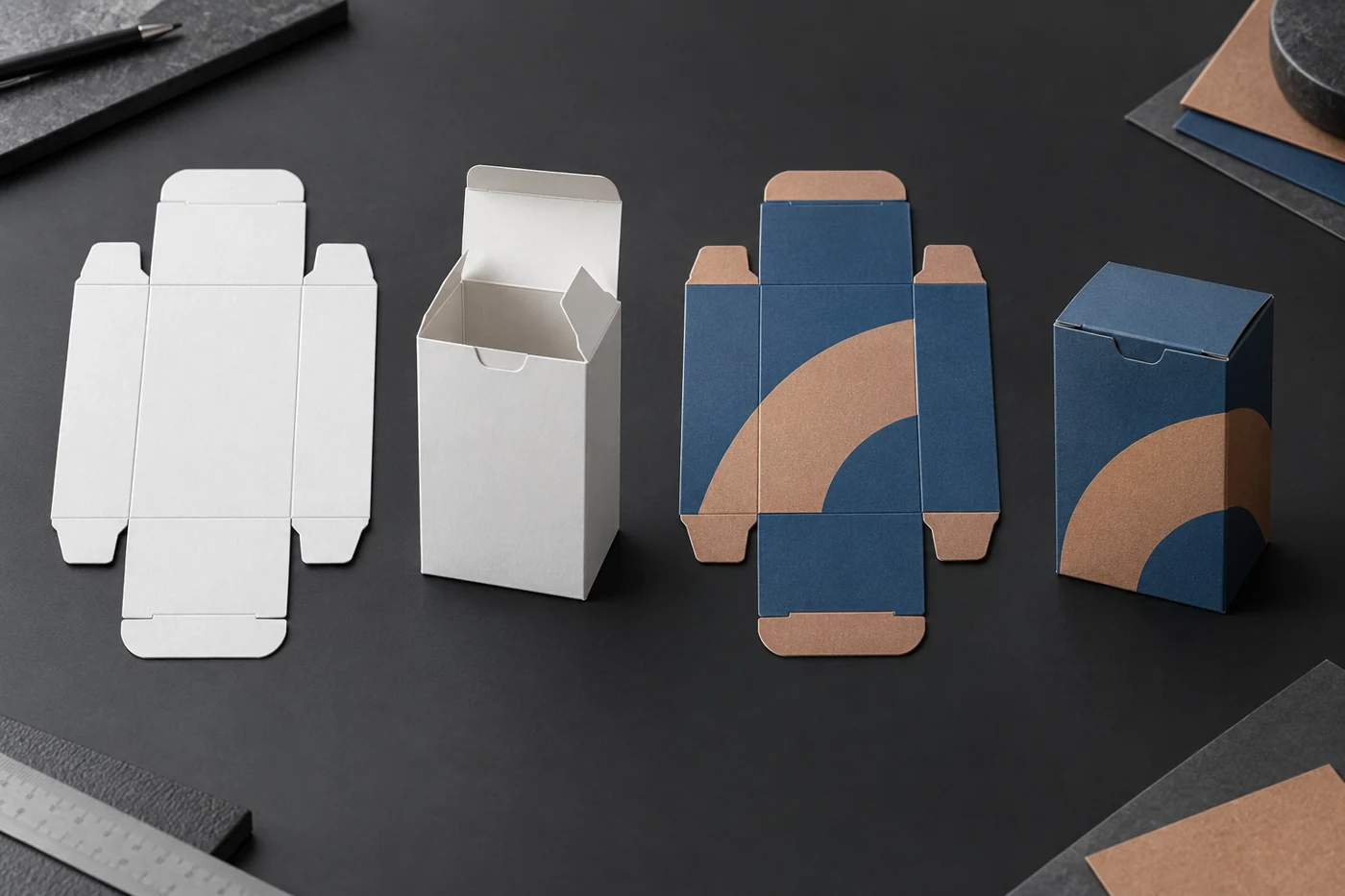
How should you test a carton before mass production?
Build three levels of sample
- Structural white sample: confirm dimensions, tabs, locking action, assembly order, product clearance, and whether the board thickness is practical.
- Printed appearance sample: assess color, legibility, finish, and decoration placement. State clearly if the printing or tooling differs from production.
- Production-intent pilot: use the nominated board, printed finish, crease geometry, die-cutting method, and folding process. This is the decisive sample for fold quality.
The sample ladder is useful across formats. A slim custom chocolate bar carton needs clean long folds and reliable tuck closure, while custom CBD boxes in tuck-end, two-piece, or magnetic formats place stress in different locations. Approving only the front panel artwork leaves these functional differences untested.
Write an acceptance method, not “no cracks”
“No visible cracking” sounds clear but can produce arguments because visibility changes with distance, lighting, viewing angle, color, and fold position. Define the inspection method: named fold locations, sample quantity, whether units are inspected flat or assembled, number of open-close cycles where relevant, lighting conditions, viewing distance, and the permitted severity. Keep approved reference samples for comparison.
Separate critical, major, and minor outcomes. A torn locking flap may be a functional rejection. A continuous white line on the primary display panel may be a major appearance defect. A tiny fracture hidden under a dust flap may be minor if it does not propagate. The final classification should reflect the product, retail presentation, and agreed quality plan.
Test packed cartons, not empty shells
Insert the actual product or dimensionally accurate substitute, use the intended insert, close the carton in the planned sequence, and simulate realistic handling. For structures with multiple working folds—such as custom cigarette boxes offered in flip-top, drawer, and magnetic styles—inspect both assembly folds and consumer-operated hinges. Record where the first crack appears instead of reporting only a pass/fail total.
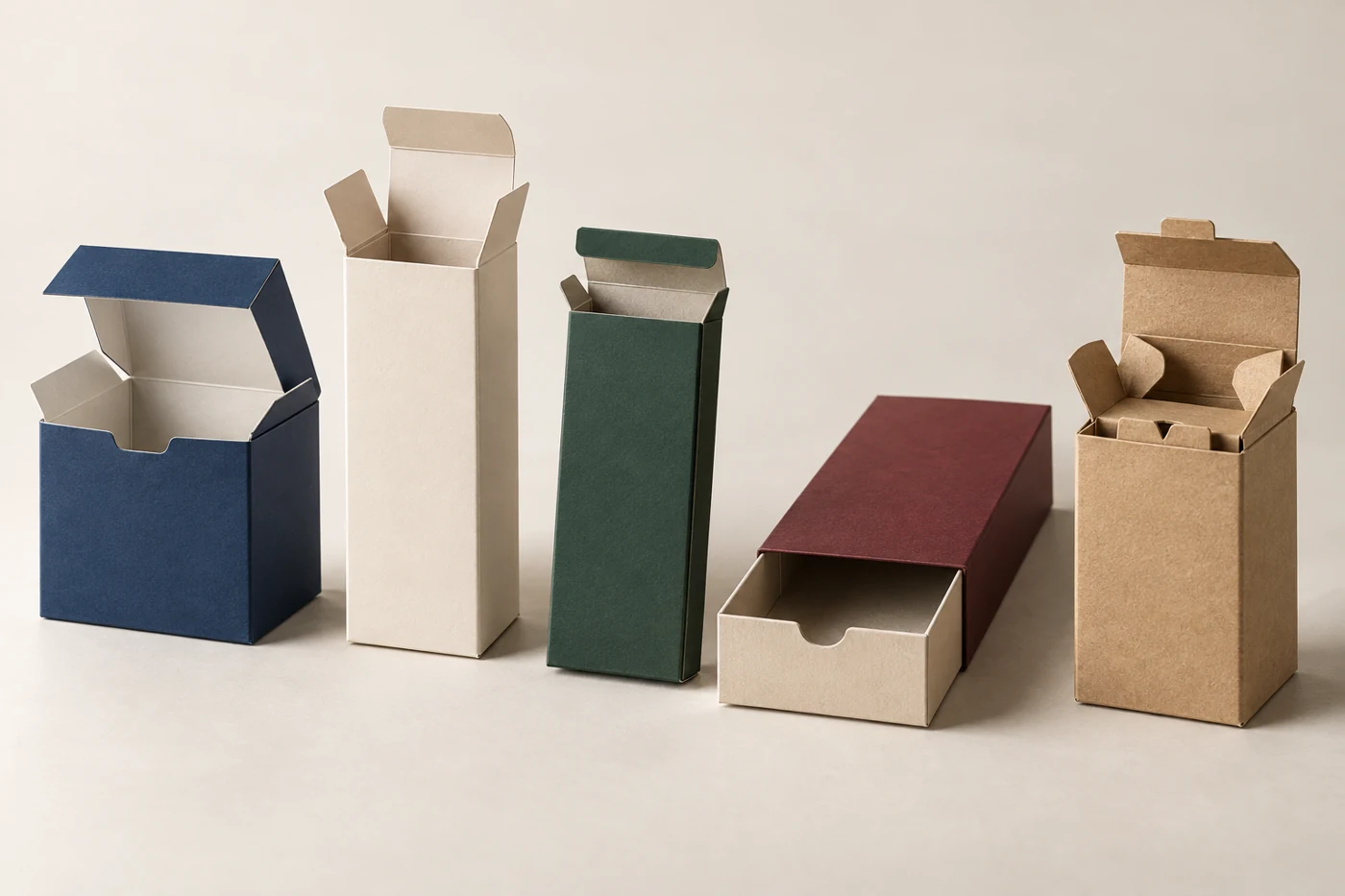
What should appear in your RFQ and purchase order?
- Finished dimensions, box style, revision-controlled dieline, and critical fold locations.
- Board manufacturer/grade where required, nominal grammage, caliper expectation, color, and approved substitution rule.
- Grain direction on the sheet or a requirement for the supplier to propose and document it.
- Printing process, ink system, total finish stack, and exact decoration zones near folds.
- Production-intent sample requirement and the variables that must match mass production.
- Assembly method, fold sequence, packed-product test, and repeated-opening requirement if applicable.
- Visual inspection conditions, defect categories, approved reference sample, and remediation process.
- Change-control language covering board substitutions, tooling changes, and finish changes.
This specification is more useful than demanding a particular gsm in isolation. It also makes quotation comparisons fairer: suppliers are pricing the same verification work instead of silently assuming different sample and quality levels.
Frequently asked questions
Will thicker paperboard stop fold cracking?
Not automatically. A thicker or stiffer sheet can require a different rule, channel, pressure, and fold design. If the crease setup remains unchanged, increasing caliper may worsen the defect. Select board for protection and stiffness, then qualify the converting setup for that exact stock.
Is lamination always the best fix?
No. Lamination may improve appearance in some constructions, but it adds material, cost, and another interface that can lift or delaminate. Compare an unlaminated coating option, a different film, and a corrected crease on production-intent samples before deciding.
Can artwork changes reduce the risk?
Yes. Moving a high-contrast boundary, fine type, foil edge, or heavy spot coating away from a demanding fold can make small movement less visible and reduce decorative stress. Artwork changes should complement—not replace—sound board and crease engineering.
What evidence should a supplier provide after a failure?
Request affected samples, board identification, production lot, grain orientation, die and matrix settings or change record, finish stack, process stage where the crack first appeared, and photographs under the agreed inspection method. A controlled corrective trial is more useful than an unsupported promise that the next run will be better.
Make fold quality a controlled requirement
Cracked folds are rarely solved by one universal material upgrade. Treat the carton as a linked system: board construction, fibre direction, crease geometry, printing, finish, folding, product fit, and handling. A representative pilot and a clear acceptance method turn a subjective complaint into a controllable production requirement.
If you are reviewing a folding-carton project, send PaperBoxPro the dieline, finished size, product dimensions, target board and finish, critical display panels, and photos of any current fold failure. Request a packaging review and ask for a production-intent sampling plan before committing to mass production.