
Custom boxes usually warp because the two faces of the paper-based structure no longer respond equally to moisture, ink, coating, film, adhesive, heat or mechanical restraint. The fastest route to a fix is not to order a thicker board. First record when the shape changed, which way it curved and whether the defect affects loose blanks, erected cartons or wrapped rigid boxes. Those observations separate a material-conditioning problem from an unbalanced finish, an assembly problem or a storage problem.
A buyer should treat “warped” as a symptom, not a specification. A broad panel that bows outward, a carton blank that curls toward one face, a twisted glued box and a rigid lid that rocks are different failures. Each needs different evidence and a different trial.
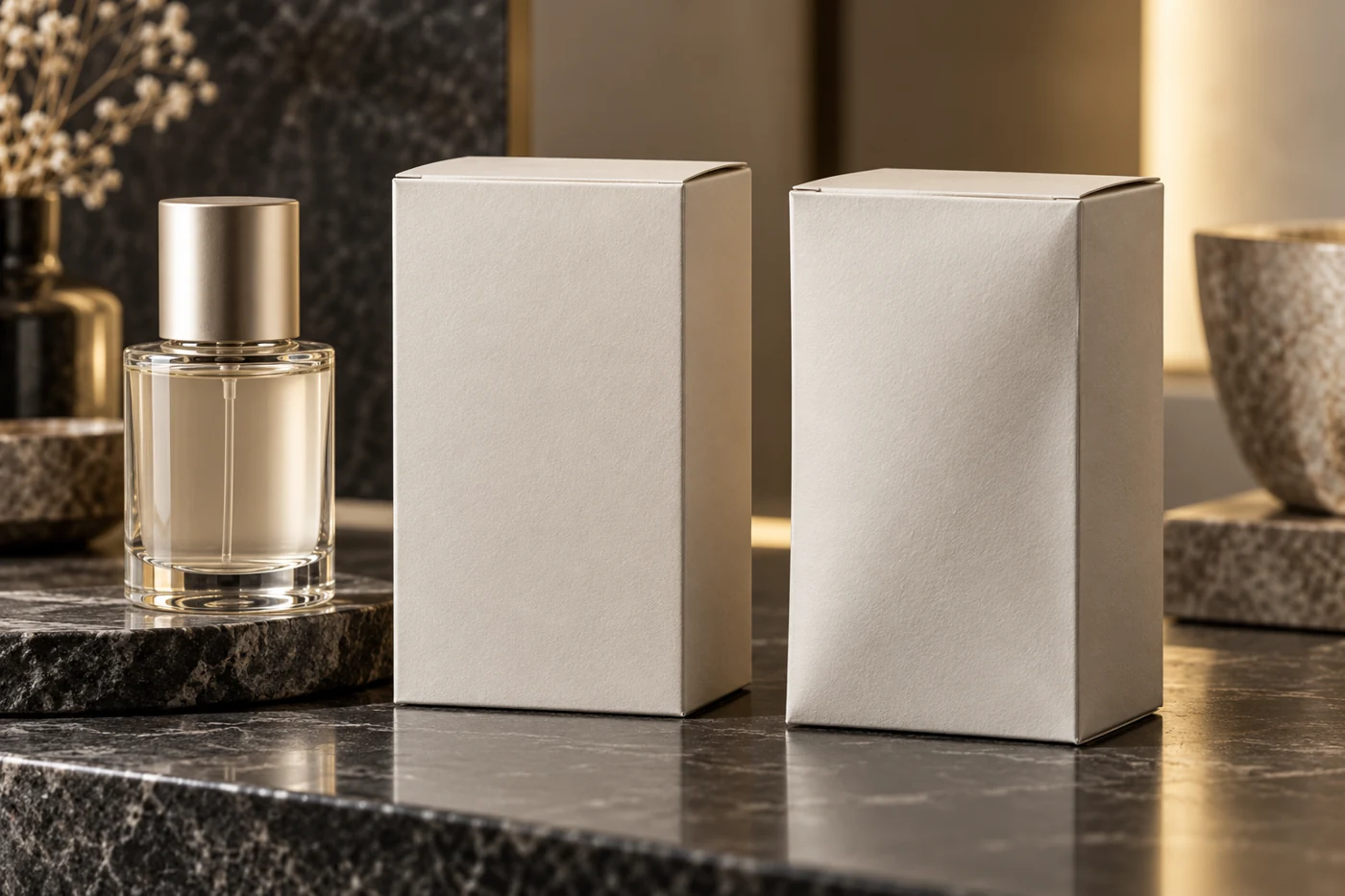
Start with the shape and the moment it appeared
Do not flatten the first rejected samples before documenting them. Photograph each sample on a known flat surface, mark the print side and grain direction if known, and note the lot, pallet position and time since unwrapping. Keep several untouched samples in their received packaging as controls. A simple map of the defect is more useful than a complaint that the boxes “feel wavy.”
| Observed symptom | Evidence to collect first | Most useful first comparison |
|---|---|---|
| Loose blank curls consistently toward one face | Print, coating and lamination sequence; time after each pass | Unprinted board versus printed-only and fully finished sheets |
| Only sheet edges are wavy | Wrapped versus exposed sheets; room and material temperature history | Top, middle and bottom sheets from the same pallet |
| Erected carton has a bowed display panel | Blank flatness, score geometry, product fit and closure load | Empty erected carton versus the filled pack |
| Glued carton is twisted | Joint alignment, compression time and blank squareness | Unglued blank versus carton immediately after gluing |
| Rigid lid or drawer sleeve rocks or binds | Greyboard parts, wrap direction, adhesive coat and drying restraint | Bare board shell versus wrapped and fully dried box |
The direction matters. A repeatable curve toward the decorated face points to a different stress balance than random distortion confined to exposed sheet edges. A defect that appears only after filling may instead come from a tight insert, an oversized product or closure pressure. Do not ask a material change to solve an assembly load.
Why paperboard can lose flatness
Moisture and temperature change the starting condition
Paperboard exchanges moisture with the surrounding air. If one region gains or loses more moisture than another, its dimensional change is restrained unevenly and the sheet can curl or become wavy. Cold wrapped stock is especially vulnerable if it is opened in a warm room: condensation can form before the board reaches room temperature.
Holmen’s paperboard handling guidance advises keeping moisture-proof wrapping on until the load has reached the printing-room temperature, then rewrapping sheets after conversion. It also describes edge waviness, upcurl or downcurl when moisture moves outside the intended condition. The same supplier recommends 45–60% relative humidity and 20–23°C in its printing and converting guidance. Those figures are useful process context, not a universal acceptance specification for every board, adhesive or factory. Your purchase order should use limits agreed with the actual material supplier and converter.
Record material temperature as well as room conditions. A room reading alone cannot show whether a cold pallet was opened too soon, or whether converted blanks spent hours beside a drying or cooling air stream.
Printing and finishing can create an unequal stress stack
Ink coverage, aqueous or UV coating, film lamination, foil areas and spot effects do not act like the base sheet. A heavy treatment concentrated on one face can change moisture exchange, drying and surface stress. Large dark floods and near-full-area films deserve a trial on the intended board, especially when the reverse remains largely untreated.
This does not mean that every premium finish causes curl. It means the complete construction must be evaluated as a stack: board, front-side print, reverse print, coatings, films, adhesives and drying sequence. For compact decorated disposable-vape cartons, approve the exact finish combination rather than a visually similar plain dummy. For broad, shallow chocolate bar cartons, even a modest panel curve may become obvious on the shelf, so compare the finished sheet before and after die-cutting.
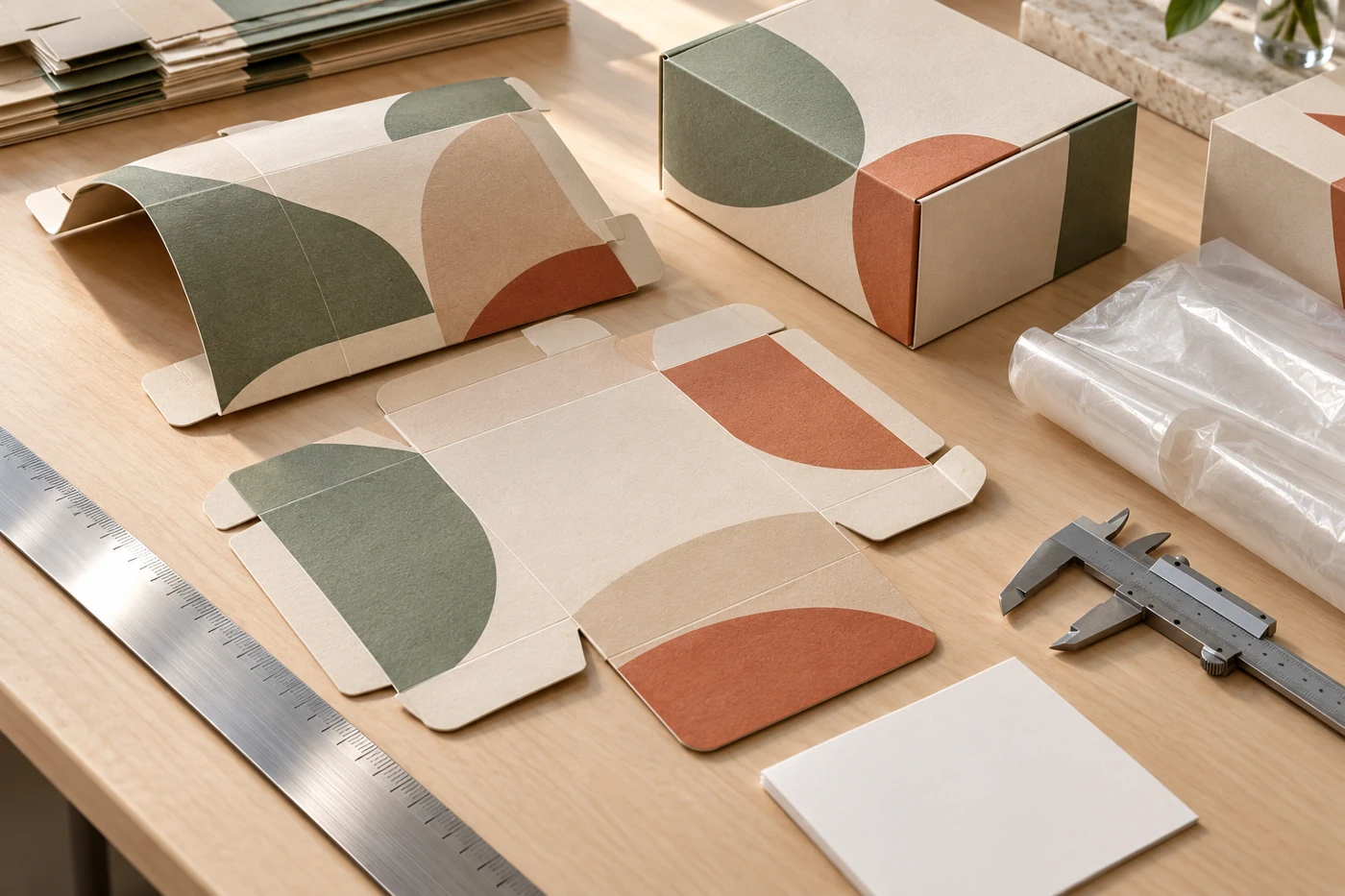
Grain direction and panel geometry decide where stress becomes visible
Paperboard is direction-dependent: stiffness and dimensional response differ between machine and cross directions. Grain direction should therefore be part of the dieline review, not discovered after production. Long uninterrupted panels reveal bow more readily than small panels divided by folds. A crease can also redistribute stress, which is why a flat printed sheet is not proof that an erected carton will stay square.
A flip-top cigarette carton combines narrow panels, a hinge and close-fitting closure geometry; flatness should be judged in both blank and erected states. Ask the converter to mark grain direction on the approved sample record and to keep it consistent between sampling and production.
Rigid boxes have a separate balance problem
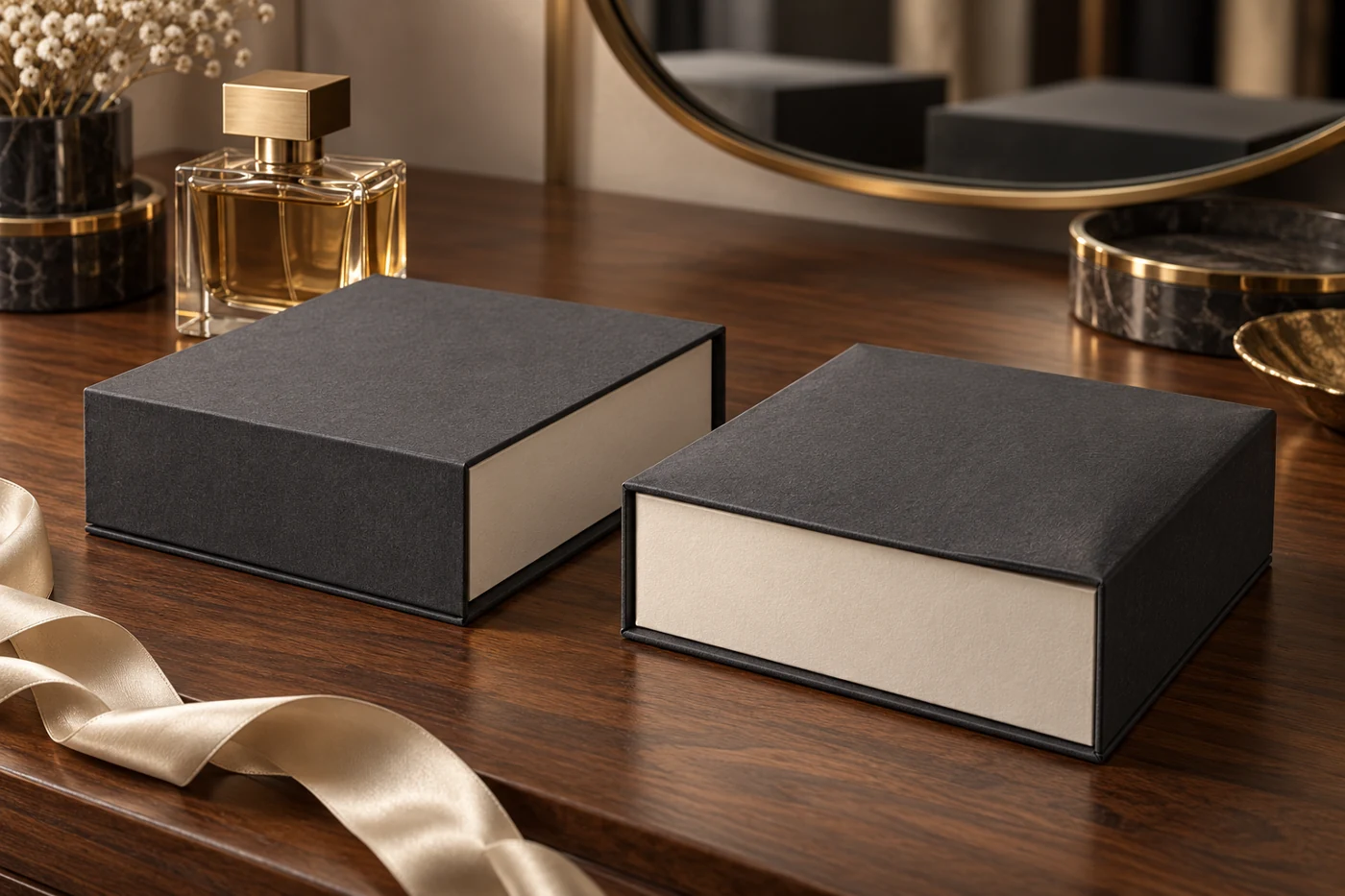
A rigid box is not simply a thicker folding carton. Its greyboard parts are wrapped with paper and adhesive, then turned in and dried under a specific restraint. Uneven adhesive, inconsistent wrap tension, mismatched grain directions or releasing the box before moisture has equalized can pull a lid or panel out of plane.
For a wrapped book-style gift box, inspect the cover flatness, hinge movement and closure after the box has reached its agreed conditioning state. For slide-out box packaging, check sleeve squareness and drawer movement together: a bowed sleeve can turn an acceptable clearance into binding, while excessive clearance can hide a distorted shell during sample handling.
Build a trial that identifies the cause instead of hiding it
A useful trial changes one variable at a time. Request enough retained samples to compare the stages below under the same viewing and measurement method:
- Base-board reference: unprinted sheets from the production lot, still identified by lot and pallet position.
- Print-only reference: before film, heavy coating or secondary decoration.
- Fully finished flat blank: after adequate drying or curing, before erection.
- Erected empty pack: formed and glued, without product or insert load.
- Filled pack: with the approved product and insert, evaluated after the agreed conditioning period.
If the blank is already curled at stage three, changing insert clearance will not address the source. If it stays flat until the product is loaded, investigate fit and closure forces before changing the print process. If rigid components are flat before wrapping but the finished lid bows, focus on wrapping, adhesive and drying balance.
Holmen’s technical discussion of the packaging operation lists flatness and dimensional stability among properties that affect efficient packaging. That is why a visual color proof alone is insufficient: it can approve appearance while missing the conversion and packing conditions that expose distortion.
Put measurable flatness checks into the approval record
“Must lie flat” is too vague for a purchase order. Agree on the sample state, conditioning time, support surface, measurement points and allowable gap or rocking. The tolerance must be realistic for the structure and end use; the same number should not be copied across a small tuck carton and a large wrapped lid.
A practical approval record can include:
- board grade, caliper, grain direction and approved material source;
- front and reverse print coverage, coating, film and decoration sequence;
- time and conditions before unwrapping, converting and measurement;
- flatness method for loose blanks and squareness method for erected packs;
- closure, insert and product-fit checks after filling;
- pallet wrapping, stack height, orientation and storage limits;
- retained references from the base board, finished blank and packed unit.
Do not specify a board only by GSM. Basis weight does not reveal grain direction, moisture condition, caliper, stiffness profile or the stresses added by the finish stack. A heavier sheet can still curl if the two faces are unbalanced.
What should you do with a batch that is already warped?
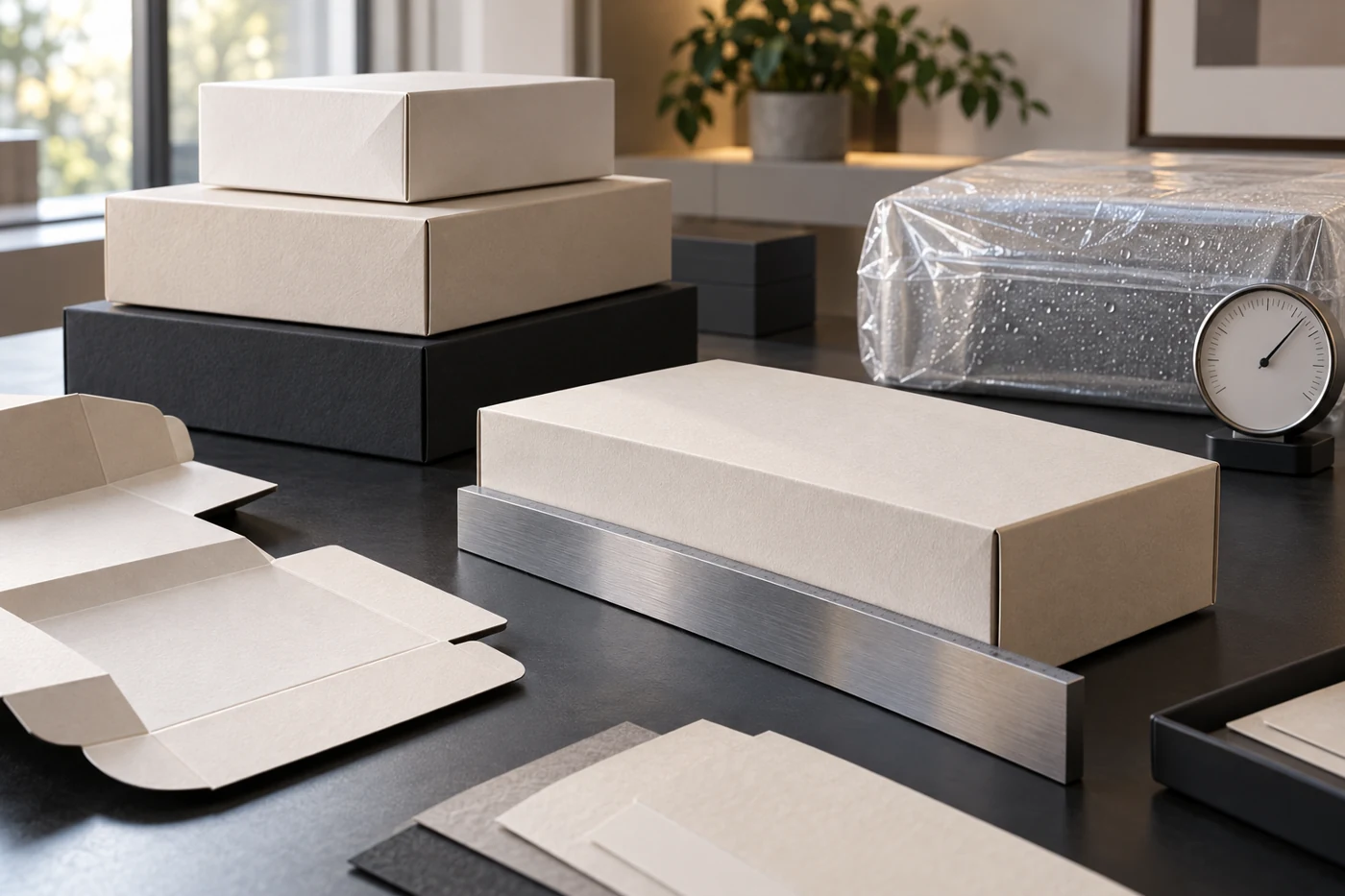
Quarantine it by lot before mixing acceptable and affected pallets. Preserve original wrapping and labels, then compare unopened controls with exposed material. Record where each sample sat in the pallet and how long it was open. Reconditioning may reduce some moisture-related curl, but it should be a controlled, supplier-approved trial—not an improvised application of heat, water or heavy pressure that could alter print, adhesive or box dimensions.
Ask the converter for the process record and retained samples rather than debating blame from photographs alone. If the defect is finish-induced, test a more balanced coverage, a different film or coating sequence, or a longer controlled dwell. If it is assembly-induced, adjust joint alignment, adhesive application, restraint or insert fit. Repeat the same measurement after the correction.
Questions to send with your RFQ
- Which board, caliper and grain direction are proposed for this panel layout?
- Which face receives each ink, coating, film, foil and adhesive?
- How will stock be acclimatized and rewrapped between passes?
- At which production stages will flatness or squareness be checked?
- Will the finished sample use the final product, insert and closure force?
- How will flat blanks or assembled boxes be restrained and protected in transit?
- Which samples and lot records will be retained if a claim occurs?
FAQ
Will thicker paperboard stop a box from warping?
Not by itself. Extra caliper or stiffness may reduce visible deflection, but it does not remove unequal moisture, print, film or adhesive stress. Diagnose the direction and production stage first.
Can lamination be used without causing curl?
Yes, provided the selected board, film, adhesive, coverage, temperature and process sequence work together. Approve the final stack on the final structure rather than assuming a plain or differently finished sample is equivalent.
Should buyers specify one humidity number for every supplier?
No. Use material-supplier guidance as a starting point, then agree conditions appropriate to the actual board, process and destination. Record material temperature, exposure time and wrapping status as well as room humidity.
When should flatness be approved?
At several meaningful states: base material, fully finished blank, erected empty box and filled pack. The stage at which the shape changes is part of the diagnosis.
Turn the complaint into a controlled specification
Warp is manageable when material identity, grain, finish stack, conditioning, assembly and storage are treated as one system. Send PaperBoxPro your dieline, product and insert dimensions, finish map, destination conditions and photographs of the failure direction. Request a structure and process review so the next sample can be evaluated with agreed flatness checkpoints instead of appearance alone.