
Use a custom packaging window when seeing the actual product removes a buying objection that artwork cannot resolve, and only when the product, structure and distribution route can tolerate the opening or clear film. Use a printed product image when the pack needs a larger uninterrupted graphic area, better concealment, simpler conversion, or tighter control of light, dust and handling exposure. Do not treat “window” as one specification. An open die-cut, a clear film-patched window and a closed printed panel create different protection, assembly, cost and end-of-life questions.
This guide helps packaging buyers decide before requesting samples. It does not certify food contact, child resistance, recyclability or product protection. Those outcomes depend on the exact materials, intended use, market requirements and testing of the finished pack.
Start with what the shopper must verify
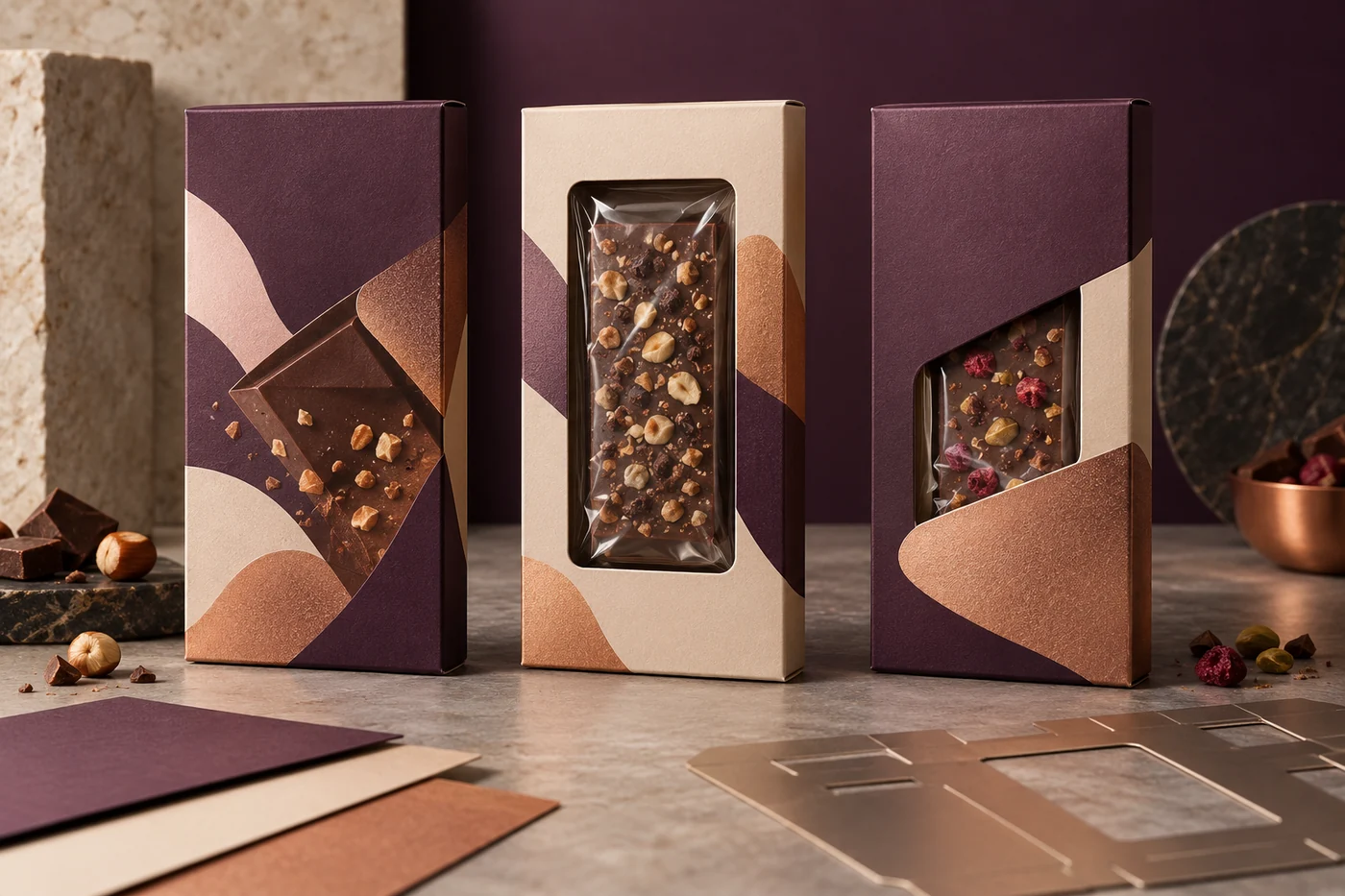
A window earns its place when the product itself carries information that affects purchase: color, texture, fill level, arrangement, scale or a distinctive component. If the shopper only needs to understand the product category, a well-controlled photograph or illustration may communicate more consistently. Ask one direct question: What uncertainty will disappear when the shopper sees the real item?
That answer should be specific. “Make the box premium” is not a window requirement. “Let the buyer confirm the chocolate decoration without opening the carton” is. “Show the cartridge color and its position in the tray” is. A custom packaging window that does not reveal the decisive feature can add cost and weaken the panel while contributing little to conversion.
Compare three practical routes
| Route | What the buyer sees | Main advantage | Main purchasing risk |
|---|---|---|---|
| Open die-cut window | The product through an uncovered opening | No clear film or window-patching operation | Less protection from dust, touching and product movement; exposed edges may deform |
| Film-patched window | The product behind a clear sheet | Visibility with a physical separation layer | Film, adhesive, haze, scratches, curl and attachment quality become part of the specification |
| Closed panel with printed image | A controlled photograph or illustration | Full printable area and simpler material construction | The image can overpromise color, scale or quantity if it is not accurate |
The correct route can vary within one product family. A premium window-design chocolate bar carton may use a film patch to reveal decoration while keeping the bar separated by its primary wrap. Another chocolate product may need a closed panel because light exposure, a variable appearance or a large legal-copy area makes a window less useful.
Choose window size and location from the structure
A die-cut window removes board from a load-bearing panel. Larger is not automatically better. Keep the opening clear of score lines, locking tabs, glue seams, corners and narrow bridges unless the converter has engineered reinforcement. Rounded internal corners are generally easier to convert cleanly than sharp re-entrant corners, but the actual radius and minimum bridge width should come from the converter’s tooling and board recommendation.
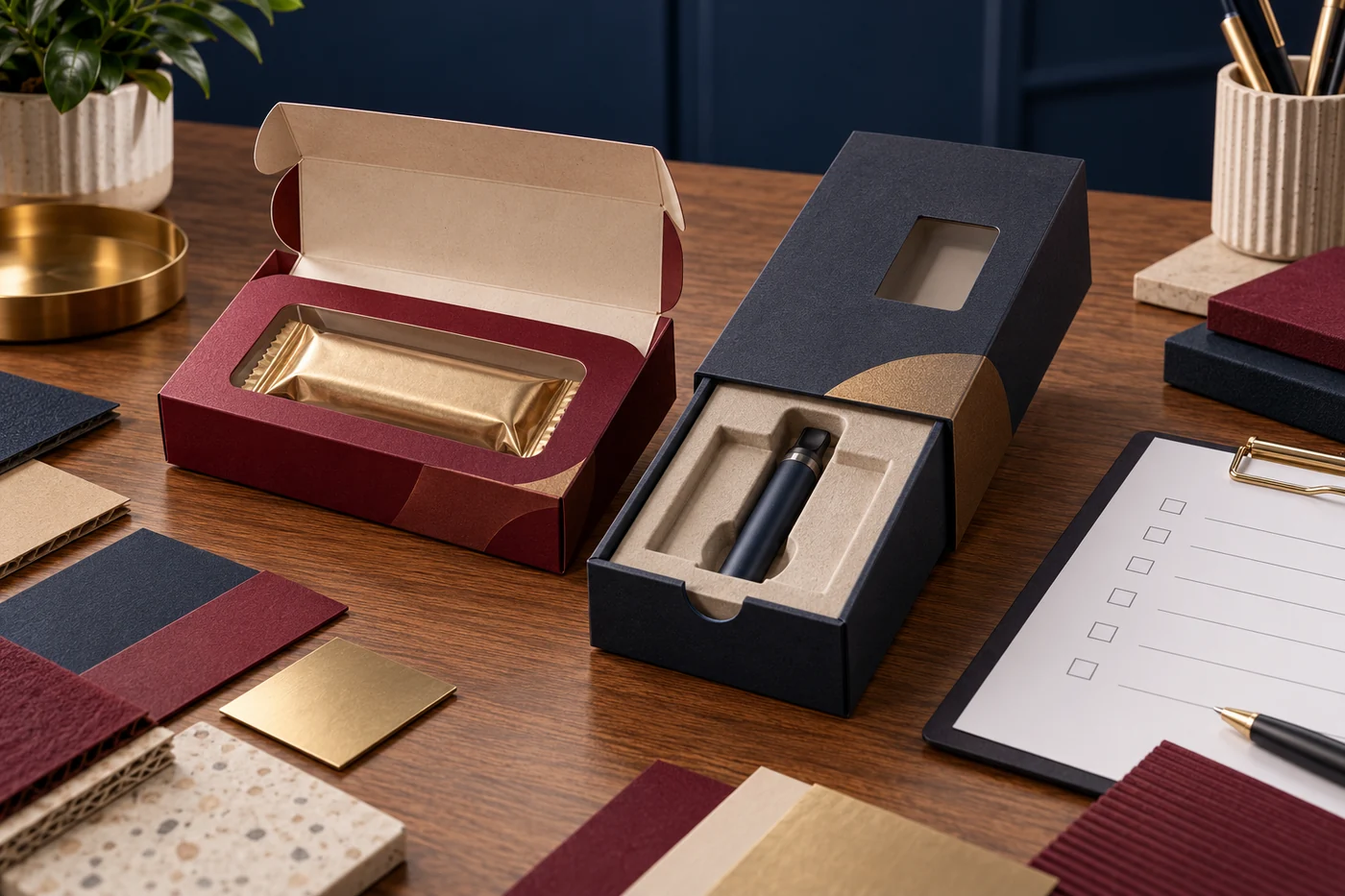
Locate the window only after the product and insert are positioned. In a drawer-style 1 ml cartridge box with a display window, the tray must hold the cartridge within the visible zone after handling. A beautiful CAD view is not sufficient if the product rotates, sinks below the opening or exposes an unintended component in transit.
The same principle applies to a disposable vape window display box. Confirm the viewing face, device orientation, warning and barcode zones, finger access and packing direction together. A window that competes with mandatory information or makes the product difficult to load is not a successful product-visibility solution.

Specify the clear layer instead of asking for “plastic”
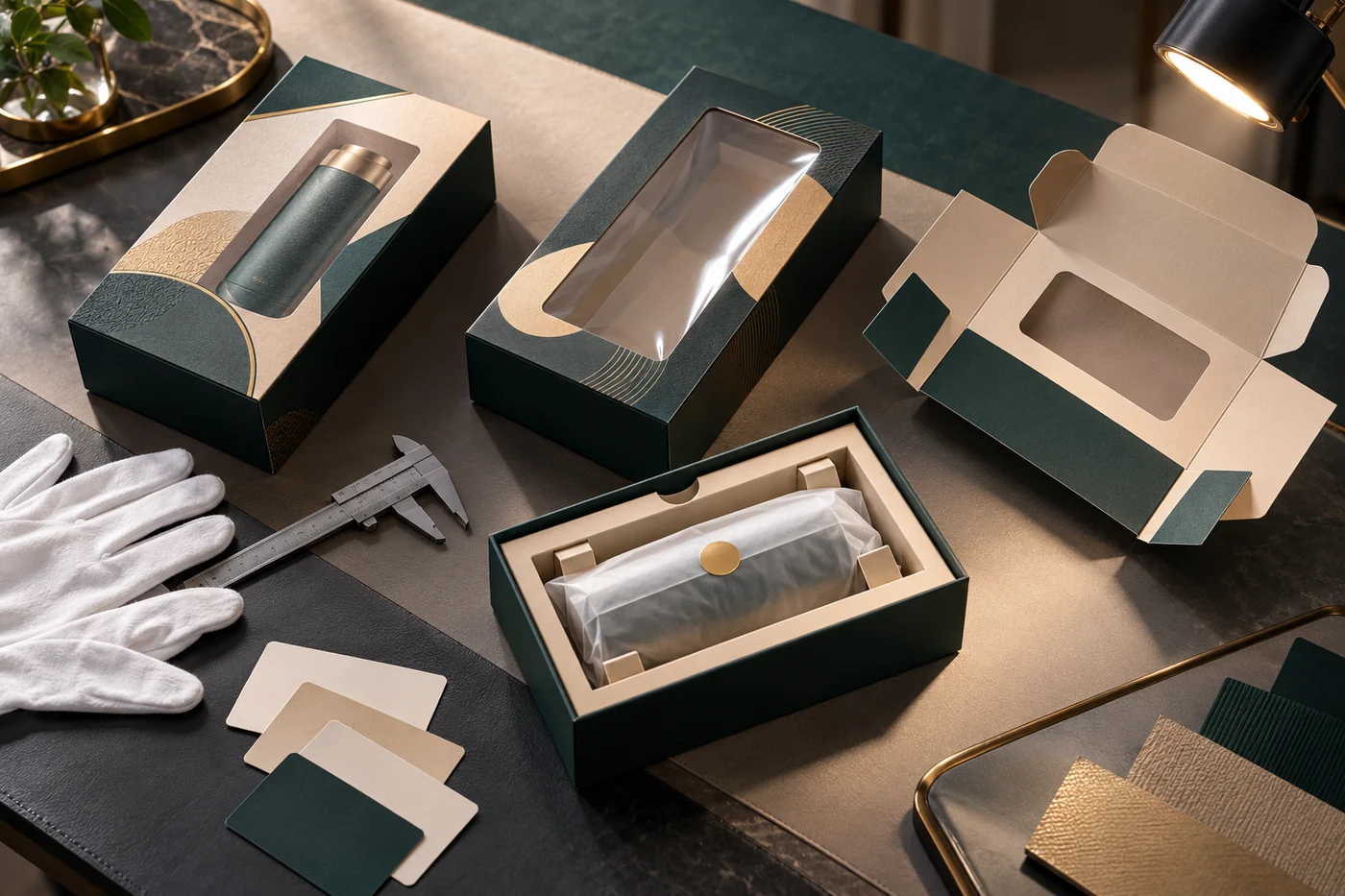
If the die-cut window needs a patch, request the proposed film family, thickness or caliper, clarity target, surface treatment where relevant, adhesive system and patch overlap. The converter should also state which side receives the patch and whether it is applied before or after printing, coating, die cutting and folding. “Clear plastic” is too vague for quotation comparison or repeat production.
Window patching film is not optically invisible. Reflections, fine scratches, static-attracted dust and adhesive squeeze-out can become noticeable under retail lighting. Dark interiors can make haze more visible; high-gloss graphics can amplify minor surface marks. Approve the complete box under diffuse light and raking light, not only a flat film swatch.
Set an appearance boundary that can be inspected: for example, no visible adhesive inside the agreed viewing area at a stated observation distance, and no film detachment after the agreed packing and handling checks. Avoid promising “scratch-proof” or “crystal clear” without a defined sample and acceptance method.
Keep sensitive-use requirements separate from appearance
Food and confectionery
For food packaging, first determine whether the food has a separate primary wrap and whether the window film, adhesive, ink or coating can contact the food under intended conditions. The U.S. FDA explains that food packaging components, including adhesives and colorants, may be food-contact substances. Therefore, a generic statement such as “food-grade window” is not enough; request documentation tied to the exact material, use and market.
A full-wrap or window design for a custom psychedelic chocolate box should be decided together with the primary wrapper, storage conditions and intended viewing area. The secondary paper carton does not automatically create a barrier for the food, and a clear window does not replace the primary package.
Child-resistant or regulated packaging
A visual opening must not be treated as proof that a package remains child resistant. The U.S. Consumer Product Safety Commission’s PPPA guidance defines special packaging by opening difficulty for young children and proper adult use, not by appearance. Applicability varies by product and market, and required testing concerns the finished packaging system.
When considering a window on a child-resistant vape cartridge box or an optional-window pre-roll box, keep the opening away from the locking mechanism and potential pry points. Confirm the exact tested construction, material and assembly with the responsible compliance parties. Do not assume that adding a patch to an existing box preserves any previous result.
Compare cost using the complete converting route
A window changes more than the cutting die. A film-patched design can add film material, patching setup, adhesive control, inspection and slower handling for some formats. A larger opening may require a stronger board, revised insert or protective transit packing. Conversely, a printed image may require color-critical photography, retouching, proofing and version control when the visible product changes.
Ask suppliers to quote the same scope:
- same box dimensions, board and print coverage;
- same window geometry and film specification;
- same insert and product orientation;
- same decorative finishes and glue areas;
- same packing method, inspection level and delivery condition.
A lower unit price is not comparable if one quote excludes the insert, uses an open cutout instead of a film patch, or assumes a different packing method. Price the approved construction rather than the word “window.”
Make end-of-life claims only for the complete pack
A paper box with a transparent patch is a multi-material construction. Its actual sorting and recycling outcome depends on the film, adhesive, fibre content, dimensions, separation behavior and local collection route. Current 4evergreen circularity-by-design guidance for fibre-based packaging evaluates complete constructions and recycling routes rather than relying on a paper appearance alone.
If removal is part of the design, verify that a user can actually separate the window without tearing away an impractical amount of board, and provide disposal instructions only when supported for the intended markets. Do not call the package recyclable, compostable or plastic-free merely because the clear area is small.
Approve a production-intent window sample
- Digital structure review: confirm opening dimensions, radii, board bridges, scores, glue zones, insert position and product orientation.
- White structural sample: load the actual product and check visibility, movement, panel stiffness, finger access and packing sequence.
- Decorated sample: use the intended board, print, coating, film and adhesive route; inspect registration and surface appearance.
- Packed handling check: evaluate product alignment, film attachment, scuffing and panel deformation after the agreed packing and distribution simulation.
- Golden sample and limits: retain an approved unit plus written acceptance boundaries for haze, scratches, adhesive marks, window registration and product position.
Window-box RFQ checklist
- Product dimensions, weight, orientation and primary packaging
- What the customer must see and the minimum visible area
- Open cutout, film-patched window or supplier recommendation
- Window shape, position and relationship to scores, locks and glue
- Requested film and adhesive documentation for the intended use
- Insert material and tolerance controlling product alignment
- Lighting, handling, temperature and storage concerns
- Applicable market, food-contact or special-packaging review
- Expected order quantity and packing method
- Sample stages and measurable acceptance limits
Frequently asked questions
Does a larger window always improve product visibility?
No. The useful area is the part that consistently shows the deciding product feature. A larger cutout can reduce graphic space and panel stiffness, while product movement may leave part of the opening empty.
Is an open die-cut window cheaper than a clear film window?
It removes the film-patching step, but total cost depends on product protection, board strength, packing, insert design and acceptable exposure. Compare finished, packed constructions rather than one operation.
Can a screen rendering approve clear window packaging?
No. A rendering can approve placement, but it cannot show real film reflection, haze, scratches, adhesive appearance, board stiffness or product alignment. Use a production-intent physical sample.
Should the printed product image exactly match what is inside?
It should represent the product and quantity accurately for the intended market. If color or decoration varies, use qualified copy or a representative visual that does not promise an appearance the buyer may not receive.
Send the viewing objective, not only a window sketch
For a useful quotation, send PaperBoxPro the product or dimensional model, primary packaging, desired viewing feature, market, insert requirement, artwork and distribution route. We can then compare an open cutout, a film-patched window and a closed printed panel on the same brief. Request a custom packaging assessment with your product orientation and the feature customers need to see.