
Barcodes on custom boxes can fail because the printed symbol is difficult to read, the wrong number has been encoded, or the retailer has not linked that number to the correct product. Start by separating those problems. Then check the finished pack, not just the artwork: dimensions, clear margins, background, print definition and final placement all deserve attention before you approve production.
For a packaging buyer, the useful deliverable is a documented release decision. Which SKU was checked? Which artwork revision was printed? What sample was tested? Who is responsible for resolving a failure? This guide focuses on conventional linear retail barcodes, such as EAN/UPC, on paperboard cartons and rigid boxes. Other symbols and scanning environments need their own specifications.
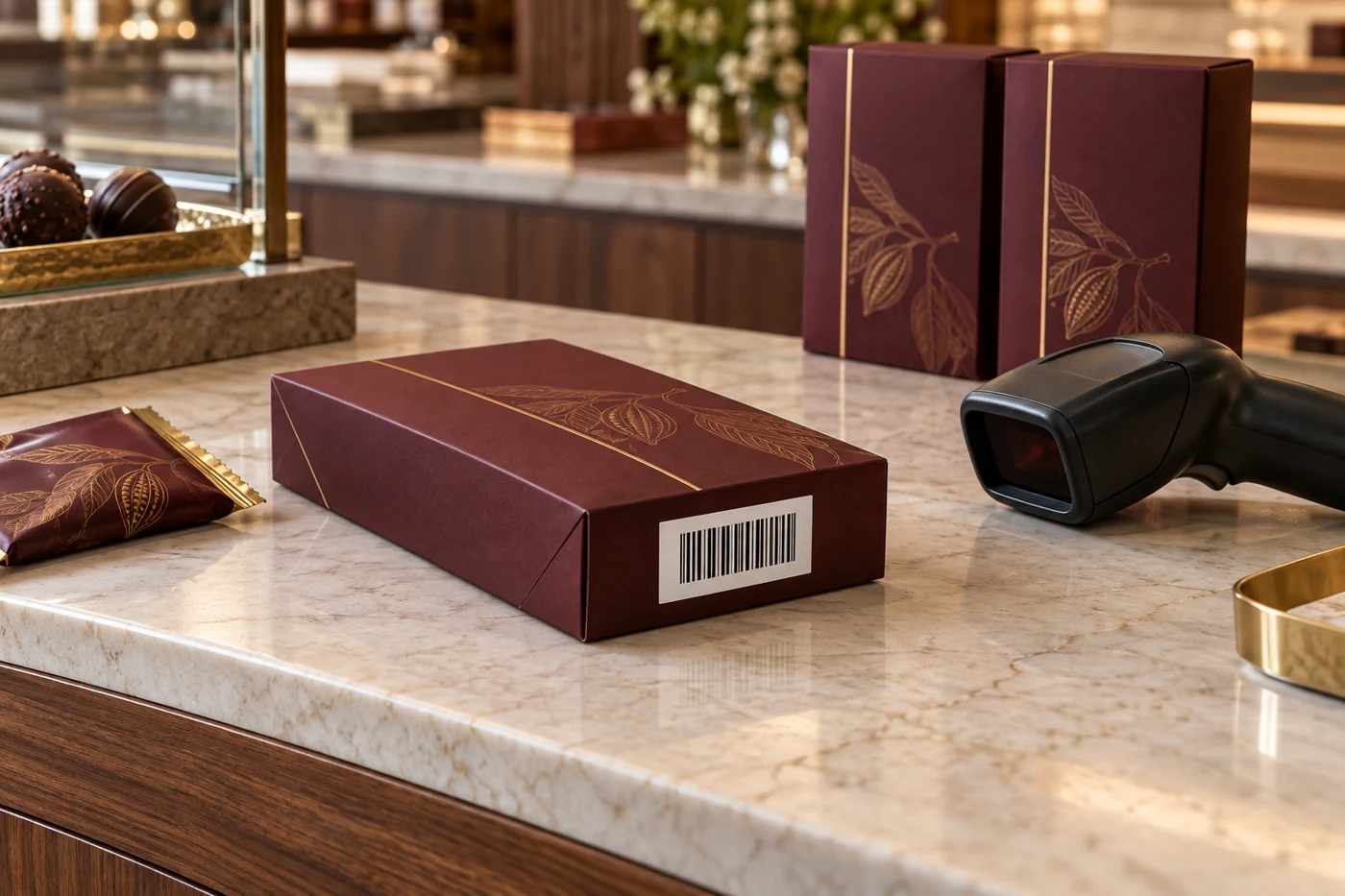
Is the problem the printed code or the product record?
Ask the receiving team for the exact symptom. “The barcode does not work” is too vague to justify a reprint. Request the decoded number, if available, alongside a photograph of the actual package and the retailer’s error message. Keep an untouched sample from the affected lot.
The GS1 Australia Barcode User Guide explains that a conventional retail barcode identifies an item through its GTIN; price and description are obtained from a product database. A readable code returning the wrong product therefore calls for a data investigation, not an automatic change of ink or board.
| Reported symptom | Evidence to request | First owner | Release decision |
|---|---|---|---|
| No number is decoded | Finished sample and verification findings | Printer and barcode specialist | Hold affected stock until the cause is resolved |
| A number is read, but no item appears | Decoded number and retailer item setup | Brand’s product-data contact | Confirm the product record before reprinting |
| The wrong variant appears | Approved SKU-to-GTIN list and printed revision | Brand and artwork approver | Check allocation, artwork and retailer mapping |
| Only some finished packs fail | Samples grouped by lot and production stage | Packaging quality lead | Investigate variation rather than averaging it away |
Use this table as a triage tool, not a diagnosis. For example, a wrong variant could originate in the artwork or the retailer’s system. The decoded number connects the physical box to the records and helps the teams determine which one needs correction.
Reserve a functional area before decorating the box
GS1 Australia’s creating and printing guidance ties symbol size to barcode type and scanning environment. It warns against shortening bars below the specified height and requires clear surrounding space, called the quiet zone. Black bars on an opaque white field are a practical starting point; reflective or transparent surfaces need particular care. Obtain the applicable dimensions from the barcode specification, rather than shrinking the symbol until it fits spare artwork space.
In the design brief, give this area its own approval line. Ask the designer to show the complete reserved field on the final dieline. Ask the printer to flag any conflict before quoting plates or finishes. This makes a necessary technical area visible while moving it is still a layout decision.
On custom flip-top cigarette cartons, the available faces must accommodate several functions. That product format offers barcode printing alongside decorative treatments. Decide where the scan field belongs before approving the front-panel composition; do not treat a narrow remaining flap as the default location.
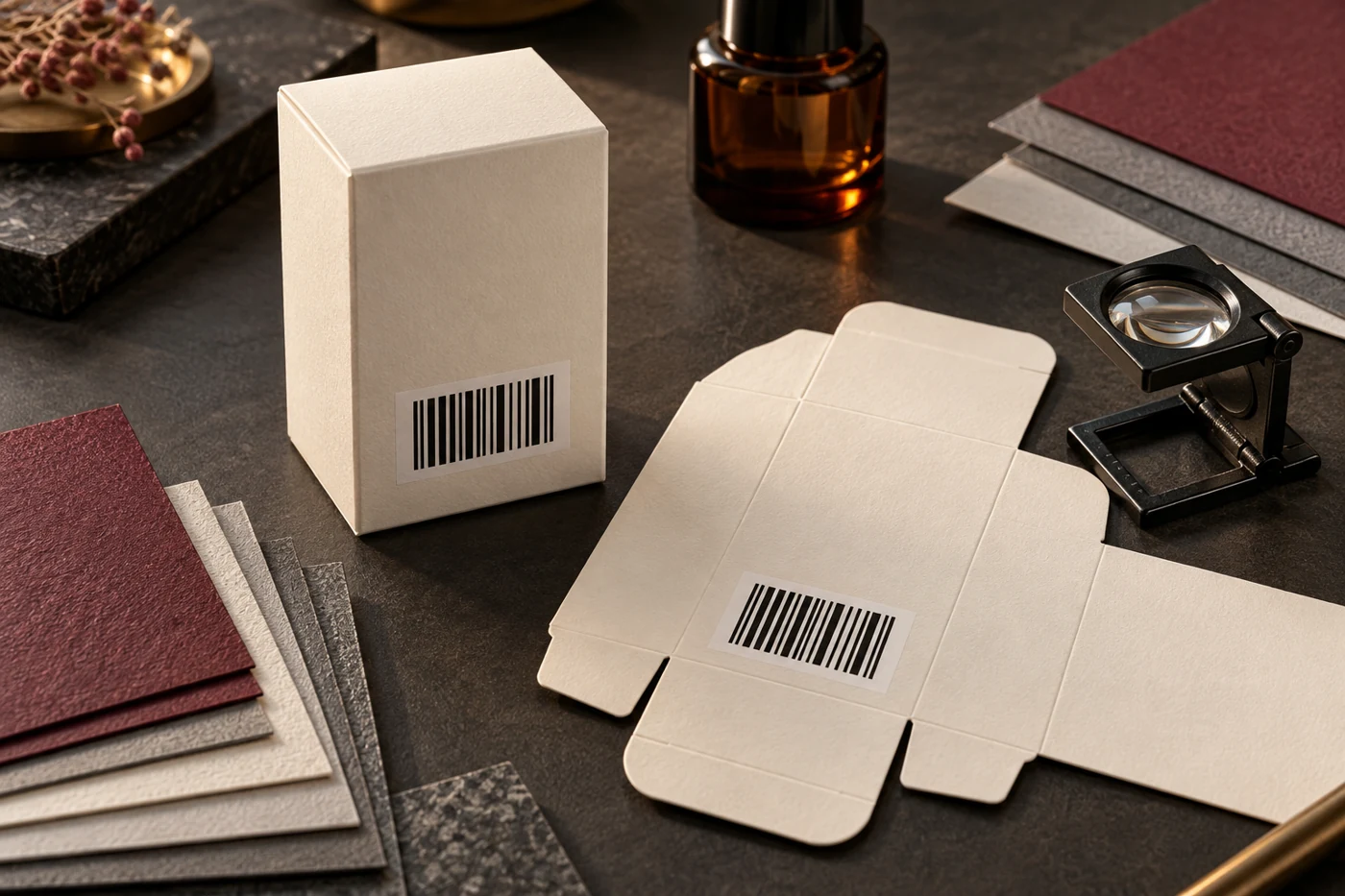
Follow the barcode through the finishing and assembly sequence
A useful review follows one physical sample through printing, finishing, forming and final packing. Photograph the same panel at each stage and keep the sample identity attached to the photographs. If a problem first appears after one operation, investigate that change before revising every part of the specification.
GS1 Australia’s barcode-generation checklist calls for checking the final formed product, keeping wrapping or tape from obscuring the symbol, and avoiding unwanted codes showing through from inside the package. It also recommends routine checks during the print run. A flat-sheet approval alone leaves these later conditions unexamined.
For printed slide-out cartridge packaging, mark the intended code location on the closed outer sleeve. Review it with the tray inserted and the pack ready for retail handling. A diagram showing the drawer pulled out is a presentation view; it is not the same configuration the cashier receives.
With custom chocolate bar cartons, bring the planned wrapper, carton and any promotional sleeve to the approval meeting. Decide which component carries the retail identifier and identify who controls each file. This is especially useful when a chocolate producer orders the primary wrapper and the paper carton from different suppliers.
Document decorative exclusions as part of the finish artwork. For book-style magnetic gift boxes, discuss a plain scan field on the outer wrap or a separate opaque label. Keep the luxury presentation elsewhere on the pack. This is a design proposal to test, not a claim that every matte label or every rigid-box surface will pass.

Choose direct printing or a label by the work each option creates
Neither route removes the need for approval. Direct printing can make the code part of a controlled carton artwork file. A separately applied label can accommodate a later identity decision, but it introduces another purchasing item, application step and opportunity to select the wrong variant.
Consider an illustrative launch with four versions of the same retail product. The buyer has approved one shared box design, but the final variant list is still changing. Comparing only the price of printed cartons would miss the decision that matters: should production wait for four controlled artwork files, or should the project qualify a label process with explicit variant checks?
Request two complete quotations using the same delivery quantity. For direct printing, identify the separate artwork versions and change charges. For labels, include label production, application labour, reconciliation of unused labels and the agreed inspection step. Ask the supplier to describe how operators will distinguish variants during packing.
For custom disposable-device retail boxes, where the product page includes space for barcodes and other information, settle the panel allocation and SKU list together. A last-minute variant change should trigger a file review, not an informal instruction to reuse the previous code.
Choose the route whose responsibilities you can control. Do not buy flexibility you have no process to manage, and do not pay for separate printed variants before the brand has frozen their identifiers.
Ask for evidence that matches the approval stage
A quick successful scan is useful feedback, but it does not establish every requirement in a purchasing specification. GS1 Australia’s Barcode Check service assesses matters including symbol type, size, position and duplication, and provides a verification report with corrective advice. Ask your retailer what evidence it accepts before agreeing to a test service or release criterion.
Separate the approvals in your purchase order. Name the person responsible for the identifier, the person approving artwork, and the party arranging the finished-sample check. Specify who receives the report and who can release production or shipment. A report sent only to a designer may never reach the buyer managing delivery.
The GS1 Australia testing checklist distinguishes artwork assessment from final-sample verification. It says an incomplete package cannot establish final barcode location and that artwork reports do not provide final ISO print-quality assessment. Its submission rules also exclude dangerous or flammable goods. Confirm the testing provider’s instructions before sending samples, especially for battery-powered or liquid-filled products.
In practical terms, ask for a report tied to the finished construction and identified artwork revision. If the submitted sample differs from the shipment, record the difference and ask which conclusions still apply. Do not quietly promote a provisional artwork check into final production approval.
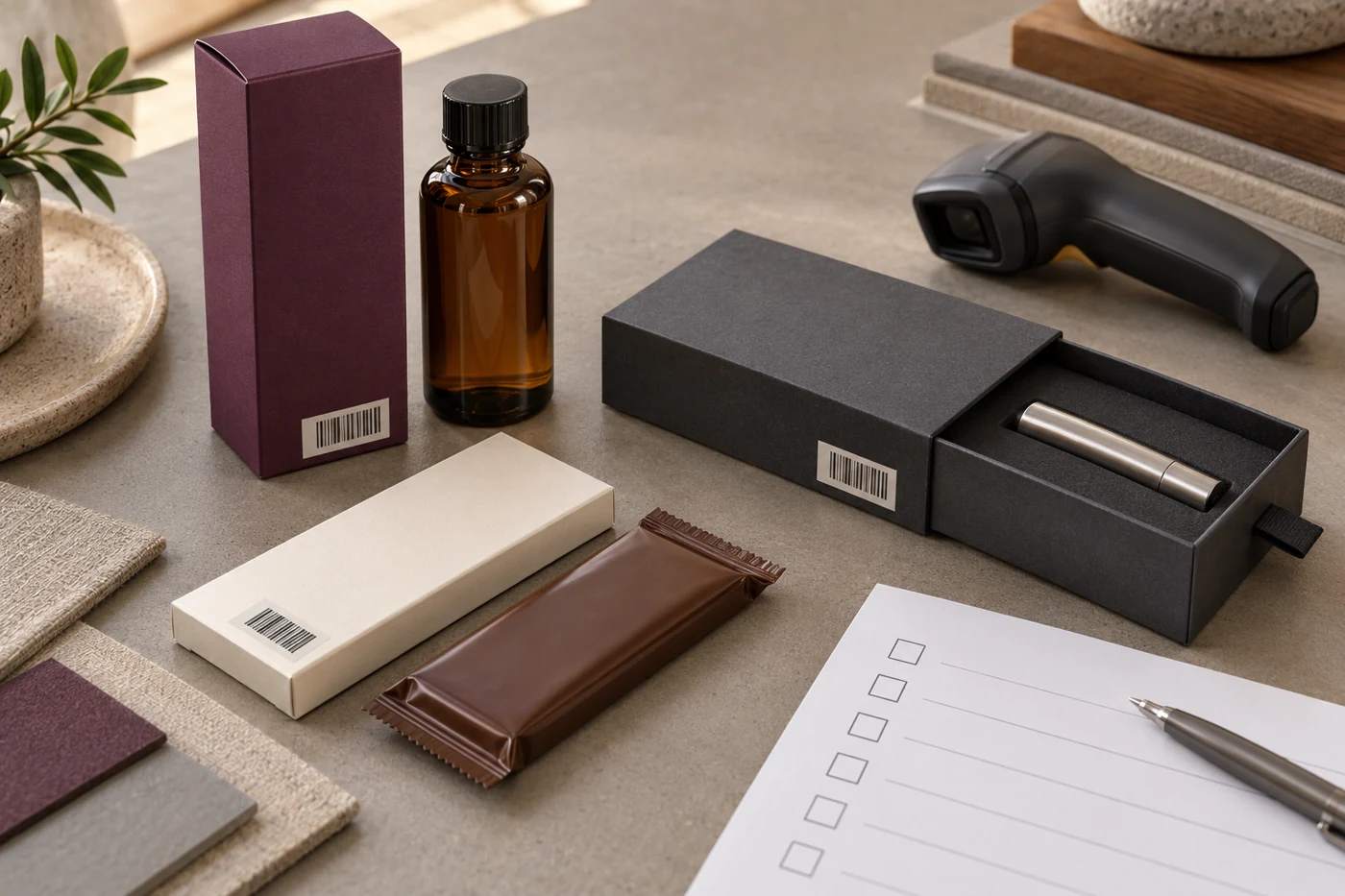
A release brief your purchasing team can use
The following is a proposed purchasing workflow, not a universal sampling standard. Adapt it with your printer, retailer and verification provider:
- Freeze identity. Maintain one controlled list linking each ordered SKU to the approved identifier. Record who supplied and approved it.
- Freeze the file. Record the dieline and artwork revisions, output filename and approval date. Remove obsolete versions from the production handover.
- Define the specimen. State the board or wrap, print process, decorative finishes and final packing configuration that the submitted sample represents.
- Agree on evidence. Name the verification provider, applicable specification, retailer requirements and reporting details. Let qualified parties set the appropriate acceptance criteria.
- Plan lot checks. Agree how samples will represent the production run and how failed results will be escalated. Do not invent a sample quantity after delivery.
- Control changes. Require review when artwork, material, finish, placement or packing configuration changes. Record what was rechecked before release.
If a batch fails, isolate the affected stock and keep the failed samples. Ask for a proposed correction and a fresh check of the corrected construction. Relabelling may be a candidate, but obtain the buyer’s agreement and confirm the revised pack before authorising the work. A rushed repair without a documented release simply moves the uncertainty downstream.
Frequently asked questions
Can I approve the code because my phone reads it?
Treat that as a preliminary check. Ask for the evidence required by the retailer and your purchase agreement. A phone result does not replace the final-sample assessment described above.
Should I make a difficult barcode larger?
First identify the failure. A size issue needs review against the applicable symbol specification; a wrong SKU-to-number mapping needs a data correction. Increasing the artwork size cannot resolve every complaint.
Will a new barcode improve a product that scans at the wrong price?
Check the decoded identifier and retailer record first. For the conventional retail codes discussed here, the price comes from the database. Reprinting without tracing that link may repeat the problem.
What should I send with a packaging enquiry?
Share the box style, dimensions, material preference, quantity by SKU, approved barcode artwork and final wrapping arrangement. Include any retailer testing requirements and describe the exact failure if this is a corrective order.
Send PaperBoxPro your packaging and barcode placement brief to discuss the carton layout and sample plan. Request separate confirmation of artwork, finished construction and verification responsibilities before committing to the production run.
Images are AI-generated packaging concepts, not customer orders or verification evidence. Illustrated barcode patterns are not production-ready symbols. The launch scenario and release workflow are explanatory examples.