
Folding cartons usually pop open after gluing because the joint was never built as a complete bonding system. The adhesive must wet and anchor to the actual glue-flap surface, the carton must be folded within the adhesive’s working window, and the joint needs enough compression and setting time to resist the board’s spring-back. More adhesive alone can create squeeze-out without fixing coating contamination, poor flap geometry, inaccurate folding or premature packing.
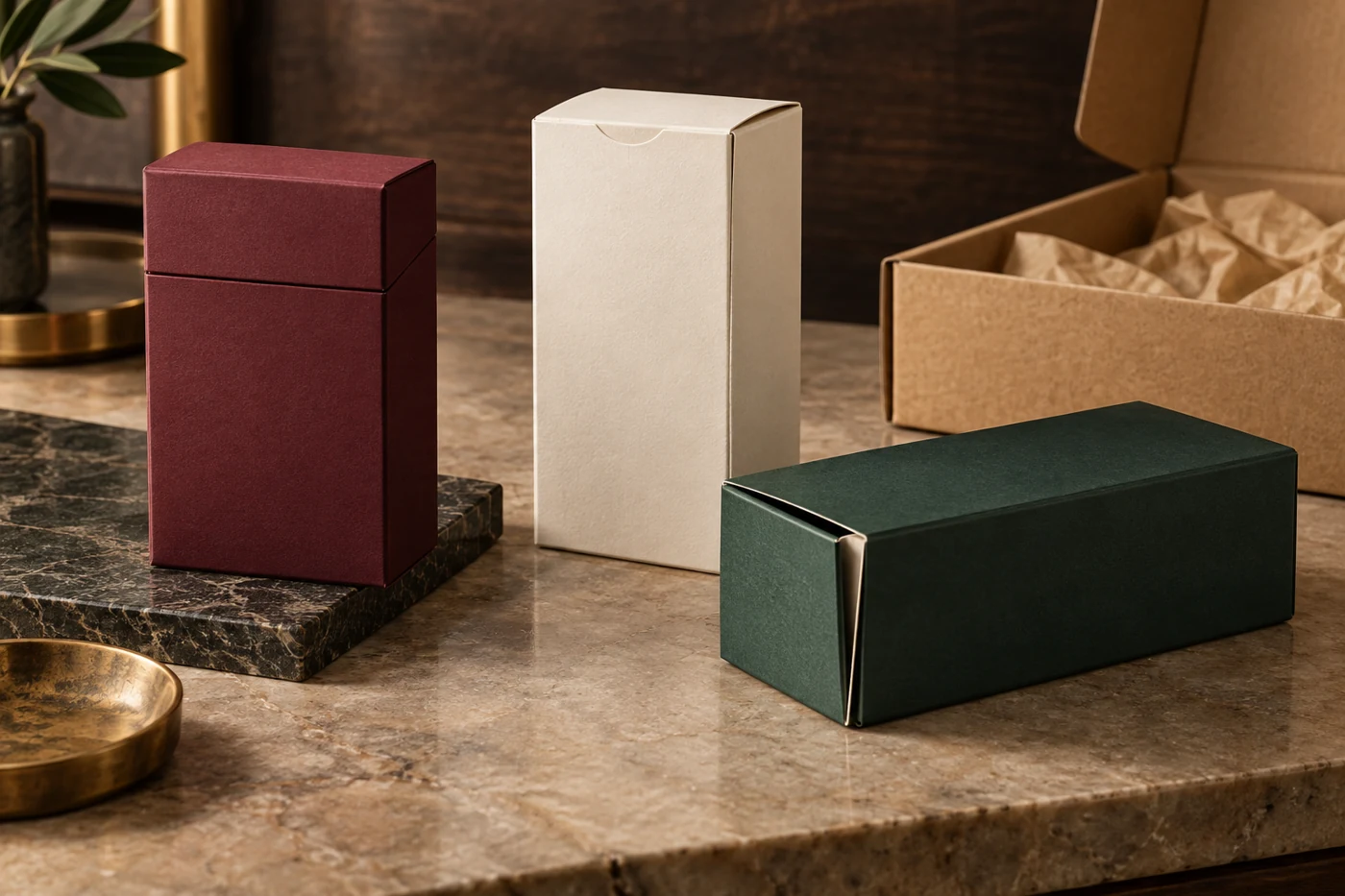
Start by identifying how the seam failed
An open seam does not automatically mean weak glue. Carefully separate a failed sample and look at both sides of the joint. If dried adhesive sits almost entirely on one surface and the opposite flap looks clean, the bond may not have transferred or wetted correctly. If paper fibers tear from the board, the adhesive may have bonded to the surface while the paper layer itself became the weaker point. If the joint is intact but the carton is twisted or bowed, folding alignment or crease stress may be driving the complaint.
Record when the failure appears. A seam that opens immediately after the folder-gluer differs from one that survives conversion but fails after filling, cold storage or transport. Photograph the glue line, note the carton position within the batch and retain unopened comparison samples. This evidence is more useful than a general request to “use stronger glue.”
Why a glued seam is more than an adhesive choice
A folding-carton side seam is a small engineered joint. Its performance depends on the paperboard surface, ink and coating boundaries, glue-flap width, adhesive bead, folding accuracy, compression and time. The carton’s score lines also store elastic force; when the blank is folded, that recovery force can try to pull the seam apart before the bond has developed enough strength.
The challenge changes with the structure. A flip-top cigarette carton has narrow panels and repeated-use geometry, while a conventional tuck carton may have a simpler manufacturer’s joint. The supplier should qualify the actual dieline, surface finish and production speed rather than transfer a setup from a different SKU.
Seven causes of cartons opening after gluing
1. Ink, varnish or laminate covers the glue area
A premium finish can improve appearance while making bonding more demanding. If ink, UV varnish, soft-touch coating or film extends across the glue flap, the adhesive is no longer bonding directly to the intended paper surface. Some surface-and-adhesive combinations can work, but they must be tested; “paperboard glue” is not a universal compatibility statement.
Keep the glue area clearly identified in the artwork and finishing files. Where appropriate, specify a glue-free or coating-free zone and verify it on the imposed production sheet, not only on the dieline. For premium disposable vape cartons with matte, gloss or specialty finishes, the approved sample should use the exact finish stack planned for production.
2. The adhesive does not match the substrate and process
Water-based and hot-melt systems behave differently, and suppliers offer formulations for different surfaces, speeds and end-use conditions. The converter should select the system with its adhesive partner and validate it on the real board. Buyers do not need to prescribe chemistry without expertise, but they should disclose cold-chain exposure, heat, long storage, oily environments or other relevant conditions.
Changing from an uncoated kraft flap to a coated white board—or adding a laminate—can invalidate an old approval. Treat material and finish changes as potential bond changes, even when the box dimensions remain identical.

3. The glue line is in the wrong place or has gaps
A glue bead too close to the edge can squeeze out and contaminate finished boxes. Too far inward, it may reduce the effective bonded area or miss the opposing flap. Intermittent gaps can come from poor application, blocked nozzles, unstable feeding or the wrong relationship between blank position and glue trigger.
Define the acceptable glue-line location and continuity on a signed production sample. Inspect several cartons from different times in the run. A slim chocolate bar carton may offer little tolerance for a wandering bead, especially when the box must remain clean for retail presentation.
4. Folding is inaccurate, so the flaps do not meet correctly
Even a suitable adhesive cannot bridge poor geometry indefinitely. Skewed feeding, inaccurate scores, warped blanks or a folder setup that does not square the carton can reduce overlap and create uneven pressure. The joint may look closed when flat yet open as soon as the carton is erected.
Machine makers such as KAMA describe folder-gluers as systems for both folding and gluing, which is an important purchasing lesson: these are not independent steps. The carton should be checked flat and erected. Measure squareness, overlap and seam position before changing adhesive settings.
5. The board’s fold-back force is higher than the joint can resist
Heavy board, short panels, grain direction, tight scores and certain structures can produce strong spring-back. If the compression section releases the carton before the adhesive has set sufficiently, the seam can lift. This is a process-window problem rather than proof that the board is “too thick.”
A CBD or cartridge carton may carry a bottle, cartridge or insert, and erection can introduce additional load to the side seam. Test the glued blank after realistic erection and filling, not only while it is held flat.
6. Compression is uneven or too short
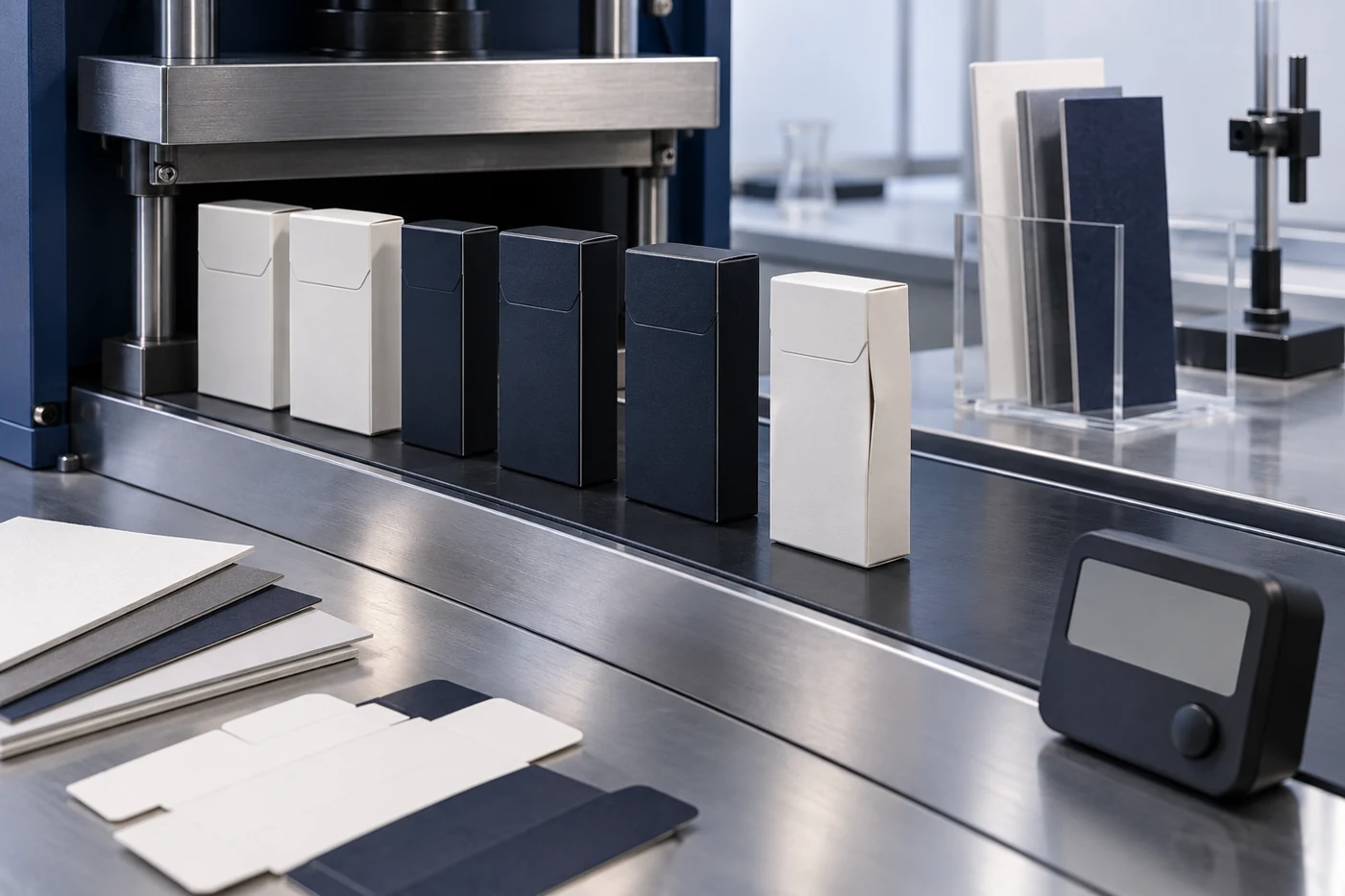
The joint needs consistent contact while the adhesive develops handling strength. If belts, rails or guides apply uneven pressure, one edge of the flap may bond while another remains loose. Faster line speed can also reduce the time available between adhesive application, folding and release.
Do not copy a fixed pressure or time from another carton. Instead, run a controlled trial at the actual board, adhesive and line conditions. Change one factor at a time and keep samples labeled by setting. The goal is a stable range, not one perfect carton produced at an unsustainable speed.
7. Cartons are packed or filled before the joint is ready
A seam can leave the gluer with enough strength for gentle handling but not enough for aggressive bundling, case compression or immediate erection. Tight strapping, heat in a packed case or the force of automatic cartoning can expose a marginal joint.
Define the minimum handling and conditioning time in the production plan. For e-liquid and vape cartridge cartons, verify the seam after the intended insert and product are loaded. The test should represent the sequence the customer will actually use.
Use the failure pattern to choose the next trial
| Observed result | Investigate first | Controlled comparison | Likely trade-off |
|---|---|---|---|
| Adhesive stays on one flap | Surface treatment, contamination and wetting | Compare production finish with a defined glue-free zone | Artwork or finishing file change |
| Fibers tear from both sides | Board surface strength and excessive stress | Review crease, overlap and erection load | Structural or board adjustment |
| Seam opens at one end | Glue-line position, flap contact and compression alignment | Map glue continuity and belt pressure along the joint | Slower setup and more inspection |
| Carton is skewed | Scores, blank feeding and folding guides | Check flat-blank squareness before adhesive change | Tooling or machine correction |
| Joint fails after filling | Insert pressure, product load and erection sequence | Test empty and production-filled samples from the same batch | More clearance or structural support |
Approve the surface, structure and process together
Paperboard selection matters because converting performance includes more than printing. For example, Smurfit Westrock’s paperboard information explicitly includes die-cutting, folding and gluing among converting considerations. That does not mean one branded grade guarantees a bond; it illustrates why board and conversion must be qualified as a system.
Use a three-stage approval ladder
- Structural blank: confirm glue-flap width, overlap, scores, grain direction and squareness before decorative finishes complicate diagnosis.
- Finished conversion sample: run the actual ink, coating or laminate and the planned adhesive application through representative folding and compression.
- Production-intent pack: erect, fill, close, case-pack and condition samples before checking seam integrity and appearance.
For a slide-out vape cartridge package, distinguish the glued joints in the inner tray or sleeve from friction and fit between components. A drawer that feels tight can load a seam differently from the same piece tested by itself.
What should your folding-carton RFQ include?
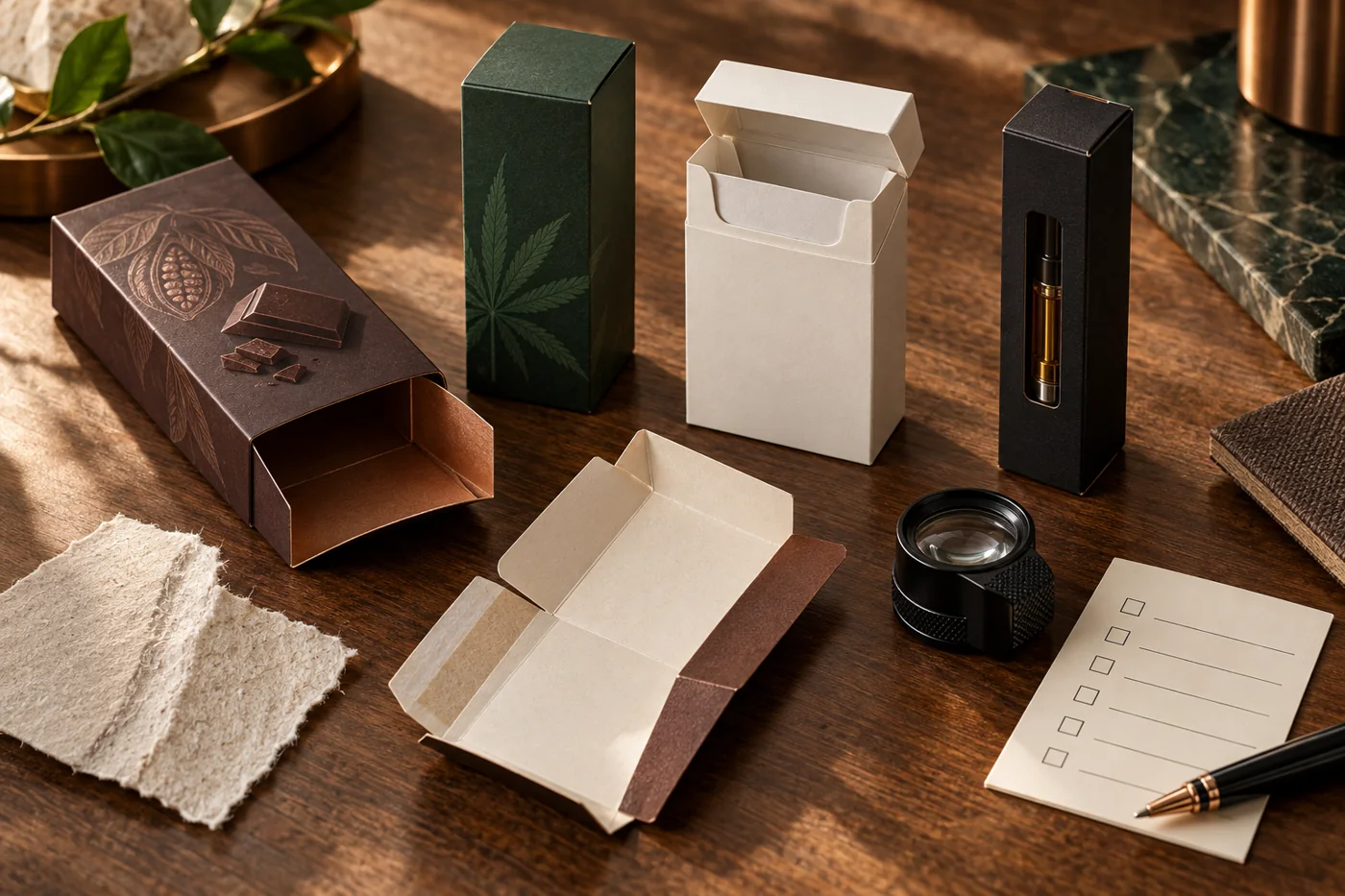
- Box style, finished dimensions, dieline revision and product or insert load.
- Paperboard grade, caliper or thickness, grain direction and critical crease locations.
- Complete print and finish stack, with the glue area identified on artwork.
- Expected filling method, erection speed, storage climate and end-use conditions.
- Required seam appearance, allowable squeeze-out and defined cosmetic zones.
- Production sample quantity, conditioning period and empty-versus-filled test method.
- Change-control rules for board, coating, adhesive, tooling, machine or pack-out changes.
Frequently asked questions
Does adding more glue make a carton seam stronger?
Not automatically. Excess adhesive can squeeze out, slow setting or create appearance problems. Correct surface compatibility, bead placement, flap contact and compression are more useful starting points.
Can a laminated carton be glued reliably?
Often yes, but the adhesive and joint design must be validated for the actual film and treatment. Leaving an appropriate unlaminated glue zone may simplify the process when the design permits.
Why does the seam pass flat testing but fail after erection?
Erection introduces fold-back force, product pressure and geometry that are absent while the carton is flat. Test production-intent samples in the filled configuration.
What is the most useful incoming inspection?
Check seam position, squareness, glue squeeze-out and a defined bond-opening sample across several cartons and case locations. Compare results with the signed standard rather than relying on one carton.
Turn an open seam into a measurable process problem
Reliable carton gluing comes from a compatible surface, controlled adhesive line, accurate folding, sufficient compression and realistic conditioning. Diagnose where the joint failed before changing materials. If you are developing a new carton or troubleshooting seams that open after filling, send PaperBoxPro the dieline, finish stack, product load and failed samples for a production-focused review.