Clear answers for custom paper boxes, paper tubes, materials, printing, samples and delivery. Use this guide to prepare a practical brief before requesting a factory quotation.
Custom means a specification to approve. Dimensions, board, structure, printing and packing method should match the actual product. We use samples and written details to align expectations before bulk production.
Need a specific format? Explore folding cartons, rigid boxes, paper tubes and flexible packaging.
Cost and minimums depend on the finished specification.
A typical starting point is 500 pieces for many custom paper boxes and paper tubes. The minimum can change with the structure, board grade, tooling, print process and finish. Share the product and quantity so we can confirm the workable MOQ for that specification.
We quote from the approved size, board and print specification, insert, finishing steps, order quantity and delivery terms. A unit price shown on an example product page is a reference, not a final project quotation. Send the packed product, required dimensions, artwork direction, quantity and destination for an itemized review.
Yes. The examples on this website show possible structures and finishes, not fixed stock sizes. We develop the dieline around the packed product, clearance, board thickness, insert and shipping method; confirm fit with a physical sample before mass production.
Our team can review a dieline, advise on a structure and help prepare production artwork for an agreed project. The scope, timing and any design or tooling charge depend on the brief and are confirmed in the quotation. If you already have artwork, send the editable files and the rights to use them.
Yes. We can discuss a digital proof, white structural sample or printed production sample depending on what you need to verify. Sample and courier charges depend on the method and destination. Confirm the approved physical sample, final artwork and written specification before production.
Prepare files that match the approved dieline.
Editable AI, EPS or print-ready PDF files are preferred. PSD may be useful when layered artwork is available; high-resolution JPG or PNG can support reference, but may not be suitable as final print art. Ask for the approved dieline and include fonts or outlined text, linked images, bleed, color references and separate foil or spot UV layers when applicable.
CMYK and specified Pantone (PMS) spot colors can be evaluated for the chosen material and print process. A screen preview is not an exact print match. Confirm the color reference, paper surface, finish and an approved proof or sample, especially for large solid areas, metallic inks or sensitive brand colors.
Bleed extends artwork past a cut line to prevent unwanted white edges after cutting. The dieline identifies cuts, folds, glue zones, windows and safe text areas. Exact bleed and safe-zone dimensions depend on the structure and equipment, so use the production dieline supplied for your project.
Often yes, depending on the box structure, paper surface, quantity and finishing sequence. Interior printing can affect cost and lead time. Tell us which panels need artwork and whether the inside will touch the product; we will confirm material and process suitability.
Confirm performance claims for the complete pack.
Common options include folding cartons in white or kraft paperboard, rigid boxes built from greyboard with wrapped paper, corrugated mailers and spiral-wound paper tubes. Select thickness and structure from the packed weight, required stiffness, closure and shipping conditions rather than appearance alone. See our folding cartons, rigid boxes and paper tubes.
Paperboard, molded or die-cut inserts, EVA, foam and other options can be considered according to product fit. Printing and finish options may include matte or gloss lamination, foil, embossing, debossing and spot UV. Review a sample because the selected paper, coating and process affect the result.
Ask us about recycled-content or FSC-related paper options for your specific structure and order. Availability and the documents or on-pack claims that may be used depend on the actual supply chain and approved materials. We do not treat an option as a blanket certification of every finished pack.
No. Paper grade, plastic film, foil, adhesive, coating and local collection systems all affect end-of-life handling. For a sustainability claim, review the complete assembled pack and the destination market. We can compare practical material choices without promising that every construction is recyclable or biodegradable everywhere.
We can discuss material and construction options for food or confectionery projects. Direct food contact, grease or moisture resistance and any required testing must be specified for the exact product, contact time and market. A printed outer box alone should not be assumed to be a certified food-contact barrier.
We can develop locking drawer, push-and-slide and other structures for a product brief. Whether the finished package is child-resistant depends on the complete assembled design and testing required by the destination market. Specify the target standard, product and opening method before claiming compliance. Explore child-resistant box formats.
Approve the sample and written details before production.
Typical production takes 7–15 working days after the sample and final artwork are approved. A complex finish, tooling, special material or larger quantity may change the schedule. Shipping is additional, and the written quotation should give the project-specific timeline.
We review the product, quantity, dimensions, artwork, target market and destination; then discuss a proposed structure and material. After quotation, dieline and sample review, you approve the final specification and print proof before bulk production. Changes after approval may affect price and schedule.
Agree the measurable requirements in advance: assembled dimensions, product fit, print proof, surface finish, opening action, packing count and acceptable tolerance. Production checks are made against the approved sample and written specification; any market-specific test should be planned separately.
Often, but each structure, size, artwork and finish may have its own tooling, setup and minimum quantity. Send a list of variants and expected quantities; we can check what can share materials or production steps and quote each version clearly.
Separate production time from freight and import terms.
We can discuss international freight with the destination postcode or port, quantity, carton dimensions and required arrival date. Air and sea options have different transit times and costs. Confirm the Incoterm, import responsibilities, duties and insurance in the written quotation; production time is separate from transit.
A DDP option may be available for eligible destinations and goods. Duties and taxes are included only when the written quotation explicitly says so. Share the exact delivery address, product details and shipment size so the freight scope can be checked.
Send the packed product and dimensions, target box or tube style, desired materials and finishes, artwork or reference photos, estimated quantity, delivery destination and required timing. Mention food contact, child resistance or other target-market tests up front. If dimensions are unknown, provide the physical product size so we can start with a structure proposal.
Use the contact form to share your project brief. You can also contact the team through the WhatsApp link on this site. A precise specification helps us answer faster; any quoted response or delivery time will depend on the project and business hours.
Exact dimensions are helpful, but a physical product size and reference image are enough to start a structure discussion. We will confirm a project-specific specification before production.
Share your packaging brief ↗Our team can review the product, structure and sample requirements with you.
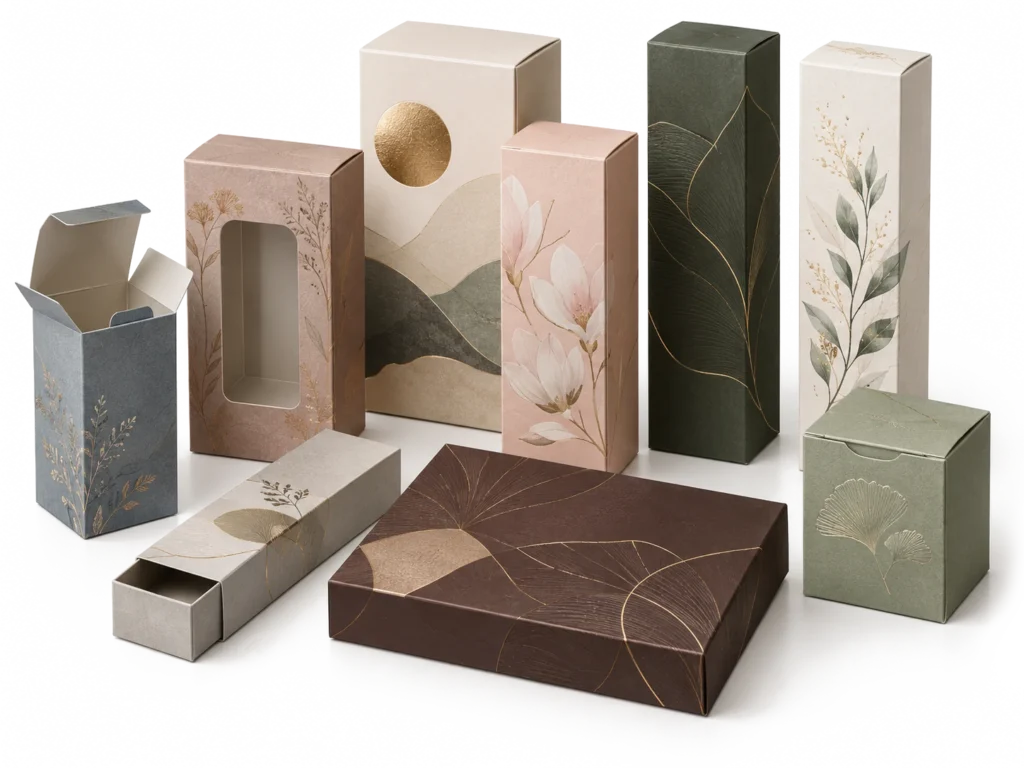
Custom sizes, materials and finishes for your brand.
Share a few details to request a custom quote.